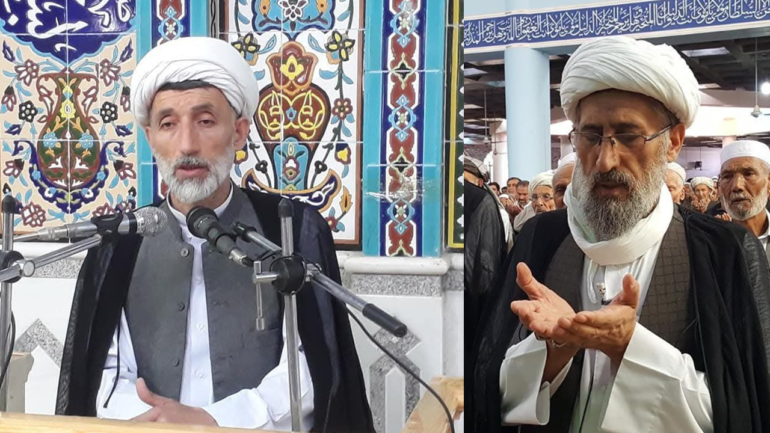

KABUL, AFGHANISTAN – Taliban authorities have arrested two Shia clerics in western Herat province, credible sources confirmed to KabulNow, following a mourning ceremony held to commemorate the death anniversary of Fatima al-Zahra, the daughter of Prophet Muhammad.
A source told KabulNow that Mohammad Jawad Rajabzadah and Mohammad Rohani were arrested on Saturday morning, November 14, and remain in Taliban custody. Both clerics serve as prayer leaders at Sadeqiya Mosque in Herat city.
According to the source, the arrests were linked to a mourning ceremony held on Friday night at the Mohammadia Jaghara Grand Mosque in Injil district of Herat, marking the death anniversary of Fatima al-Zahra.
It remains unclear why Taliban authorities detained the two Shia clerics. However, the source said that similar arrests have previously been carried out by the Taliban’s intelligence agency.
Sayyed Issa Hosseini Mazari, a cleric known for his close ties to Iran, condemned the arrests of Mohammad Rohani and Mohammad Jawad Rajabzadah, describing them as an “provocative and repulsive” act.
In a post on his Facebook page, Mazari accused the Taliban of targeting people’s religious beliefs, warning that “by doing so, they are striking at their own roots.”
He called for the immediate release of the two Shia clerics.
The Taliban have not yet commented on the arrests.
The group has previously arrested and detained Shia religious scholars on several occasions, raising concerns among members of the Shia community over restrictions on their religious activities and ceremonies.
In a separate incident, the Taliban’s Ministry of Justice has detained two community representatives from Omid Sabz Township in western Kabul for about a week amid a land ownership dispute. Abdul Raziq Musaddiq and Wakil Jafari were reportedly detained after refusing to sign documents agreeing to vacate their homes, while their families remain unaware of their whereabouts and condition.
Omid Sabz Township, a predominantly Hazara residential area in western Kabul developed over the past two decades, is among the areas affected by the Taliban’s land dispute. The Taliban have declared the land state-owned and ordered residents to surrender their properties.
The arrests come amid a broader pattern of restrictions imposed by the Taliban on religious practices among Afghanistan’s Shia Muslim community, particularly during religious commemorations. In July 2024, the Taliban imposed restrictions on Muharram ceremonies, limiting mourning activities to three days, prohibiting public processions and requiring ceremonies to be held inside mosques and other enclosed spaces. The restrictions were also reported in Herat.
In its January–March 2026 human rights update, the United Nations Assistance Mission in Afghanistan (UNAMA) reported that Taliban authorities in at least eight provinces had instructed Shia communities to observe Eid al-Fitr according to the date determined by the authorities rather than the Shia religious calendar. In one province, Shia clerics were detained for refusing to comply. UNAMA also reported that Taliban morality inspectors in Herat had instructed a Shia mosque to prevent women from attending evening prayers.
The European Union Agency for Asylum (EUAA), in its 2026 Afghanistan country report, also documented restrictions on Shia religious ceremonies in several provinces, including Herat, Kabul, Ghazni, Bamyan and Ghor. The report noted that two Shia clerics were arrested in Jebrael, Herat, in November 2024, while three Shia religious scholars were arrested in Ghazni in March 2025 after refusing to follow Taliban instructions on the timing of Ramadan and Eid prayers.