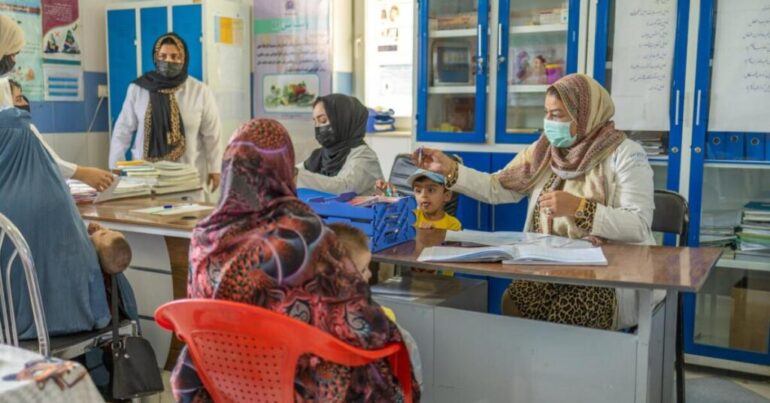

KABUL, AFGHANISTAN – Funding shortages are forcing health facilities across Afghanistan to scale back services or shut down completely, leaving millions at risk of losing access to essential healthcare, the United Nations warned on Sunday.
The U.N. Office for the Coordination of Humanitarian Affairs (OCHA) said remote and underserved communities are particularly hard hit, with many residents forced to travel long and often dangerous distances for medical help.
“Across Afghanistan, healthcare facilities are being forced to scale back or shut down completely because of funding shortages,” Olga Cherevko, OCHA’s representative in Afghanistan, said during a visit to a hospital in the northeastern province of Badakhshan.
“In remote areas of Afghanistan, reaching a healthcare facility can sometimes mean that the journey will turn into a lengthy and dangerous one,” she said.
Humanitarian partners continue to deliver services in more accessible locations, she added, but sustained and predictable funding is essential to protect mothers and give children a healthier start in life.
Afghanistan continues to face one of the world’s largest humanitarian crises, with millions struggling to meet basic needs amid persistent economic hardship, recurring natural disasters, restrictions imposed by the Taliban on women and girls, declining international aid and the large-scale return of Afghans from neighboring countries.
Nearly 22 million people, almost half of the country’s population, are expected to need humanitarian assistance in 2026, according to the United Nations, with women and children among the most vulnerable.
The UN has appealed for $1.71 billion to address the country’s humanitarian needs this year. However, only about 33% of the required funding has been secured so far, according to OCHA.
Aid agencies have repeatedly warned that the funding shortfall is undermining their ability to provide life-saving assistance, including healthcare, food, nutrition support and shelter, to millions of vulnerable Afghans.