


KABUL, AFGHANISTAN – Pakistan’s federal government has declared a state of emergency in Khyber Pakhtunkhwa, escalating a political dispute with the opposition-led provincial government as security tensions along the Afghanistan-Pakistan border continue. The announcement came as Pakistan’s military said 12 members of the Pakistani Taliban and Taliban forces in Afghanistan had been killed in a border clash.
According to Pakistan’s Dawn newspaper, the federal cabinet approved the emergency on Sunday, October 11, before President Asif Ali Zardari endorsed the decision. The presidential office said the measure was taken under Articles 232 and 234 of Pakistan’s Constitution, which provide for emergency powers under specified circumstances.
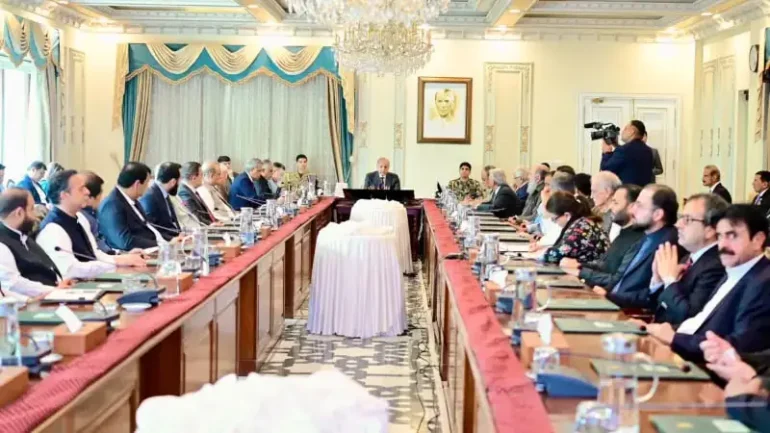
The decision followed a federal cabinet meeting chaired by Prime Minister Shehbaz Sharif, during which officials reviewed the security situation in Khyber Pakhtunkhwa. According to the prime minister’s office, cabinet members presented documents alleging that the provincial government had deliberately withdrawn from efforts to combat terrorism. They recommended that Sharif advise the president to exercise his constitutional powers in response to what they described as a deteriorating situation.
Sharif also accused the Pakistan Tehreek-e-Insaf (PTI), which leads the provincial government, of threatening the country’s economic stability. The move comes amid heightened tensions between Islamabad and the provincial administration, led by Chief Minister Sohail Afridi, who has been leading a large protest march toward the federal capital in recent days.
The emergency declaration marks a significant escalation in the dispute between the federal government and PTI, which has repeatedly clashed with the administration in Islamabad. The federal government has linked the province’s deteriorating security situation to what it describes as the provincial authorities’ lack of commitment to confronting Tehreek-e-Taliban Pakistan (TTP), also known as the Pakistani Taliban.
Meanwhile, Pakistan’s military said its forces had killed 12 TTP members and Taliban fighters from Afghanistan during a clash in the Kurram area near the border on Saturday, October 10. In a statement, the military said it had detected TTP fighters attempting to enter Pakistan from Afghanistan and had thwarted the infiltration attempt.
The military further alleged that Afghan Taliban border posts opened fire in support of the TTP fighters. One Pakistani soldier was killed in the exchange, according to the statement. Pakistan’s military described the incident as further evidence of what it called the Afghan Taliban authorities’ failure to prevent militant groups from using Afghan territory to launch attacks against Pakistan.
The account could not be independently verified. Afghan Taliban officials have repeatedly denied that militant groups use Afghanistan as a base to threaten other countries and maintain that Afghan territory poses no security threat to Pakistan.
The latest clash followed a separate confrontation reported on Saturday evening between Taliban forces and Pakistani border guards in Dand Patan district of Paktia province in Afghanistan. The Taliban’s 203 Mansouri Corps confirmed the incident but said Pakistani forces had fired first and that Taliban fighters had returned fire. Abdul Haq Feda, a spokesperson for the corps, later said the fighting had ended without Taliban casualties.
The incidents come amid a prolonged deterioration in relations between Pakistan and the Afghan Taliban authorities. Islamabad accuses the TTP of operating from sanctuaries in Afghanistan and says the Taliban authorities have failed to honour commitments to prevent cross-border militancy. The Afghan Taliban reject the allegations, and the dispute has repeatedly led to border clashes and Pakistani airstrikes inside Afghanistan.
Pakistan has carried out multiple airstrikes against locations it describes as militant hideouts, while Afghan Taliban authorities and the United Nations have reported civilian casualties in some of the attacks. The Taliban have also launched drones toward Pakistan in some incidents, adding to concerns over the risk of further escalation.
The conflict has also strained regional diplomatic efforts. Despite mediation attempts by several countries, tensions remain high, and the eighth meeting of the Moscow Format on Afghanistan recently ended without a joint statement, underscoring continuing disagreements over the country’s security situation and regional relations.
The emergency declaration in Khyber Pakhtunkhwa now adds a domestic political dimension to the wider security crisis, as Islamabad faces both an intensifying dispute with the provincial government and persistent violence along the Afghan border.

