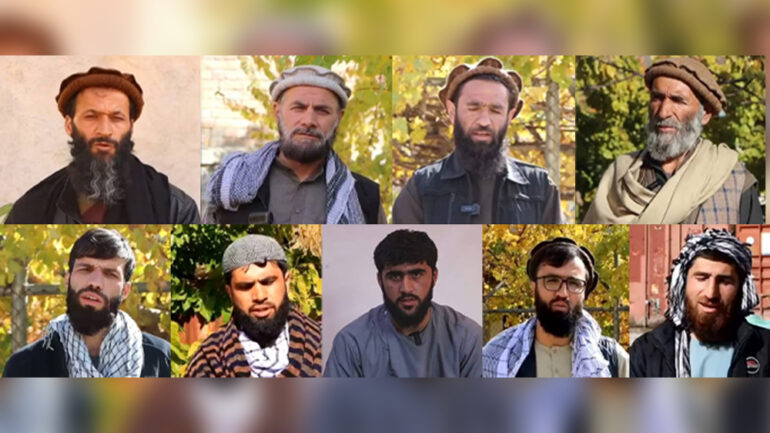

KABUL, AFGHANISTAN – Local sources in Panjshir province say the Taliban are forcing residents to appear in interviews with media outlets under the group’s control and read prewritten statements in support of its rule, amid an escalating security crackdown in the province.
According to the sources, Taliban intelligence agents summon residents for interviews and threatened them with detention and torture if they refuse to cooperate or challenge the statements they are instructed to make.
In one recent incident, Taliban intelligence officers in Hesa-e Awal district summoned 20 young men to the district governor’s office and ordered them to give interviews “in support of the regime”, repeating statements provided to them in front of cameras, the source said.
The young men were gathered in a room and were not allowed to leave until they had completed the interviews, the source added.
In a separate incident, Taliban intelligence officials forced the family of a former government military officer who died by suicide in Abdullah Khil valley, Dara district, to give an interview to media outlets under the group’s control, according to another sources.
The interviews were recorded and broadcast by the Taliban-controlled National Television (RTA) and the group’s media offices in Panjshir, according to the sources.
Panjshir has remained a focus of Taliban security operations since the group took control of the province. It became a stronghold of armed resistance groups, particularly the National Resistance Front, which has continued to carry out attacks against Taliban forces.
Human rights organizations have previously described Taliban actions in Panjshir as collective punishment.
In June 2023, Amnesty International said abuses committed by Taliban forces during security operations in Panjshir amounted to war crimes, including the war crime of collective punishment. The rights group documented cases of arbitrary detention, torture, extrajudicial killings and the destruction of civilian property in the province.
“Each individual act is abhorrent, and this conduct in sum amounts to collective punishment – in itself, a war crime,” Amnesty said.