
KABUL, AFGHANISTAN – Iranian border guards have reported a fourfold increase in seizures of synthetic drugs along the border with Afghanistan during the first half of the current Iranian calendar year, amid growing concerns over the production and trafficking of methamphetamine in the region.
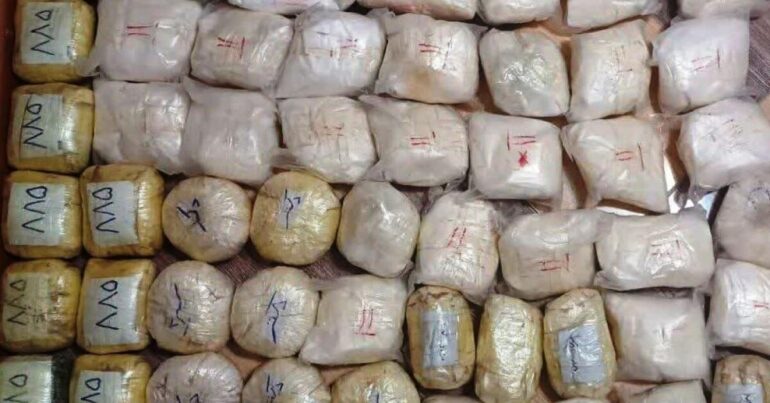
Majid Shuja, commander of Iran’s Razavi Khorasan Province border guards, told the state-run IRNA news agency on Monday, October 12, that authorities had seized 1.5 tonnes of narcotics, including opium, heroin and synthetic drugs, along the border with Afghanistan during the first six months of the year.
Shuja said overall drug seizures along the province’s border with Afghanistan had doubled compared with the same period last year, while seizures of synthetic drugs, including methamphetamine, commonly known as crystal meth, had increased fourfold.
According to Shuja, most of the seized drugs were opium and its derivatives, including heroin and morphine. However, synthetic drugs accounted for approximately 30 percent of the total seizures.
He attributed the growing share of methamphetamine to rising prices for synthetic drugs and the expansion of their production in Afghanistan.
The United Nations Office on Drugs and Crime (UNODC) has also reported changes in Afghanistan’s illicit drug market following the Taliban’s ban on opium poppy cultivation. While the restrictions have sharply reduced traditional opium production, methamphetamine manufacturing and trafficking have continued, raising concerns about the changing composition of the country’s drug trade.
In its Afghanistan Opium Survey 2025, UNODC said methamphetamine seizure trends appeared largely unaffected by the drug ban. The agency also reported that methamphetamine seizures had become more frequent across areas within 3,000 kilometres of Afghanistan, raising questions about production methods, supply networks and evolving market dynamics.
A separate UNODC assessment published in February 2026 found that drug use in Afghanistan remained dominated by traditional substances, but the use of synthetic drugs and the misuse of pharmaceutical medicines were increasing. Methamphetamine was reported among the substances used in Afghan communities, accounting for seven percent of the drugs cited by male respondents in the assessment. The report also noted limitations in available data, particularly concerning women and some regions.
The expansion of synthetic drug production presents a continuing challenge for Afghanistan and neighbouring countries. Unlike opium, methamphetamine can be manufactured using chemical precursors, and trafficking networks may adapt their production and distribution methods in response to changes in drug enforcement and market conditions.
The latest figures reported by Iranian authorities underscore concerns that restrictions on traditional narcotics have not eliminated the region’s illicit drug trade, but may be accompanied by changes in the substances being produced and trafficked. However, seizure figures alone do not establish the total volume of drugs manufactured or trafficked, or the extent to which production has shifted within Afghanistan.