

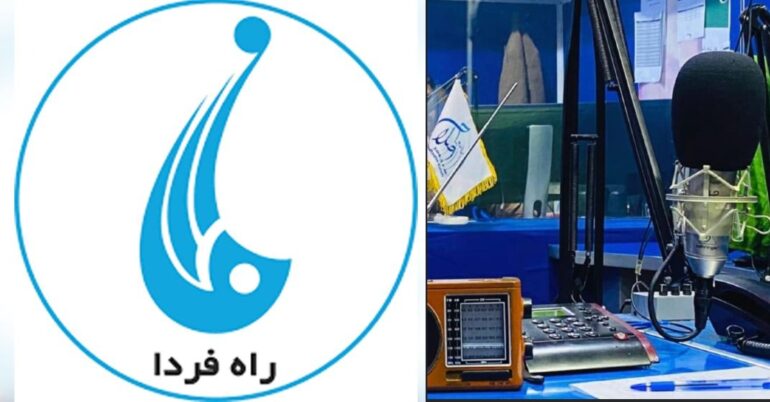

KABUL, AFGHANISTAN – The Afghanistan Journalists Center (AFJC) has condemned the Taliban’s closure of two Kabul-based media outlets, Rah-e-Farda TV and Seday-e-Eslah Radio, describing it as the latest assault on press freedom and calling for their immediate reopening.
In a statement, the AFJC said Taliban forces raided the offices of Rah-e-Farda TV in the Sar-e-Karez area of western Kabul on Sunday, sealed the premises and detained its owner, identified as Salman Akhlaqi. The Taliban forces also sealed the office of a local elder in an adjacent building and detained several people present there, the group said, citing its sources.
An official from the Taliban Ministry of Justice told the AFJC the action was taken because both buildings are believed to belong to Mohammad Mohaqeq, chairman of the People’s Islamic Unity Party of Afghanistan, a prominent politician in exile since the Taliban returned to power in 2021.
It was not the first action against the television network. In February 2025 the Taliban suspended its broadcasts for three months until the outlet obtained a new license under new ownership and management.
In a separate statement, the AFJC also strongly condemned the closure of Seday-e-Eslah (Voice of Reform), a private radio station that had operated in Kabul for 18 years. The station was shut in July after the Taliban alleged it was affiliated with the banned Jamiat-e-Eslah group. The station said it has operated under new private ownership and a legal license since 2018 with no organizational ties to any party or movement.
Seday-e-Eslah was established in 2007 by Jamiat-e-Eslah, transferred to new owners in 2018 and broadcast news, political, social and educational programming, including Quranic and Arabic language courses, on the FM band. It was accessible in most provinces, the AFJC said.
The watchdog called on Taliban authorities to reopen both stations, release Akhlaqi and allow media outlets to operate freely and safely without fear of arrest or censorship.
Taliban authorities have not yet publicly commented on the closures.
Afghanistan’s media landscape has deteriorated sharply since the Taliban seized power in August 2021. Journalists continue to face arrests, censorship, interrogations, threats and pressure related to their reporting, online activities or affiliations.
In a report published last month, the AFJC documented 102 violations against journalists and media freedom over the previous 12 months, including the detention of 15 journalists and media workers. At least 29 media outlets and journalistic institutions were shut down or had their operating licenses revoked during the period.
The Taliban crackdown has resulted in the closure of more than half of the country’s media outlets, including television and radio stations. Many journalists have fled the country or gone into hiding to escape reprisals. Female journalists face particular restrictions, including gender-based segregation in workplaces and a ban on broadcasting women’s voices in certain provinces.
Media rights groups have repeatedly urged the Taliban to respect press freedom and allow independent outlets to operate without political interference, arbitrary detention, or threats.

