

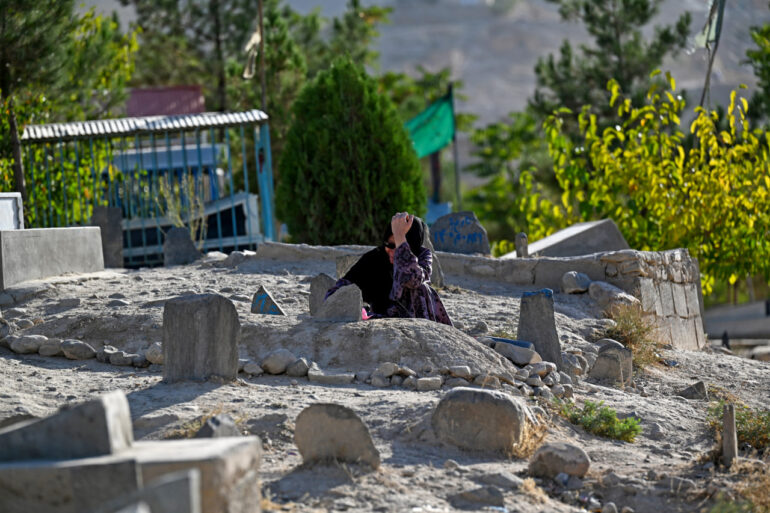

KABUL, AFGHANISTAN – The United Nations Assistance Mission in Afghanistan (UNAMA) says more than 40,000 civilians were killed and over 77,000 injured in armed conflict between January 2009 and the Taliban’s return to power in August 2021, while many survivors and families of victims continue to receive little or no justice, compensation or official recognition.
The findings are contained in a new UNAMA report titled Forgotten: Victims’ Rights After Decades of Armed Conflict in Afghanistan, based on research conducted in 2024 and 2025.
The report focuses primarily on the period from the U.S.-led military intervention in 2001 to the Taliban takeover on August 15, 2021.
UNAMA said the report is based on interviews with 195 victims of armed conflict and their relatives, 23 civil society organizations working with conflict victims, and 23 officials of Afghanistan’s de facto authorities.
The report describes the consequences of Afghanistan’s decades-long conflict as extending far beyond deaths and physical injuries, affecting victims’ mental health, economic conditions, family relationships and social lives.
According to UNAMA, 58 percent of those interviewed said they had suffered serious physical injuries as a result of conflict-related incidents. In many cases, those injuries continued to affect their lives for years or decades, leaving victims with chronic pain, disabilities and continuing medical needs. Some relatives were also forced to abandon their education or employment to care for injured family members.
The psychological impact was even more widespread. Ninety-five percent of interviewees reported emotional and psychological harm, including depression, anxiety, memory problems and recurring memories of traumatic events. Some said they had contemplated suicide after losing family members.
The economic consequences were also severe. Eighty-four percent of those interviewed said they had suffered financial losses. These included medical expenses, funeral costs, rebuilding damaged homes and businesses, and loss of income caused by injury, disability or the death of family members. Many families said their financial difficulties forced them to withdraw children from school and send them to work.
Women who lost their husbands were particularly affected. UNAMA said many widows became the sole providers for their families but were unable to earn an income because of restrictions imposed by the de facto authorities.
One of the report’s most significant findings is that more than half of those interviewed—55 percent—had never attempted to file a complaint, seek justice, obtain compensation or request assistance for what had happened to them.
UNAMA said victims commonly cited a lack of knowledge about where or how to seek redress, doubts that their cases would be taken seriously or handled fairly, and fear of retaliation. Among those who did seek compensation or assistance, 64 percent said their efforts had failed. Some said their claims were rejected or became trapped in administrative procedures, while others reported corruption or discrimination.
The report also found that existing forms of assistance were often inadequate. Payments received by victims varied widely, and many said the assistance they received did not correspond to the scale of their losses. The report notes that there is currently no effective system for providing comprehensive redress for victims of armed conflict and serious human rights violations.
Financial compensation emerged as the most important priority among victims.
Eighty-one percent of those interviewed said they needed financial compensation. Victims said they would use such assistance to pay medical expenses, rebuild destroyed homes and property, compensate for lost income and repay debts accumulated because of the conflict.
Justice was the second major priority. Forty-eight percent of interviewees said they wanted perpetrators to be held accountable and brought to justice. Some victims specifically called for international institutions to investigate and prosecute those responsible for crimes, arguing that justice is difficult to pursue inside Afghanistan.
Another 47 percent said they wanted concrete measures to prevent similar abuses from happening again. Many victims told UNAMA that although nothing could bring back their dead relatives, preventing other families from experiencing similar suffering remained critically important to them.
Only 18 percent said an apology was important to them, while 12 percent specifically identified official acknowledgment of the harm as a need. Some victims said an apology without recognition of responsibility or other measures of accountability would have little meaning.
The report gives particular attention to families of people subjected to enforced disappearance.
UNAMA interviewed eight families affected by enforced disappearance. Family members described years of uncertainty over whether their relatives were alive or dead, with the lack of information causing continuing psychological suffering. Some families said they were unable to mourn properly because they did not know the fate or whereabouts of their missing relatives.
All of the families interviewed said they had made extensive efforts to find their missing relatives, approaching government institutions, Taliban authorities, the International Committee of the Red Cross, UNAMA and other organizations. Yet many said their efforts produced no results.
In some cases, families reported repeatedly filing petitions and traveling between provinces and Kabul and Kandahar, while receiving no meaningful response. Some said they had spent substantial amounts of money, including on alleged bribes to officials, in attempts to obtain information about missing relatives.
UNAMA said families of people subjected to enforced disappearance have a right to know what happened to their relatives and where they are. It recommended establishing mechanisms to investigate such cases and provide families with information, assistance and redress.
The report concludes that efforts over the years to address victims’ rights in Afghanistan have been severely inadequate and uneven.
UNAMA attributes this in part to a lack of political will to address past abuses, the prioritization of security and other political concerns, and the influence of individuals with vested interests in preventing scrutiny of past violations.
Although several opportunities existed—including post-2001 political processes, a 2005 national consultation on transitional justice, an action plan on transitional justice and the 2020 Doha process—the report says they did not result in meaningful measures to recognize civilian suffering or establish effective mechanisms for truth, justice, reparations and guarantees of non-repetition.
UNAMA says that although armed violence has significantly declined since the Taliban takeover, there has been no meaningful progress in addressing the rights of conflict victims. The continuing humanitarian crisis has also compounded the suffering of many victims.
The report further says that all parties to Afghanistan’s armed conflicts failed to fully meet their obligations under international law to protect civilians. It calls for the recognition of the extensive and often irreversible harm suffered by Afghan civilians.
UNAMA recommends that Afghanistan’s de facto authorities establish a comprehensive program for victims based on direct consultation with them and their families.
The report calls for mechanisms through which victims, relatives and the wider public can obtain information about past violations and learn the truth about what happened. It also calls for comprehensive compensation and assistance programs, including financial support, healthcare, education, housing and psychological services.
The report also urges authorities to establish mechanisms to investigate alleged violations committed during the armed conflict and calls on countries whose forces participated in the conflict to independently investigate and, where appropriate, prosecute alleged violations committed by their personnel.
UNAMA further recommends measures to prevent abuses from being repeated, including security-sector reforms, the removal of perpetrators of serious violations from security forces, and human rights and international humanitarian law training for security personnel.
The report also highlights the particular needs of people with conflict-related disabilities and women who lost male relatives during the war. It calls for measures to ensure the inclusion of persons with disabilities in employment and for women’s access to education, vocational training and the labor market.
UNAMA says victims must be placed at the center of any future effort to address Afghanistan’s conflict legacy.
“The voices of victims,” the report argues in its recommendations, should be central to efforts aimed at delivering truth, justice and reparations, while any future process should be comprehensive, victim-centered and developed through consultation with victims and their relatives.

