

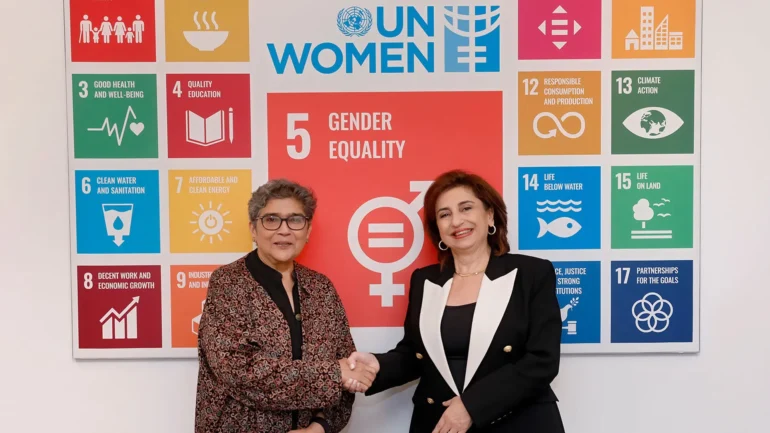

KABUL, AFGHANISTAN – Sima Bahous, Executive Director of UN Women, has called on Rabab Fatima, the newly appointed head of the United Nations Assistance Mission in Afghanistan (UNAMA), to work toward protecting the rights of Afghan women and girls.
Bahous congratulated Fatima on her appointment in a post on X on Saturday, saying she looked forward to working with her to protect the rights of Afghan women and girls, ensure their voices are heard and strengthen their leadership.
Fatima, in response, said she looked forward to continuing their “excellent partnership.”
UN Secretary-General António Guterres appointed Fatima, a Bangladeshi diplomat, as his new Special Representative for Afghanistan and head of UNAMA in July, succeeding Roza Otunbayeva of Kyrgyzstan. Fatima has more than 30 years of experience in diplomacy and international public service.
She previously served as Bangladesh’s ambassador and permanent representative to the United Nations and as the UN under-secretary-general and high representative for the Least Developed Countries, Landlocked Developing Countries and Small Island Developing States.
Fatima’s appointment comes as the rights and participation of Afghan women and girls remain a central concern for the United Nations. UN Women has reported that restrictions imposed by the Taliban authorities have significantly limited women’s access to education, employment, public life and essential services. The agency has also continued to support Afghan women’s organizations and women human rights defenders.
UNAMA has a broad mandate that includes supporting peace and stability in Afghanistan, promoting human rights and engaging with Afghan authorities and other stakeholders. Fatima will therefore take over the mission at a time when the United Nations continues to face the challenge of maintaining engagement with the Taliban while advocating for the rights of Afghan women and girls.
Fatima has not yet formally begun her duties as head of UNAMA.
Since returning to power in August 2021, the Taliban have imposed sweeping restrictions on Afghan women and girls, excluding them from secondary and higher education, severely limiting their access to employment, public spaces and healthcare, and restricting their freedom of movement. Afghanistan remains the only country in the world where girls and women are systematically barred from secondary and higher education.
UN Women says the cumulative restrictions have dismantled women’s rights across education, employment, public life, justice and healthcare, while describing the situation as the world’s most severe women’s rights crisis. Afghan women’s rights activists and international human rights organizations have increasingly described this system of institutionalized discrimination as “gender apartheid,” while UN experts have raised concerns that the systematic persecution of women and girls could amount to crimes against humanity.
The restrictions have also reduced women’s participation in public life and decision-making, making the role of UNAMA and its new leadership particularly significant in efforts to ensure that Afghan women’s voices and rights remain central to international engagement with the Taliban.

