

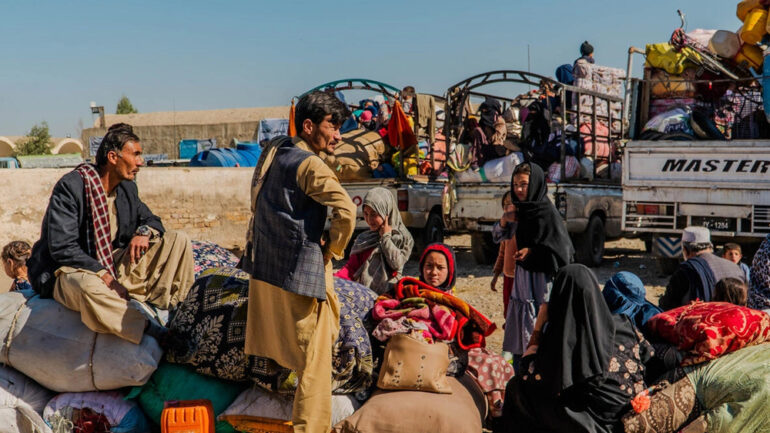

KABUL, AFGHANISTAN – United Nations human rights experts on Friday called on Pakistan to take urgent steps to identify Afghans at risk of persecution, torture or other serious harm before deciding to remove any of them, expressing grave concern over ongoing forced returns.
In a joint statement, the experts, including Richard Bennett, the UN special rapporteur on human rights in Afghanistan, said Pakistan should establish a transparent and accessible procedure allowing at-risk Afghans to come forward, undergo individual assessments and receive protection from deportation.
“Without such procedures, vulnerable individuals may remain in hiding, unable to seek protection for fear of arrest, detention or removal,” they said.
They highlighted a recent Pakistani directive ordering medical and dental institutions to remove Afghan students. The experts said the move would particularly affect female Afghan students, ending their prospects of qualifying as doctors or dentists because of the Taliban’s ban on higher education and medical training for women. At least 100 Afghan students in Pakistan would be affected, including 20 to 40 women, they said.
The experts acknowledged Pakistan’s longstanding role in hosting millions of Afghans but urged the government to halt removals of Afghan nationals, especially women and unaccompanied children, in line with the principle of non-refoulement. That obligation prohibits returning anyone to a place where they face a real risk of persecution, torture, cruel treatment, arbitrary deprivation of life or other serious irreparable harm.
Citing information they received, the experts said about 127,344 Afghans crossed back into Afghanistan between July 10 and Aug. 27, including at least 14,186 who were reportedly forcibly removed. Approximately 38,388 of those who crossed were women and children.
While welcoming a July 30 statement from Pakistan’s Ministry of Foreign Affairs that about 16,000 vulnerable Afghans had been identified and measures taken to alert law enforcement, the experts called for greater clarity on the criteria and procedures used to identify them.
Pakistan has accelerated enforcement of its Illegal Foreigners Repatriation Plan, originally launched in late 2023. In its latest directive, the Pakistani Interior Ministry instructed law enforcement agencies to intensify arrests of undocumented Afghan migrants from July 10 and ordered the immediate detention of those residing without valid visas. Provincial administrations were also directed to submit daily reports on identifications, actions taken and the current status of undocumented Afghans.
Officials in Islamabad say around 2.4 million Afghans have either returned voluntarily or been deported since the plan took effect. Data from the UN refugee agency UNHCR indicate that more than 1.15 million Afghans returned from Pakistan during 2025 alone.
Pakistan has long hosted one of the world’s largest Afghan refugee populations, with successive waves of displacement driven by decades of conflict, political upheaval and economic hardship in Afghanistan.
The large-scale returns have drawn warnings from UN agencies and humanitarian organizations about the challenges facing returnees in Afghanistan, which continues to face a severe humanitarian and human rights crisis, economic difficulties, widespread unemployment and limited access to public services under Taliban rule.
UN agencies, human rights organizations and aid groups have stressed that returns must be voluntary, safe and in line with international protections, particularly for refugees and vulnerable individuals, while calling on the international community to increase humanitarian aid and resettlement options.
The experts noted that Pakistan is not alone in removing Afghans and called on all countries to fulfill the non-refoulement obligation, which forms part of customary international law and binds all states. They also urged wealthier countries to share responsibility, including by providing political and financial support to host countries in the region, fulfilling commitments to resettle Afghans from Pakistan and continuing to offer safe pathways to those at serious risk of persecution.

