

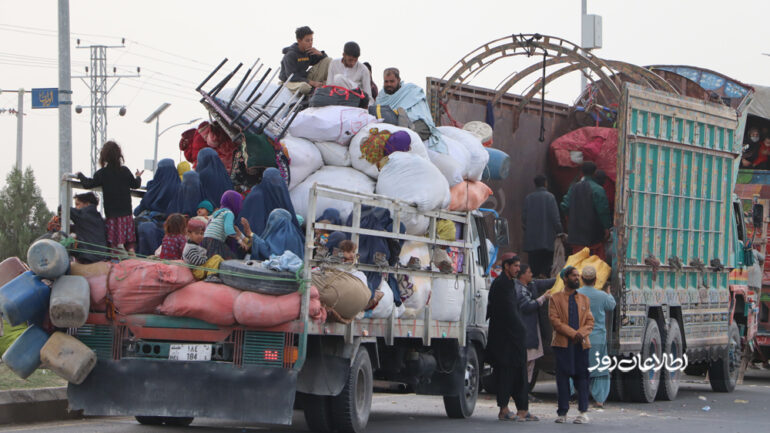

KABUL, AFGHANISTAN – More than 6.4 million Afghans have returned from Pakistan and Iran since September 2023, including over one million so far this year, the UN Children’s Fund said in a new report, amid an ongoing crackdown on Afghan refugees in neighboring countries.
In its Afghanistan Humanitarian Situation Report for July 1-31, 2026, UNICEF said women and children make up more than half of the returnees, many of whom have limited ties to their communities of origin and face heightened risks of poverty and secondary displacement.
In July alone, more than 120,660 returnees crossed major border points. The largest numbers arrived via Torkham (81,840), followed by Milak (25,696), Spin Boldak (12,265) and Bahramcha (586).
The UN agency said the large-scale returns are placing significant pressure on border facilities, host communities and already strained basic services across Afghanistan.
The mass movement comes as the country grapples with severe food insecurity and malnutrition. Around 17.4 million people require urgent food assistance, while 4.9 million women and children are expected to need treatment for malnutrition this year, UNICEF said.
In July the agency screened 1.1 million children for wasting. Of those, 104,602 were admitted for treatment. An additional 10.3 million children aged 6 to 59 months received vitamin A supplementation.
Afghanistan is experiencing one of the world’s worst humanitarian and human rights crises. Nearly half the population needs assistance, and women and girls remain stripped of most basic rights under Taliban rule.
The World Food Programme (WFP) has recently warned of a rapidly worsening child malnutrition crisis that has reached critical levels in 12 provinces. Nearly 3.7 million children and 1.2 million pregnant and breastfeeding women are projected to suffer from acute malnutrition in 2026, the agency said.
International aid has fallen sharply since the Taliban returned to power in 2021. UNICEF’s $949 million appeal for Afghanistan in 2026 was only 47 percent funded as of July. The broader United Nations appeal of $1.7 billion was only funded 30% as of late August.
Aid agencies continue to urge sustained international funding, warning that current shortages are already limiting the delivery of essential food, shelter and healthcare to millions of Afghans.

