

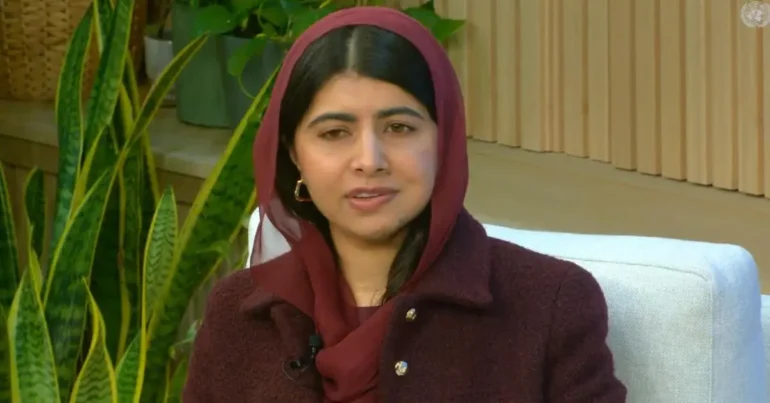

KABUL, AFGHANISTAN – Nobel Peace Prize laureate Malala Yousafzai, Ireland’s Minister for Foreign Affairs and Trade Helen McEntee, and former U.S. Ambassador for Global Women’s Issues Melanne Verveer have called on the international community to move beyond expressions of concern and take concrete action in response to the Taliban’s restrictions on women and girls in Afghanistan.
Speaking at events on Monday September 21, on the sidelines of the 81st session of the United Nations General Assembly in New York, the three figures warned against normalizing or recognizing the Taliban and stressed that Afghan women must have a meaningful role in international decisions concerning their country and their own future.
Yousafzai said five years of Taliban rule had provided sufficient evidence of how the group governs and treats women and girls. She argued that the restrictions imposed on Afghan women go beyond conventional gender discrimination and represent a system of segregation and domination. She called for the situation to be recognized as gender apartheid and urged governments to pursue legal accountability rather than limiting their response to expressions of sympathy or concern.
The Nobel laureate also criticized the exclusion of Afghan women from international discussions about Afghanistan. She said women should be present in the rooms where decisions about their lives and future are made, particularly when world leaders and governments engage with Taliban representatives. She urged international leaders to place greater trust in Afghan women than in the Taliban and to ensure that their stated commitments to gender equality are reflected in their policies.
McEntee similarly argued that international concern over the Taliban’s restrictions must be followed by practical measures. Speaking at a UN event focused on women and girls in Afghanistan, she said the international community should not allow repeated expressions of shock and anger over new Taliban decrees to substitute for action. She also opposed any recognition or normalization of the Taliban and said the international community should remain focused on protecting the rights of Afghan women and girls.
McEntee has also criticized recent European engagement with Taliban representatives, arguing that such contacts risk normalizing the group’s rule. Her comments came as international discussions over how to engage with the Taliban continue, including debates over humanitarian assistance, migration and consular issues.
Verveer, speaking at a separate UN General Assembly side event on women, peace, justice and national reconciliation in Afghanistan, also criticized the international community’s approach to engagement with the Taliban. She said engagement with the group should be clearly distinguished from support for the Afghan people and civil society and should not lead to normalization or recognition of the Taliban.
She further criticized the exclusion of Afghan women from international diplomatic and political processes concerning Afghanistan. Verveer argued that discussions about issues such as the economy and trade cannot be separated from their impact on women and that Afghan women’s voices must be represented in decision-making processes. The event, held at UN headquarters on September 21, brought together officials, Afghan civil society representatives and advocates to discuss peace, justice, accountability and women’s political participation.
Verveer also raised concerns about the international community’s continued engagement with the Taliban while women and girls remain excluded from education, employment, public life and access to justice. She argued that diplomatic language or changes in how Taliban authorities are described should not obscure the need for meaningful participation of Afghan women and safeguards against normalizing the group.
The speakers’ remarks came as the United Nations continues to describe Afghanistan as facing a severe humanitarian, socioeconomic and human rights crisis. According to the UN, more than 2.6 million girls have been denied access to secondary education since the Taliban takeover, while more than 200 laws and decrees have contributed to the exclusion of women and girls from public life.
The calls for greater international action come five years after the Taliban returned to power in August 2021 and imposed sweeping restrictions on women and girls, including bans on secondary and higher education and restrictions on employment and participation in public life.
The UN General Assembly side events this week have placed the rights of Afghan women and girls, accountability and the nature of international engagement with the Taliban among the issues under discussion.

