

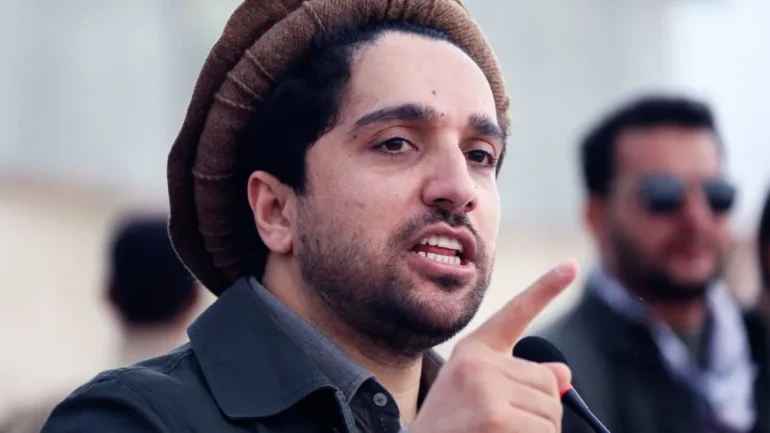

KABUL, AFGHANISTAN – Anti-Taliban political and military figures have emphasized the need for greater unity among forces opposed to the Taliban, saying that their differences should not prevent them from pursuing a common political future for Afghanistan.
The remarks were made on Sunday, Sept. 13, during an online gathering held as part of the programs marking “Shaheed Week,” which commemorates the 25th anniversary of the assassination of Ahmad Shah Massoud and the 15th anniversary of the assassination of Burhanuddin Rabbani.
Speakers at the meeting included Ahmad Massoud, leader of the National Resistance Front of Afghanistan; Fawzia Koofi, a former member of parliament; Yasin Zia, leader of the Afghanistan Freedom Front; Mohammad Mohaqeq, leader of the People’s Islamic Unity Party of Afghanistan; Abdul Rashid Dostum, leader of the National Islamic Movement of Afghanistan; and Salahuddin Rabbani, leader of Jamiat-e Islami Afghanistan.
Ahmad Massoud said collective and joint resistance against the Taliban was necessary, arguing that the group was seeking to create divisions and mistrust among its opponents. He said the response to such efforts should be unity and added that the Taliban feared the unity of their opponents more than anything else.
Massoud said the Taliban were also attempting to widen the distance between anti-Taliban forces and the Afghan population. He claimed that resistance against the Taliban had expanded to different parts of Afghanistan and was becoming “more alive” each day.
Referring to the killing of several commanders of the National Resistance Front by the Taliban, Massoud said their deaths demonstrated that the resistance movement had a presence on the ground.
He also rejected the Taliban’s claim that their opponents lacked a unified narrative. Massoud said the roadmap and objectives of anti-Taliban forces had been clear from the beginning, with democracy and the rule of the people forming a common goal.
“People’s rule,” he said, was a fundamental principle distinguishing the opponents of the Taliban from the group itself. He added that although different anti-Taliban groups might have their own political plans, they could share the broader objective of allowing Afghans to determine their own future.
Massoud said he would accept Taliban supreme leader Hibatullah Akhundzada as president if he were elected through a legitimate election. However, he rejected the Taliban’s current rule, saying that Akhundzada was governing through force and that the Taliban government was illegitimate both legally and, in his view, under Islamic principles.
Massoud said Afghanistan’s future should be determined by its people. He argued that once this objective was achieved, Afghans would receive their rights and there would no longer be a need for the Taliban as a political force.
Massoud launched his opposition to the Taliban from Panjshir after the group returned to power in August 2021. The Taliban subsequently captured the province, but the National Resistance Front has continued armed attacks against the group and has lost several senior commanders in the conflict.
Fawzia Koofi, a former member of Afghanistan’s parliament, said a “post-Taliban Afghanistan” would eventually emerge and urged political figures opposed to the Taliban to prepare for that period.
Koofi called on anti-Taliban politicians to turn their ideological differences into a source of strength rather than division. She said Afghanistan’s diversity was one of its defining characteristics and argued that political differences should not prevent opposition groups from working toward common objectives.
She also highlighted the role of Afghan women in opposing the Taliban. Koofi said women’s resistance was important in preventing the Taliban from gaining international legitimacy.
She said Afghanistan’s history would remember the women who resisted Taliban restrictions and transformed their homes into spaces of struggle after the group barred women and girls from education and imposed extensive restrictions on their participation in public life.
Koofi, however, criticized political figures for failing to give women a meaningful place in their own political efforts. She said Afghan women were not only living under the restrictions of the Taliban but were also being ignored by political actors opposed to the group.
Yasin Zia, leader of the Afghanistan Freedom Front, said the armed struggle against the Taliban would continue and rejected the prospect of negotiations or peace with the group under current circumstances.
Zia said the armed struggle was not pursued for its own sake, but to achieve justice in Afghanistan.
He said the Afghanistan Freedom Front was fighting to transfer political power from the Taliban to the Afghan people and stressed the need to prepare for the country’s political situation after the Taliban.
Zia claimed that the situation was increasingly moving beyond the Taliban’s control and accused the group of using YouTubers and psychological warfare to portray itself as being firmly in control of Afghanistan.
He also rejected reports of serious divisions among anti-Taliban forces, saying there was no fundamental problem among the groups opposing the Taliban.
At the same time, Zia distinguished between former officials of the Islamic Republic who are now outside Afghanistan and those actively opposing the Taliban. He argued that simply having served in the former government did not necessarily make someone an opponent of the Taliban.
Zia also rejected warnings that the fall of the Taliban could lead to widespread chaos. Referring to the Taliban’s past and current policies, he questioned whether opponents of the group could be considered incapable of governing when, in his view, the Taliban had themselves presided over violence, destruction and insecurity.
Mohammad Mohaqeq, leader of the People’s Islamic Unity Party of Afghanistan, described the situation under Taliban rule as disastrous for Afghanistan’s more than 40 million people and called for a return to what he described as “jihad and resistance” as a means of escaping the country’s current situation.
Mohaqeq said Afghanistan had been in a stronger position when “the banner of jihad and resistance” was present. He argued that former mujahideen had abandoned their weapons after being attracted by what he called the “glitter of America,” resulting in the loss of their influence and status.
He accused the United States and the Taliban of having reached an agreement that paved the way for the group’s return to power, describing the Taliban’s takeover as the result of a “shameful collusion.”
Mohaqeq said conditions under Taliban rule had become increasingly difficult for Afghans, particularly Hazaras and Shia Muslims, whom he said faced attacks and growing pressure.
He called on the international community not to make deals with the Taliban at the expense of the Afghan people and urged countries to support Afghans in their efforts to achieve freedom rather than strengthening the Taliban through engagement.
Mohaqeq fought against the Taliban in northern Afghanistan during the group’s first period in power. He left Afghanistan after the Taliban’s return in 2021 and is currently based in Turkey.
Abdul Rashid Dostum, leader of the National Islamic Movement of Afghanistan, took a somewhat different position on the question of negotiations, saying the Taliban should agree to talks to prevent further bloodshed.
Dostum said negotiating delegations representing factions opposed to the Taliban were prepared to enter negotiations. He warned that the current situation would not continue indefinitely and predicted that armed fronts against the Taliban would increase.
He said Afghans needed a unified voice and leadership for any broader uprising against the Taliban and warned the group not to take actions that could push the country into a situation beyond its control.
Salahuddin Rabbani, leader of Jamiat-e Islami Afghanistan, accused the Taliban of treating Afghanistan as a territory seized as spoils of war and said the group was continuing what he described as a “scorched-earth policy.”
Rabbani said the Taliban’s approach to Afghanistan as a form of property or spoils risked deepening tensions among the country’s ethnic communities.
He also condemned the Taliban’s ban on education for women and girls, calling it unjust, un-Islamic and inhumane. However, Rabbani said Afghanistan’s crisis was broader than the issue of women’s education and required a wider political response.
Rabbani also criticized the Taliban’s management of Afghanistan’s natural resources, saying the group was failing to take the rights of local communities into account when extracting minerals.
He warned that the uncontrolled extraction of minerals without adequate environmental safeguards could have long-term consequences for local communities and future generations.
Rabbani urged anti-Taliban groups to concentrate on their “common aspiration” and said every effort aimed at strengthening unity among opponents of the Taliban should be valued.
The online gathering was part of events organized during Shaheed Week by Afghan political and opposition figures to commemorate Ahmad Shah Massoud and Burhanuddin Rabbani, two prominent figures of Afghanistan’s anti-Taliban political and military history.
The 25th anniversary of Massoud’s assassination and the 15th anniversary of Rabbani’s assassination have provided an occasion for political figures opposed to the Taliban to discuss Afghanistan’s current political and security situation, the role of resistance movements and their vision for the country after the Taliban.
Although the speakers differed over the means of confronting the Taliban — ranging from armed resistance to negotiations and political mobilization — a central theme of the meeting was the need for greater coordination among the Taliban’s opponents and preparation for a political order beyond the group’s rule.
The Taliban have repeatedly called on political opponents living abroad to return to Afghanistan and live under its rule. The group has nevertheless rejected negotiations with its opponents over the country’s political future, maintaining that its government is sufficiently inclusive.

