

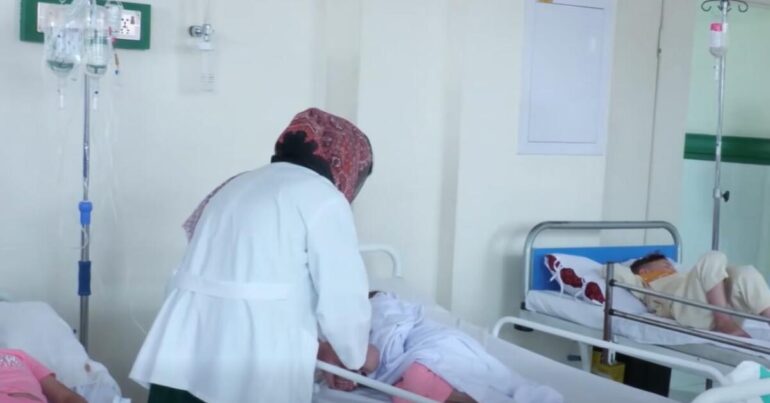

KABUL, AFGHANISTAN – Local sources in Kabul’s Dasht-e-Barchi, a predominantly Hazara and Shia area in western Kabul area say an unidentified infectious illness resembling food poisoning has spread among residents and is continuing to affect more people.
According to the sources, the illness began spreading last week in the Wali Asr Township area of Qala-e-Naw and parts of Erfani Township in western Kabul.
Sources said the initial symptoms include diarrhea, fever and headaches, which later develop into bloody diarrhea.
A source told KabulNow that hospitals and pharmacies in western Kabul are crowded with patients, most of whom are children and elderly people.
The source said his two young children and father had contracted the illness but had not recovered despite seeking treatment at several health facilities.
He said he took his children to Ataturk Hospital in Kabul for treatment, but they were not treated and were sent back home.
The source also said that on Sunday, August 23, following an announcement at a local mosque, a number of patients were taken to Mohammad Ali Jinnah Hospital. However, the patients reportedly developed reactions to medication administered at the hospital and were subsequently transferred to Kabul Infectious Diseases Hospital.
He estimated that around 20 men and between 20 and 30 women were among the patients transferred for treatment.
According to the source, doctors at the Infectious Diseases Hospital have only administered intravenous fluids and have not prescribed other medication. He said doctors had not explained what the illness was or how it should be treated.
A nurse at a private hospital in western Kabul also said that no effective treatment for the illness had so far been identified.
The nurse said patients were not responding to treatment, with medication having little effect and symptoms such as abdominal cramps and vomiting recurring every few hours.
Another source in western Kabul told KabulNow that a number of students at private schools had also contracted the illness. The source said most of those affected were people who use untreated water supplied by mobile water tankers.
According to the source, severe water shortages in western Kabul have forced many families in Wali Asr and Erfani townships to purchase drinking water from mobile tankers.
Taliban health officials have not yet commented on reports of the illness spreading in western Kabul.
The reported illness comes as residents of Dasht-e-Barchi, a predominantly Hazara and Shia area of western Kabul, have also faced a series of recent security incidents. On August 22, an explosion caused by a hand grenade was reported near Nanwa-ei Station, opposite Paiwand Market, although no casualties were immediately reported.
Earlier, on August 17, an explosion inside the compound of Sham-e-Hedayat private school in Mahdia Township injured at least 52 people, most of them children. Emergency Hospital said 35 injured children, aged between 10 and 14, were taken to the facility, with at least three requiring surgery.
The combination of a reported infectious illness, limited access to healthcare and recent explosions has placed additional pressure on residents of Dasht-e-Barchi, where communities already face significant challenges in accessing essential health and public services.
In its latest report released in June, U.N. Secretary-General Antonio Guterres recorded 3,687 safety and security incidents across Afghanistan in the three months from February to April this year, a rise of more than 57% compared with the same period last year.

