

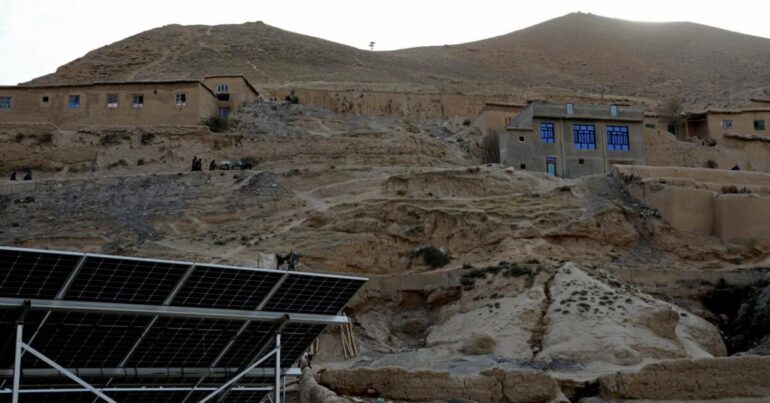

KABUL, AFGHANISTAN – The United Nations Development Programme (UNDP) says access to reliable electricity remains one of the biggest challenges across Afghanistan, affecting healthcare, education, livelihoods and local economic growth.
In a report, the UNDP said around 40% to 42% of Afghanistan’s population has access to the national electricity grid. However, nearly 90% of this access is concentrated in urban areas, leaving rural communities largely without reliable electricity services.
Afghanistan currently relies heavily on electricity imported from neighboring countries. The imported supply remains limited, with major cities also facing significant electricity shortages.
The UNDP said expanding the national electricity grid to remote areas is highly challenging. As a result, decentralized renewable energy systems are among the most practical and sustainable solutions for improving access to electricity in underserved communities.
The agency said it has launched renewable energy projects across Afghanistan, including the installation of solar power systems in schools and healthcare facilities.
According to the report, one of the most notable changes has been the use of solar energy in women’s markets. With solar power systems and battery storage, women entrepreneurs can now keep their businesses open for longer, work in better conditions and continue their economic activities during power outages.
The UNDP said solar energy is contributing to a major transformation in Afghanistan by improving essential services such as healthcare and education, supporting employment and livelihoods, empowering women and helping the country move beyond resilience toward reconstruction and economic development.
Afghanistan continues to face widespread electricity shortages. According to the Taliban-run Da Afghanistan Breshna Sherkat, only 40% of the population has access to power. The country imports over 70% of its electricity, mainly from Uzbekistan, Tajikistan, Turkmenistan, and Iran — a supply often disrupted due to rising domestic demand in those countries.
Afghanistan’s limited access to reliable electricity remains a major barrier to development, particularly in rural areas where weak infrastructure and poverty make it difficult to expand conventional power networks.
Expanding affordable renewable energy could therefore play an important role in improving access to basic services and creating economic opportunities for communities that remain disconnected from the national grid.

