

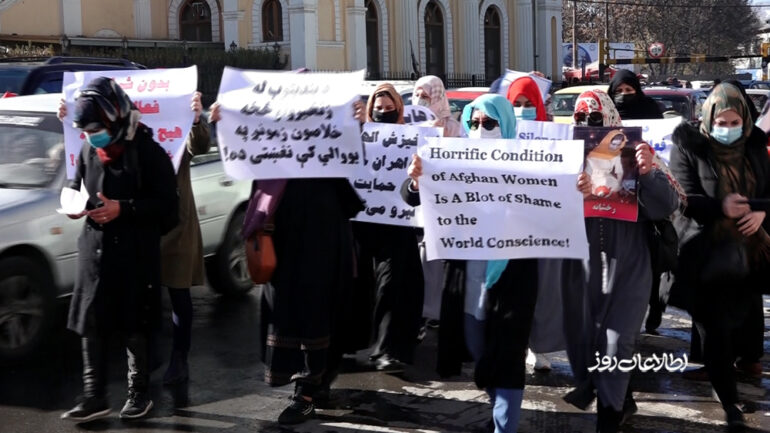

KABUL, AFGHANISTAN – Amnesty International says that the Taliban’s newly introduced “Police Law” further entrenches the already suffocating climate of repression and severe restrictions on fundamental freedoms in Afghanistan.
The law, known as “Qanun-e Shurta,” consists of five chapters and 53 articles. It was published by the Taliban Ministry of Justice on Aug. 22 after being approved by the group’s reclusive supreme leader, Hibatullah Akhundzada.
Article 50 of the law explicitly prohibits all forms of demonstration across Afghanistan, without detailing any exceptions. Article 41 grants Taliban police broader powers when dealing with suspects and states that security officials may “threaten with death” those accused of major crimes. Article 14 bans photography or video recording during the implementation of punishments.
In a statement posted on X on Wednesday, Amnesty described the law as yet another sweeping assault on human rights in Afghanistan, with far-reaching implications for due process, fair trial rights, freedom of expression, privacy, child rights and policing powers.
“Among its most egregious provisions is a blanket ban on all forms of demonstrations, a flagrant violation of the right to freedom of peaceful assembly,” the rights group said.
The rights group also pointed to the Taliban’s previous treatment of protesters and political opponents, accusing the group of using arbitrary arrests and detention, torture and other ill-treatment, and enforced disappearances.
Amnesty International called on the Taliban to immediately repeal the law and other decrees and policies that conflict with Afghanistan’s obligations under international law.
Since returning to power in 2021, the Taliban have introduced and implemented a range of laws, decrees and policies based on their strict interpretation of Sharia. These measures have significantly affected public life, including restrictions on education and employment for women and girls, limitations on media freedom, and strict social regulations.
In August 2024, the Taliban formally codified a number of existing restrictions through their Law on the Propagation of Virtue and Prevention of Vice. That law further regulated women’s clothing, movement and public conduct while expanding the authority of morality-policing officials.
The Taliban administration remains largely unrecognized by most countries. Its policies have drawn concern from the United Nations, international human rights organizations and many governments, including some Muslim-majority states, which have repeatedly called for the reversal of decrees and laws they deem discriminatory and contrary to international law.
The Taliban defend all such laws and decrees as based on Islamic law and dismiss international criticism as interference in Afghanistan’s internal affairs.

