

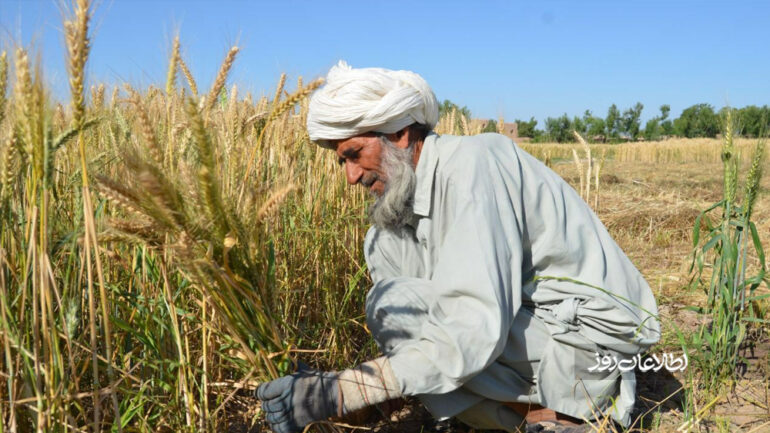

KABUL, AFGHANISTAN – The United Nations Food and Agriculture Organization (FAO) warned on Thursday that rising fertilizer prices, driven by disruptions to global markets linked to the Middle East crisis, are threatening Afghanistan’s 2027 wheat harvest.
In a statement on Thursday, FAO said the impact could be severe for Afghan farmers, as wheat production in the country’s low-fertility soils relies heavily on adequate supplies of diammonium phosphate (DAP) and urea fertilizers.
“Winter wheat is Afghanistan’s principal staple crop and accounts for more than two-thirds of annual fertilizer demand,” the agency said, warning that higher prices could force farmers to reduce fertilizer use or cultivate smaller areas.
FAO said such measures could lead to lower wheat production, reduced household food availability, and increased debt among farming families.
The agency added that the impact would likely be greatest on households already facing economic hardship, including women-headed families, returnee households, and rural communities with limited ability to absorb additional financial pressures.
“Afghanistan’s farmers have an opportunity to benefit from a stronger agricultural season after a harsh drought year, but rising fertilizer prices threaten to put that opportunity out of reach for many of the families who need it most,” said Richard Trenchard, FAO’s representative in Afghanistan.
“This is not a supply crisis; it is an affordability crisis at one of the most important moments in the agricultural calendar. Fertilizer is available, yet too many farmers cannot afford to buy it,” he added.
FAO has appealed for $38.3 million in urgent funding to help up to 600,000 farming households across Afghanistan access fertilizer and certified wheat seeds ahead of the winter planting season.
The agency said securing funding by mid-September would allow farmers to obtain the necessary inputs on time and help protect wheat production, food security gains, and efforts to reduce humanitarian needs in a country where a large share of the population depends on agriculture for income.
Agriculture remains a key part of Afghanistan’s economy, with a large portion of the population relying on farming and livestock for their livelihoods. As a landlocked country with limited access to international trade routes, Afghanistan is particularly vulnerable to disruptions in global supply chains and rising import costs for essential agricultural goods.

