

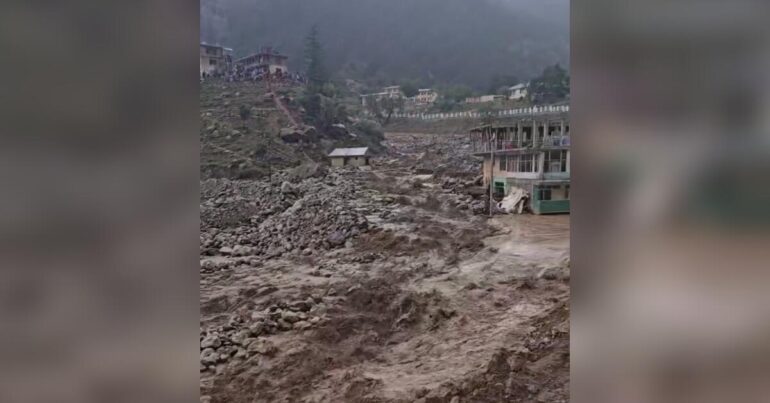

KABUL, AFGHANISTAN – Flash floods triggered by heavy rainfall have damaged around 200 residential houses in Afghanistan’s eastern Nuristan province, local sources said, adding that the full extent of the damage and any possible casualties remained unclear.
The floods swept through parts of Barg-e-Matal district on Monday after heavy rainfall, damaging residential areas, destroying or partially damaging homes, and disrupting daily activities, according to the sources.
Local sources said casualties were feared, but no deaths or injuries had been confirmed by Monday evening.
Taliban authorities in Nuristan have not yet commented on the reported flooding.
The latest flooding comes as eastern Afghanistan continues to experience periods of heavy rainfall that have triggered a series of destructive floods across mountainous provinces. Nuristan, which borders Pakistan, is particularly vulnerable to flash floods because of its steep terrain, narrow valleys and limited infrastructure.
Just two weeks ago, severe flooding hit Parun, the provincial capital of Nuristan, killing at least 24 people and injuring 36 others. The disaster caused widespread destruction to homes, government facilities, roads, irrigation networks and agricultural land. Taliban officials at the time estimated financial losses at approximately $35 million.
Heavy rainfall has also affected several other provinces in recent days, particularly in eastern and southern Afghanistan. Floodwaters have damaged farmland, killed livestock, washed away roads and disrupted transportation links, creating additional hardships for rural communities that depend heavily on agriculture and livestock for their livelihoods.
Afghanistan is highly exposed to natural disasters, including floods, droughts, earthquakes and landslides. Aid agencies have repeatedly warned that remote mountainous regions face heightened risks during emergencies because difficult terrain and inadequate infrastructure often delay rescue operations and the delivery of humanitarian assistance.
The recurring disasters have further strained Afghanistan’s humanitarian situation, which remains among the world’s most severe. Millions of Afghans continue to rely on humanitarian aid as the country grapples with economic challenges, climate-related shocks and declining international funding for relief efforts.

