

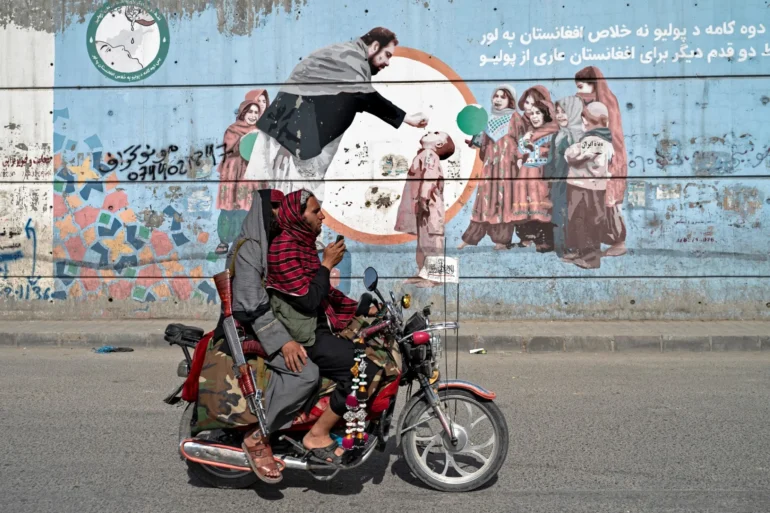

KABUL, AFGHANISTAN – The World Health Organization (WHO) has reported four new positive cases of polio in Afghanistan.
In a report published on Sunday, August 23, the WHO said two of the new cases were recorded in the Shindand and Adraskan districts of Herat Province, while one case was identified in Dila District of Paktika Province and another in Raghistan District of Kandahar Province.
According to the WHO report, the newly confirmed cases have brought the total number of human polio cases recorded in Afghanistan in 2026 to 19.
Earlier, on August 13, health officials reported another polio case in southern Uruzgan province involving a two-year-old girl from the Sarkhom area of Tirinkot. The girl had developed symptoms several months earlier, and her test was later confirmed positive.
The case was among the latest reported infections before the WHO announced four additional cases, further highlighting the continued spread of polio in Afghanistan.
The WHO has also reported 58 positive environmental samples for polio so far this year.
In 2025, Afghanistan recorded 21 confirmed human cases of polio and 94 positive environmental samples.
Afghanistan and Pakistan are currently the only countries in the world where wild poliovirus remains endemic.
The WHO said Afghanistan and Pakistan have recorded a combined 161 positive environmental samples for polio so far this year, with 53 detected in Afghanistan and 108 in Pakistan.
Polio is a highly contagious viral disease that mainly affects children under the age of five. It can spread through contaminated food and water or through close contact with an infected person. The disease can lead to permanent paralysis and, in severe cases, death. Although there is no cure for polio, vaccination can effectively prevent the infection and its serious consequences.
Polio vaccination campaigns in both countries continue to face obstacles, including misinformation and conspiracy theories that contribute to vaccine hesitancy. Among the false claims are allegations that polio vaccines cause infertility or are being used for foreign intelligence activities.
In Afghanistan, the Taliban faces significant challenges in eliminating polio, following years in which the group restricted eradication efforts and health workers involved in vaccination campaigns were targeted, particularly in the country’s southern provinces.
The continued detection of new cases and positive environmental samples highlights the ongoing challenges to polio eradication in Afghanistan. Health authorities and international organizations continue to rely on vaccination campaigns, surveillance and early detection to prevent further transmission of the virus, particularly among children who remain most vulnerable to the disease.

