

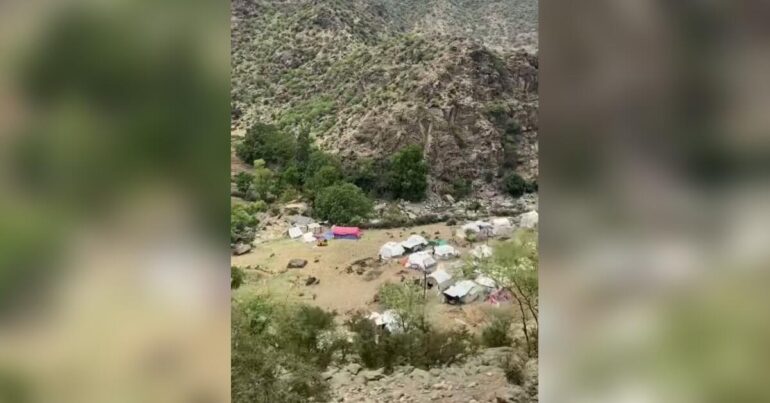

KABUL, AFGHANISTAN – Flash floods triggered by heavy rainfall killed two people in Afghanistan’s eastern Kunar province on Monday, local sources said, as several eastern provinces continue to experience repeated flooding that has caused deaths, injuries and widespread damage.
The latest floods swept through parts of Nurgal district in Kunar on Monday evening, August 3, affecting residents in the area and damaging homes and other properties, according to local sources.
The sources said the flooding also damaged temporary shelter camps established for families affected by a recent earthquake in the province.
The Taliban-run disaster management authority in Kunar confirmed the two deaths and said the floods caused significant financial losses for local residents. The authority did not provide details on the scale of the damage but warned that more rainfall and flooding could occur in the coming days.
The latest flooding follows weeks of severe weather across Afghanistan. Over the past month, floods have affected more than 20 provinces, causing casualties, displacement, and the destruction of homes, farmland, and infrastructure.
In eastern Nuristan province, floods a day earlier damaged at least 200 homes, according to local sources. Two weeks ago, severe flooding in Parun, the provincial capital of Nuristan, killed at least 24 people and injured 36 others, while causing an estimated $35 million in financial losses, according to Taliban authorities.
Afghanistan has become increasingly vulnerable to climate-related disasters, including flash floods, prolonged droughts, landslides, and extreme winter conditions. The United Nations has identified Afghanistan as one of the countries most vulnerable to climate change, despite contributing only a small share of global greenhouse gas emissions.
Years of conflict, underdeveloped infrastructure, and declining humanitarian funding have weakened the country’s ability to prepare for and respond to natural disasters. The recurring disasters have added further pressure to Afghanistan’s humanitarian situation, which remains among the world’s most severe.
Aid organizations have called for greater investment in early-warning systems, climate-resilient infrastructure and disaster preparedness measures to reduce the impact of recurring crises and support vulnerable communities affected by natural disasters.

