

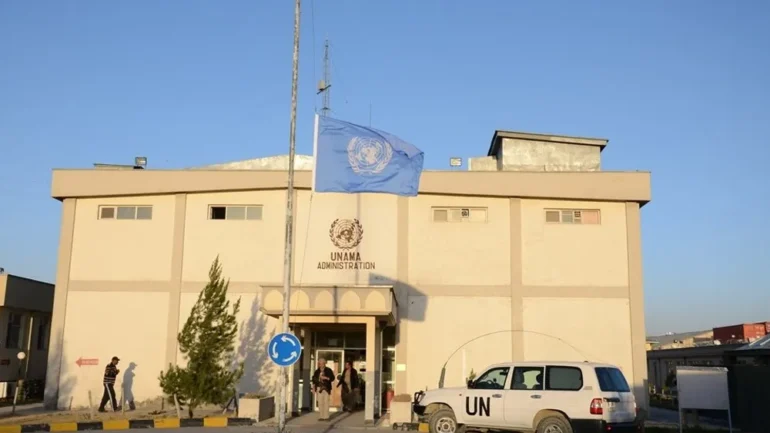

KABUL, AFGHANISTAN – The advocacy group Women for Afghanistan, in consultation with 30 organizations and around 450 Afghan women, has sent an open letter to the United Nations Secretary-General and the UN Security Council calling for the establishment of a structured mechanism under the United Nations Assistance Mission in Afghanistan (UNAMA) to engage Afghan women, democratic forces, civil society representatives, and other political actors inside and outside the country.
The letter, submitted alongside the appointment of UNAMA’s new head, states that UNAMA’s engagement with Afghan women “must go beyond consultation” and ensure their meaningful participation in shaping Afghanistan’s political future.
The signatories said UNAMA has made less progress than expected in facilitating political dialogue among Afghan groups, regional actors, and the international community to advance an inclusive, representative, participatory, and accountable system of governance in Afghanistan.
According to the letter, UNAMA has yet to establish a regular, structured, and genuinely inclusive mechanism that enables meaningful participation by all stakeholders with an interest in Afghanistan.
The signatories also criticized the lack of transparency, accountability, and consultation surrounding the development and implementation of the so-called “Mosaic Approach.”
The women urged the United Nations to implement the recommendations of the Independent Assessment on Afghanistan by appointing a UN Special Envoy with a clear mandate to advance sustained diplomacy among all stakeholders, including women, political actors, regional countries, and international partners, with the goal of reaching a comprehensive and peaceful political settlement.
They also called on the UN to establish clear, measurable, and time-bound benchmarks to assess progress or setbacks in Afghanistan’s political process.
According to the letter, these benchmarks should include specific criteria and timelines, with any failure to achieve meaningful progress referred to the Security Council for corrective action. They further requested that regular assessments be reflected in the UN Secretary-General’s reports and in both public and private Security Council meetings.
The letter states that Afghan women and citizens expect the United Nations to act as an impartial, principled, and accountable partner by hearing the voices of marginalized communities and ensuring that Afghans have a meaningful role in shaping decisions about their country’s future.
The signatories urged the UN Security Council to fully support the implementation of the Independent Assessment, provide renewed leadership, and help establish a credible political pathway toward peace, stability, and prosperity in Afghanistan.
They also expressed their readiness to contribute constructively to efforts aimed at building a pluralistic, democratic, and free Afghanistan.
Since the Taliban returned to power in August 2021, the United Nations has sought to facilitate Afghanistan’s reintegration into the international community through an inclusive political process tied to compliance with international obligations and human rights standards.
However, those efforts have produced limited tangible progress, while UNAMA has faced persistent criticism for engaging with the Taliban without ensuring meaningful participation by Afghan women and other excluded groups.
The letter comes as the newly appointed head of UNAMA assumes leadership of the mission at a time of growing scrutiny over the UN’s Afghanistan strategy. One of the most debated initiatives is the Mosaic Approach, a framework reportedly intended to coordinate parallel discussions on political, humanitarian, economic, and human rights issues involving the Taliban and other stakeholders.
Critics argue that the process has lacked transparency and meaningful consultation with Afghan civil society, particularly women, raising concerns that key decisions about Afghanistan’s future are being shaped without the participation of those most affected by them.
Since returning to power, the Taliban have imposed a wide range of restrictions on Afghan women and girls, including banning girls from secondary and university education, restricting women’s employment in many sectors, limiting freedom of movement through strict rules on travel and dress, and excluding women from public and political life.
The UN and many human rights organizations have described these policies as a systematic form of gender-based oppression, with some experts and UN officials referring to them as gender apartheid because they aim to institutionalize the exclusion and subordination of women through state policies.
UNAMA has repeatedly documented these restrictions, condemned violations of women’s rights, and engaged with Taliban authorities to demand the reversal of discriminatory measures. The mission has also supported human rights monitoring, provided platforms for Afghan women to raise concerns, and advocated for women’s participation in political processes.
However, UNAMA has faced criticism from Afghan women activists and civil society groups, who argue that its engagement with the Taliban has not produced meaningful change and that the mission has not done enough to ensure women’s voices are included in negotiations about Afghanistan’s future.

