


KABUL, AFGHANISTAN – The United Nations Assistance Mission in Afghanistan (UNAMA) has released its latest update on the human rights situation in Afghanistan, documenting a continued deterioration of fundamental rights during the period from April to June 2026.
The report highlights intensified restrictions on women and girls, widespread arbitrary arrests, continued corporal punishment, shrinking civic space, and increasing limitations on religious freedom and media independence.
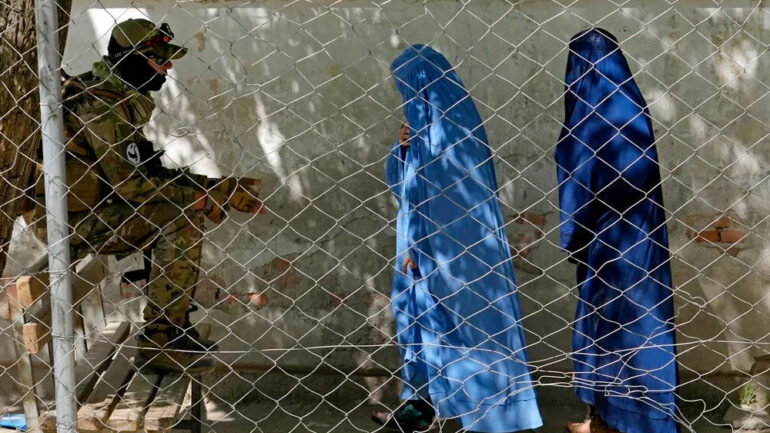
One of the report’s central findings concerns the continued erosion of women’s rights. UNAMA documented the enforcement of stricter dress code regulations by the Taliban’s Ministry for the Propagation of Virtue and Prevention of Vice (PVPV). UNAMA reported that the Taliban significantly intensified enforcement of its hijab regulations in Herat during June. Between 6 and 8 June, at least 30 women and girls were arrested for allegedly failing to wear the prescribed chador and were released only after pledging to comply with the dress code.
A peaceful protest against the arrests on 9 June was violently dispersed, leaving one boy dead, at least four people injured, and 17 people detained. Following the crackdown, authorities increased surveillance, including phone searches for protest-related content, while many women avoided public spaces for fear of arrest. During the reporting period, PVPV officials also visited shops and health facilities across several provinces, instructing business owners and healthcare providers not to serve women unless they were accompanied by a male guardian (mahram). UNAMA recorded multiple incidents in which women, as well as male shopkeepers assisting them, were threatened, detained, or punished for violating these restrictions.
The report also highlights growing concerns over women’s legal rights following the publication of Decree No. 18, titled the “Code on Judicial Separation of Spouses.” According to UNAMA, the decree strengthens male authority over marriage and divorce while imposing significant barriers for women seeking judicial separation. The decree also conditions the validity of certain marriages on a guardian’s approval and contains provisions that UNAMA says implicitly sanction child marriage and limit opportunities for children forced into marriage to seek annulment. Taliban officials defended the decree, describing it as consistent with their interpretation of Islamic law despite widespread criticism.
Restrictions on women’s participation in public life remain extensive. As of June 30, Afghan women had been barred from entering United Nations premises for 296 consecutive days. The report also notes that no women or girls participated in the country’s public university entrance examinations, as the ban on female higher education remains in place.
UNAMA also documented the continued use of judicial corporal punishment across Afghanistan. Between April 1 and June 30, at least 137 individuals—including 112 men and 25 women—were subjected to corporal punishment ordered by Taliban courts. While public announcements of these punishments have declined since late April, UNAMA verified that floggings continued in several provinces, although often with fewer public spectators than in previous years. One documented case involved six men and one woman publicly lashed in Balkh Province after convictions related to breaking the Ramadan fast and alleged illicit relations.
The report records serious security and protection concerns for minority communities. On April 10, unidentified gunmen attacked civilians gathered near the Sayed Mohammad Aqa Shrine, a Shia religious site in Herat Province. Twelve civilians, including women and a child, were killed, while fourteen others were injured. No group claimed responsibility for the attack.
Former Afghan government officials and members of the former Afghan National Defense and Security Forces (ANDSF) also remained vulnerable, according to UNAMA. During the reporting period, the mission documented at least 29 cases of arbitrary arrest and detention, five cases of torture or ill-treatment, and eight killings involving former security personnel. The report also notes that individuals forcibly returned to Afghanistan continue to face significant risks, citing the disappearance of a former Afghan National Army officer shortly after his deportation from Iran.
The report further describes the increasingly restrictive environment facing Afghanistan’s media sector. UNAMA documented the closure or suspension of several media outlets, including Radio Bamyan and educational programming on Lawang Radio. Several journalists were detained by the General Directorate of Intelligence, while searches of media offices resulted in the confiscation of equipment and the questioning of numerous staff members. Financial pressures also forced several radio stations to cease operations.
The activities of the Ministry for the Propagation of Virtue and Prevention of Vice continued to have a significant impact on daily life. Between April and June, UNAMA documented at least 389 arbitrary arrests and detentions and 65 incidents of ill-treatment carried out by ministry personnel. These actions primarily targeted individuals accused of violating Taliban rules concerning women’s hijab, men’s beard length or hairstyles, and playing or listening to music.
The report also raises concerns about religious freedom. In Badakhshan Province, Taliban authorities continued closing Ismaili places of worship, while Shia communities faced restrictions during Ashura commemorations. UNAMA documented cases in which mobile networks were suspended during Ashura, religious ceremonies were limited to designated locations, and dozens of Shia men were detained for displaying Ashura flags.
In addition, UNAMA notes several developments in the administration of justice, including the publication of new laws and legal codes, revised appeal procedures, and continued reliance on mediation in homicide cases. During the reporting period, Taliban courts also issued numerous announcements emphasizing mediation as a means of resolving criminal cases, while new legislation governing judicial procedures and religious preaching entered into force.
Overall, UNAMA concludes that the human rights situation in Afghanistan remained deeply concerning during the second quarter of 2026. The report documents continuing restrictions on women’s rights and freedoms, increasing limitations on civic and religious life, pressure on independent media, abuses against former government personnel, and the continued use of corporal punishment, underscoring the persistent deterioration of fundamental rights under Taliban rule.

