

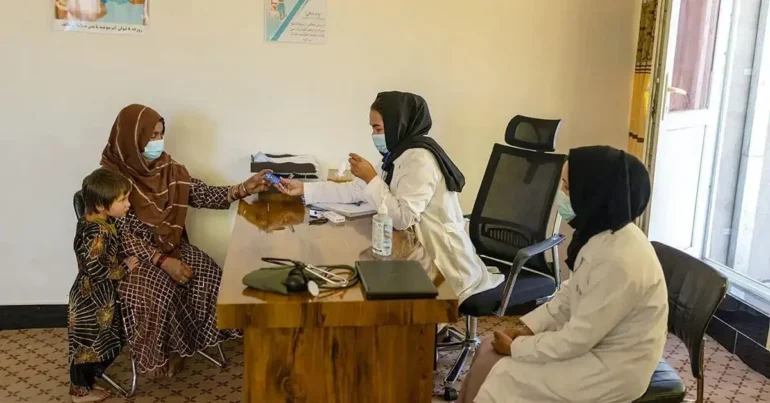

KABUL, AFGHANISTAN – The United Nations Office for the Coordination of Humanitarian Affairs (OCHA) has warned that millions of people in Afghanistan could lose access to life-saving services without immediate financial support for humanitarian programs.
In a post on X on Sunday, July 26, OCHA called for increased funding for humanitarian projects in Afghanistan, warning that declining resources have placed nutrition programs for 5.7 million children and mothers in 2026 at risk.
The UN agency emphasized that every child deserves the opportunity to grow up healthy and strong, issuing the warning during Afghanistan’s peak malnutrition season.
Two weeks earlier, the United Nations Children’s Fund (UNICEF) warned that as the peak malnutrition season and food insecurity period approaches, 3.7 million children in Afghanistan are at risk of malnutrition.
UNICEF reported that acute malnutrition has worsened in 26 of Afghanistan’s 34 provinces compared with 2025, driven by increasing food insecurity, poor diets, and economic hardship affecting families.
The agency warned that young children are already experiencing signs of nutritional stress ahead of the peak malnutrition season, with many facing reduced food variety, fewer meals, and limited access to nutrient-rich foods. Children under the age of two are among the most affected, accounting for 83% of severe acute malnutrition cases and 77% of moderate acute malnutrition cases in Afghanistan.
Afghanistan remains one of the world’s largest and most protracted humanitarian crises, with millions of people dependent on aid. The UN has said nearly 22 million people in the country require humanitarian assistance this year. However, aid agencies continue to face significant funding shortages, raising concerns over the sustainability of health, nutrition and food assistance programs.
The forced deportation of Afghan migrants from neighboring countries, particularly Iran and Pakistan, has further intensified Afghanistan’s humanitarian crisis. In recent years, millions of Afghans have returned or been deported from these countries, many of them arriving with limited resources, no stable income, and urgent needs for shelter, healthcare, and employment.
UNHCR and other humanitarian organizations have warned that large-scale returns are placing additional pressure on Afghanistan’s already fragile economy and aid system. Many returnees are settling in communities that are already struggling with poverty, food insecurity, and unemployment, increasing competition for limited resources and worsening the living conditions of vulnerable families.
At the same time, natural disasters, including floods, droughts, and earthquakes, have deepened the humanitarian challenges facing Afghanistan. Recent flooding in provinces such as Nuristan, Nangarhar, and Baghlan has killed dozens of people, displaced families, and destroyed homes, farmland, and infrastructure.
According to (OCHA), climate-related disasters continue to affect thousands of Afghans, many of whom are already vulnerable due to years of conflict and economic hardship. The combination of mass returns, declining humanitarian funding, and repeated natural disasters has created a worsening cycle of displacement, poverty, and food insecurity across the country.

