

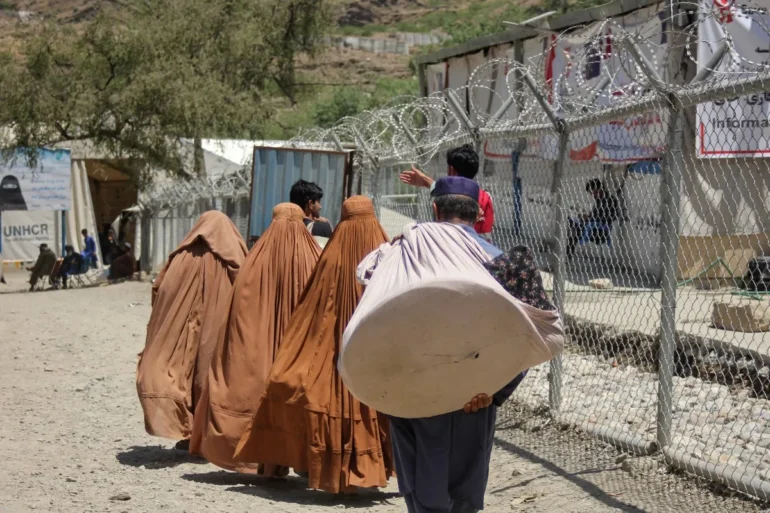

KABUL, AFGHANISTAN – Doctors Without Borders (Médecins Sans Frontières, MSF) says an Afghan refugee woman suffered a miscarriage after Pakistani police raided her home, urging the Pakistani government to halt the forced deportation of Afghan refugees and ensure they have safe access to health care.
In a statement released on Wednesday, July 29, MSF shared the testimony of an Afghan refugee family. Najib, the head of the household, said his wife miscarried after Pakistani police stormed their home and arrested him.
According to Najib, despite holding a valid Proof of Registration (PoR) card, Pakistani police entered his house and detained him.
“My wife was three months’ pregnant when the police took me,” says Najib. “When I was released and came home the next day, she was still out of her mind. She told me that she had started bleeding very heavily because of stress and deep sadness.”
“My mind was filled with so many images: the picture of the arrest, the trauma, the mental anguish from the previous night—everything was racing through my brain,” says Najib. “But, just to save my wife’s life, I acted despite the fear.”
Najib said the family eventually decided to seek medical care, although he feared being arrested again.
“I finally decided I had to go to the hospital, but I was terrified that they would arrest me again,” he continues. “I rushed her to the doctor, but we were too late. My wife had already had a miscarriage.”
MSF said Afghan refugees in Pakistan continue to live under the constant fear of arrest, loss of livelihoods, and deportation.
The organization warned that Pakistan’s forced deportation campaign has severely restricted refugees’ access to health care, with many families delaying or entirely avoiding medical treatment because they fear being detained.
MSF called on the Pakistani government to suspend its deportation policy and ensure that patients and people requiring medical care are not arrested or deported while traveling to or from hospitals.
The organization also said that fear of detention and deportation has caused many refugees to lose their jobs and income, contributing to rising levels of child malnutrition among Afghan refugee families.
According to MSF, screenings conducted after opening a health clinic in Kuchlak, Quetta, Balochistan, found that 7.6 percent of Afghan refugee women and children were suffering from severe acute malnutrition, while 25.7 percent were affected by moderate acute malnutrition.
Pakistan launched the Illegal Foreigners Repatriation Plan (IFRP) in November 2023, initially targeting undocumented Afghan nationals before expanding the policy to include registered refugees holding Afghan Citizen Cards (ACC) and Proof of Registration (PoR) cards, many of whom had lived in Pakistan since 1979. On July 10, 2026, Pakistani authorities issued a directive ordering the immediate arrest and accelerated deportation of all Afghan nationals who did not possess a valid visa.
According to Marko den Hartogh, MSF’s Head of Mission in Pakistan, although Pakistan has hosted Afghan refugees for more than 45 years with limited international support, many refugees continue to live under the constant threat of arrest, detention, eviction, loss of livelihood, and deportation. He said these conditions make it difficult to consider many of the returns to Afghanistan as genuinely voluntary.
The UN Refugee Agency (UNHCR) estimates that more than 2.5 million Afghans have returned to Afghanistan under the IFRP, with many of those returns taking place involuntarily. The United Nations has also warned that more than 70,000 Afghan refugees are at immediate risk of deportation.
Den Hartogh emphasized that people in need of international protection should not be forcibly returned and stressed that any repatriation process must be voluntary, safe, and carried out with dignity.
Between 2023 and 2026, approximately 6 million Afghans returned from Pakistan and Iran, placing additional strain on Afghanistan’s already fragile healthcare system.
Returnees face major challenges in rebuilding their lives amid the country’s worsening humanitarian and economic conditions, including severe restrictions on women and girls, significant cuts to U.S. aid, declining international funding, an overstretched health sector, and a deepening economic crisis.

