

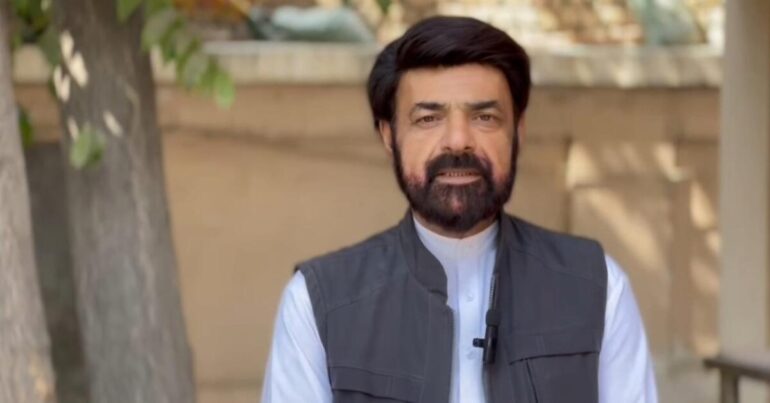

KABUL, AFGHANISTAN – The Taliban released local journalist Bashir Hatif last week after he completed a one-year prison term for alleged propaganda against the group, the Afghanistan Journalists Center (AFJC) said on Wednesday.
The AFJC, citing its sources, reported that Hatif was released from Bagram Prison on July 23 and has since reunited with his family in Kabul.
The watchdog described him as a respected veteran journalist and the founder of the Center for Journalists’ Communication and Training, who has long advocated for press freedom and media development in Afghanistan.
Taliban intelligence forces and members of the group’s morality police arrested Hatif in Kabul in July 2025. A Taliban military court later sentenced him to one year in prison on charges of propaganda against the authorities. He was one of three journalists detained that day on similar accusations. The other two — Shakib Ahmad Nazari of NTV Japan and Abuzar Sarmal Sar-e-Puli of Tawana News Agency — remain in Taliban custody serving their prison terms, the AFJC said.
The AFJC stated that Hatif’s trial was conducted without access to legal counsel and prior to a fair hearing, constituting serious violations of his fundamental rights.
The watchdog welcomed his release but expressed concern about the circumstances of his incarceration and the broader ongoing repression faced by journalists and media professionals across Afghanistan.
The group reiterated its call on Taliban authorities to respect international standards on press freedom and human rights, cease arbitrary detention, and ensure journalists can operate without fear, intimidation, or censorship. It also urged the international community to intensify efforts to secure the immediate release of all journalists still held in Taliban custody and to support initiatives aimed at restoring a safe environment for journalism in the country.
Since returning to power in August 2021, the Taliban have imposed increasing restrictions on media and journalistic activity, including arrests, censorship measures, and the closure of outlets. Dozens of journalists have been arrested and detained on accusations such as propaganda and collaboration with exiled media. Hundreds of media outlets have closed due to restrictive policies and pressure.
Afghanistan remains one of the world’s most challenging environments for journalists. The country ranked 175th out of 180 countries in the 2026 World Press Freedom Index published by Reporters Without Borders.
In its latest annual report, the AFJC documented 207 cases of media rights violations over the previous year, including two journalist killings, one injury, 183 threats, and 21 arrests. The organization said the figure represented a 20% increase compared with the previous year.
Media watchdogs and human rights groups continue to warn that independent reporting in Afghanistan faces mounting obstacles, with journalists operating under increasing pressure and limited protections.

