

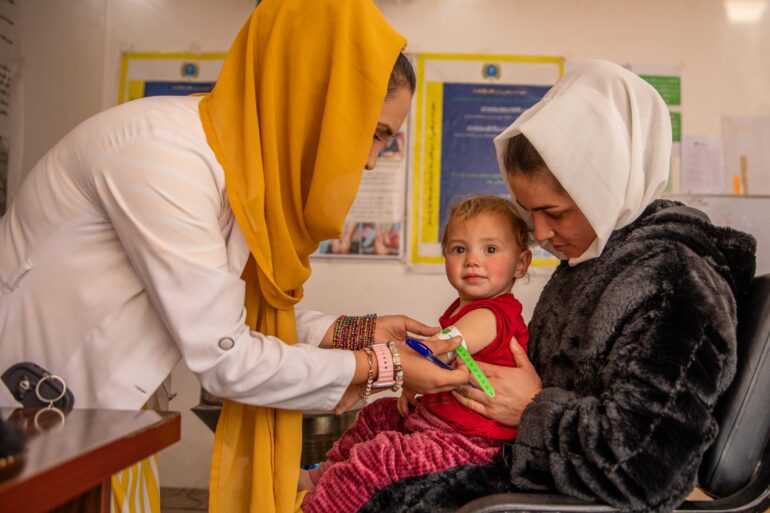

KABUL, AFGHANISTAN – The United Nations Children’s Fund (UNICEF) says it treated an estimated 610,000 children for severe acute malnutrition across Afghanistan in 2025, as the country faces a deepening humanitarian crisis and rising food insecurity.
In a post on X on Monday, UNICEF Afghanistan stated that it and its partners screened 11.8 million children nationwide for malnutrition last year. The UN agency said it aims to provide health and nutrition services to one million children suffering from acute malnutrition in 2026.
Malnutrition has long been a serious challenge in Afghanistan, but the situation has intensified since the Taliban returned to power in 2021. According to the World Food Programme (WFP), over three million children across Afghanistan currently face malnutrition.
The UN estimates that nearly half of Afghanistan’s population, about 22 million people, require humanitarian assistance this year, with a significant portion being women and children. WFP projects that 17.4 million people will face acute food insecurity in 2026, including 4.7 million in emergency conditions, classified as Phase 4 under the Integrated Food Security Phase Classification (IPC).
Meanwhile, humanitarian organizations have also been grappling with severe funding gaps in recent years. UN appeals have received less than half of the requested funding over the past two years, forcing many agencies to reduce or suspend operations in Afghanistan.
Humanitarian organizations have repeatedly warned that without increased and sustained support, vulnerable populations, especially women and children, will experience worsening health and nutrition conditions.

