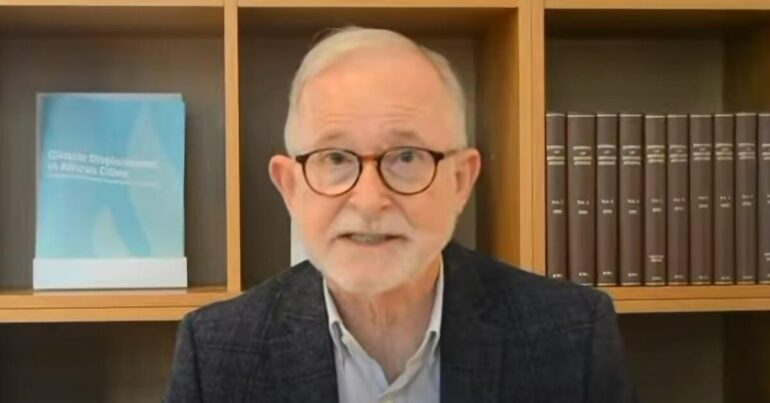

KABUL, AFGHANISTAN – Richard Bennett, the UN Special Rapporteur on human rights in Afghanistan, urged the international community not to abandon Afghanistan, warning that women, minorities, and other vulnerable groups face escalating rights violations under Taliban rule.
In a statement concluding his five-day visit to Qatar, Bennett expressed concern over sweeping restrictions on women and girls, including bans on education and employment, limited access to healthcare, and a lack of justice and protection. He also highlighted incidents of severe violence against women.
Bennett’s visit coincided with the global “16 Days of Activism Against Gender-Based Violence” campaign, which he said is particularly urgent in Afghanistan, where women and girls under Taliban rule are systematically denied basic rights.
During his trip to Doha, Bennett met with Qatari officials, students and staff from the American University of Afghanistan, Afghan activists, and representatives of the international community based in Qatar. He praised Qatar for facilitating processes that could support inclusive peace in Afghanistan, in line with international human rights standards.
“Qatar’s important role as a facilitator of processes that can help secure an inclusive peace in Afghanistan should not be underestimated,” Bennett said. He thanked the Qatari government for advocating for gender equality, raising concerns with the Taliban, and encouraging the group to revise policies to respect international human rights law.
Bennett called on the international community to amplify the voices of Afghans, particularly women and survivors of human rights violations, and to hold the Taliban accountable. “Responding to these voices is the only path toward a stable and inclusive Afghanistan at peace with itself and its neighbors,” he said.
He expressed concern over the suspicious death of a newlywed woman in Kabul, stressing that such incidents require prompt and independent investigations. He also condemned a recent public execution in Khost, reportedly carried out by a child. “The death penalty is a cruel, inhuman, and degrading punishment, especially where fair trial guarantees are unlikely to be met. Children must never be used to carry out executions,” he said.
The UN Special Rapporteur said he held extensive discussions on the situation of Afghan refugees and asylum seekers during his mission. He warned that Afghanistan remains unsafe for many groups, including women, girls, LGBTQ+ individuals, marginalized minorities, human rights activists, former government employees, and those supported international forces. “Despite these risks, over 2.7 million Afghans have been forcibly returned from Pakistan and Iran this year. Recent deportations included around 100 families and several women alone following a violent raid in Islamabad,” he said.
The UN envoy voiced concern over shrinking resettlement options in Western countries, noting that the US recently halted all Afghan migration programs, and Germany encouraged some approved applicants to withdraw by offering payments. He said these measures leave Afghans in urgent need of protection in “extremely unsafe and uncertain” conditions, including those with valid resettlement cases currently awaiting transfer in third countries.
He also highlighted the precarious situation of Hazara communities in Ghazni province, who risk losing their homes due to Taliban court rulings that do not recognize their land ownership. “Around 13,000 families could be forced to leave, raising serious concerns about the fairness of the court system and the safeguarding of vulnerable communities,” he said, stressing the need for fair due process, legal remedies, and protections to prevent displacement.