

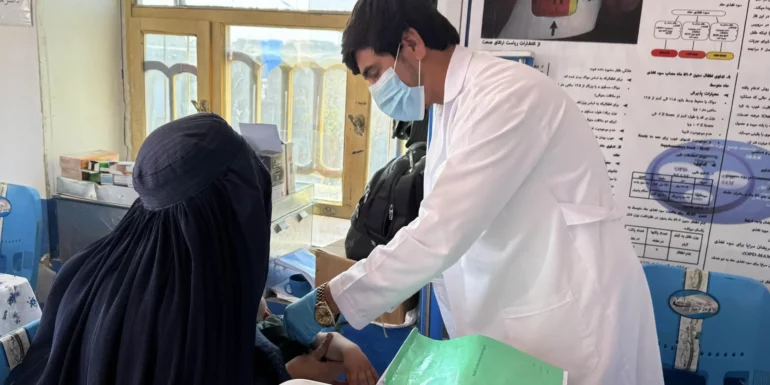

KABUL, AFGHANISTAN – About 3.7 million children in Afghanistan require nutrition support, including 1.7 million at risk of death without treatment, the UN’s relief chief said on Wednesday, calling for increased international aid.
Briefing the UN Security Council meeting on Afghanistan, Tom Fletcher, UN Under-Secretary-General for Humanitarian Affairs and Emergency Relief Coordinator, said decades of conflict, chronic poverty, restrictive policies affecting women and girls, and massive funding cuts this year have created a severe humanitarian crisis.
“Nearly 22 million people will need our help in 2026, third only to Sudan and Yemen in scale. Our appeal is $1.7 billion to target 17.5 million people, but given funding realities, we have prioritized 3.9 million people in most urgent need,” Fletcher said.
Fletcher highlighted the drastic drop in aid access, saying the number of aid recipients fell from 5.6 million last year to one million this year. “This winter is the first winter with almost no food distributions,” he added.
He said 1.1 million children are missing out on life-saving nutrition as 305 nutrition service points have been closed. In addition, 422 health facilities shut in 2025, leaving three million people without access to essential healthcare.
Fletcher also pointed to the mass return of Afghans from neighboring countries, noting that over 2.6 million people, 60% women and children, have returned this year to a country facing hunger, rights restrictions, and ongoing drought, affecting 3.4 million people.
He criticized the Taliban’s ban on UN female staff, saying it has complicated aid delivery and worsened living conditions for Afghans. Fletcher called on the Taliban to lift restrictions immediately and allow women to work safely and fully in all areas of activity.
“We need them. Afghanistan needs them. And we must also increase support for women-led organizations,” he said.
Fletcher said the UN and its partners operate in a highly complex environment with operational, financial, and reputational risks, including pressure to alter beneficiary lists, bureaucratic obstacles, interference in staff and contractor selection, and potential aid diversion.
“The humanitarian community is constantly working to ensure assistance reaches those who need it most while minimizing waste, fraud, and abuse,” he said.

