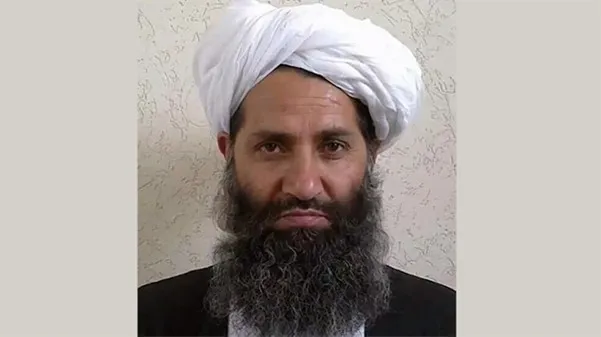

KABUL, AFGHANISTAN – Hibatullah Akhundzada, the Taliban’s supreme leader, has said education and the pursuit of knowledge are religious obligations, five years after the group banned girls from secondary schools and universities.
Hamidullah Fitrat, the Taliban’s deputy spokesperson, said Akhundzada made the remarks during a speech at a jihadist madrassa in Kandahar.
According to Fitrat, the Taliban leader urged religious scholars and the public to continue religious education and learning, arguing that these practices were necessary to eliminate corruption, bring reform and preserve religion.
However, the speech published by the Taliban makes no reference to girls’ education or the restrictions preventing millions of Afghan girls from continuing their studies beyond the primary level.
Akhundzada also told students at the religious school that they should be grateful for the opportunity to study religious sciences, describing such education as a form of jihad in the service of Islam. He urged them not to pursue knowledge for worldly ambitions, social recognition or positions of authority.
The remarks appear to refer primarily to religious education at madrassas, which the Taliban have significantly expanded since returning to power in August 2021.
The group has continued to bar girls from secondary education and women from universities, while increasing the number of religious schools across the country.
The number of madrassas in Afghanistan reportedly increased from around 5,000 before the Taliban’s return to power to more than 23,000 by September 2025.
The expansion has raised concerns about the growing influence of the Taliban’s religious ideology within the country’s education system and its potential consequences for Afghan society.
Taliban members have historically been recruited from religious schools, many of which are located in Pakistan. The group’s leadership and ranks have long included graduates of religious seminaries, particularly those educated in Pakistan.
Richard Bennett, the United Nations special rapporteur on the situation of human rights in Afghanistan, has also warned that the expansion of religious schools under Taliban rule could transform the country’s social fabric.
In a recent report, Bennett said he had repeatedly heard concerns from families about changes in the attitudes and behaviour of children studying at madrassas.
Some women and girls had reported that their brothers and other male relatives attending religious schools had become more controlling towards them, including over their clothing and behaviour, according to Bennett.
The UN human rights expert also expressed concern about the potential long-term security consequences of Afghanistan’s current educational trajectory, including the growing role of religious schools.
The Taliban’s restrictions on girls’ education have left Afghanistan as the only country in the world where girls are systematically prohibited from attending secondary school and women are barred from university education.
UN agencies and human rights organisations have repeatedly warned that denying girls access to education threatens their future employment opportunities, economic independence and participation in public life, while undermining the country’s long-term development.
The continued expansion of religious education alongside the exclusion of girls and women from much of the formal education system has intensified concerns about educational inequality, ideological influence and the future opportunities available to Afghanistan’s younger generations.