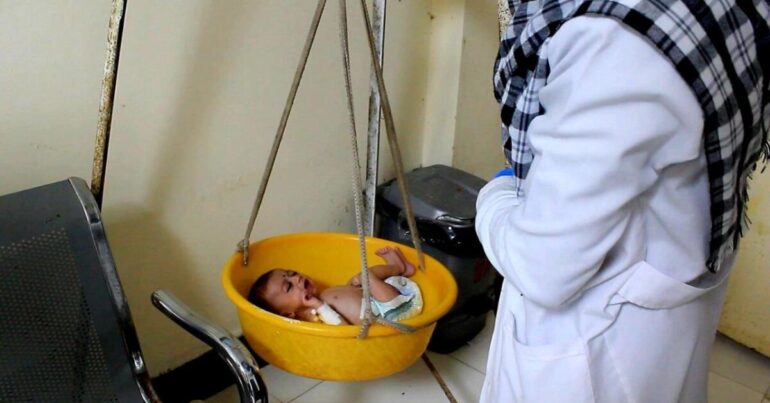

KABUL, AFGHANISTAN – UNICEF and its partners screened 1.3 million children for malnutrition in Afghanistan in August and admitted 111,099 for treatment, including 58,891 with severe wasting, the agency said on Monday.
In its monthly update for August, UNICEF said another 42,915 children were identified as being at high risk of moderate wasting, highlighting the scale of malnutrition among children in the country.
Around 3.7 million children in Afghanistan are at risk of malnutrition, including about one million who face the threat of severe, life-threatening forms of the condition, the agency said.
According to the report, children under the age of two account for about 83% of acute malnutrition cases. Around 40% of children hospitalized for severe acute malnutrition and related health complications are under six months old.
UNICEF said it delivered preventive and treatment nutrition services through 3,500 health facilities and 15,000 community health posts across Afghanistan. The services are intended to help identify children at risk, provide treatment and support caregivers in preventing malnutrition.
Food insecurity remains a major contributing factor. An estimated 13.8 million people, or 28% of Afghanistan’s population, were projected to face Crisis-level or worse acute food insecurity between April and September 2026. Of those, 2.9 million were expected to face emergency levels, classified as Phase 4 under the Integrated Food Security Phase Classification (IPC).
In August, UNICEF provided nutrition counselling to 189,350 caregivers and distributed multiple micronutrient supplements to 121,714 pregnant women. The agency also trained 80 health workers in the prevention and management of malnutrition and another 103 in maternal, infant and young child nutrition.
In addition to its nutrition programs, UNICEF said it provided health services to 6.6 million people across Afghanistan in August. It also expanded assistance in areas affected by floods, border tensions, population movements and earthquakes.
The agency warned that funding shortages are threatening the delivery of humanitarian assistance across the country. Of the $1.71 billion requested by the United Nations for its 2026 humanitarian response in Afghanistan, only $509.3 million, or 29.7%, had been funded as of August 26, UNICEF said. The shortfall has led to the closure of service centers, suspension of assistance, reduced geographical coverage and disruptions to supply chains.
Afghanistan remains one of the world’s largest and most protracted humanitarian crises, with nearly 22 million people, mostly women and children, requiring humanitarian assistance this year, according to the United Nations.
Aid agencies have urged donors to maintain and increase their support, warning that funding gaps threaten essential health, nutrition and food assistance programs.