
KABUL, AFGHANISTAN – The Norwegian Refugee Council (NRC) has called for an immediate and substantial increase in humanitarian assistance to Afghanistan to prevent families from going hungry and stop the country’s humanitarian crisis from deteriorating further, particularly for women, children and people recently returned from Iran and Pakistan.
Jan Egeland, secretary-general of the Norwegian Refugee Council, said on Friday that one-third of Afghanistan’s population would face hunger this winter.
In a post on X, Egeland said nearly 16 million people were already unable to access sufficient food, warning that rising prices, widespread unemployment, climate change and declining humanitarian assistance were worsening the situation. He added that the number of people facing food insecurity was two million higher than at the same time last year and could rise further without urgent intervention.
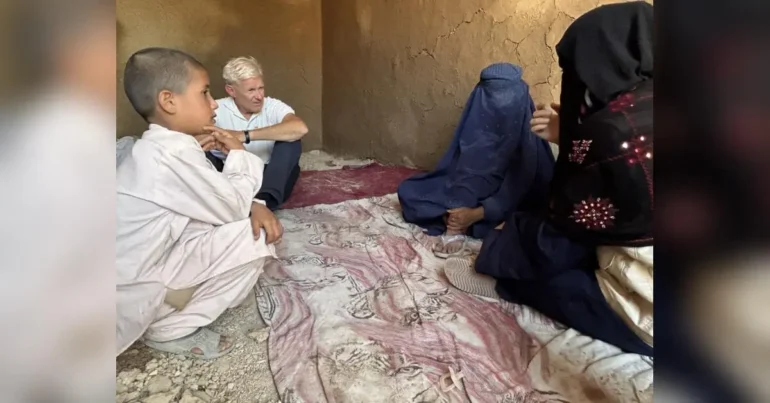
Egeland said mothers he met in Kabul and Kandahar last month had told him they could not provide enough food for their children and were worried about the approaching winter.
He attributed the deteriorating situation to Afghanistan being increasingly neglected following the Taliban’s return to power in August 2021, saying the country was receiving one of the lowest levels of humanitarian funding worldwide.
The warning comes as the Food and Agriculture Organization of the United Nations (FAO) and the World Food Programme (WFP) estimate that approximately 19.2 million people, or 38 per cent of Afghanistan’s population, will face high levels of acute food insecurity between November 2026 and April 2027. This period includes the winter months, when food shortages and harsh weather make it more difficult for vulnerable households to meet their basic needs.
The latest Integrated Food Security Phase Classification (IPC) analysis indicates that around five million people could face emergency levels of hunger, requiring urgent assistance to prevent deaths and the collapse of livelihoods. The projected number facing acute food insecurity is higher than the 17.4 million people estimated for the corresponding period a year earlier.
Meanwhile, the United Nations Children’s Fund (UNICEF) and Action Against Hunger have warned that acute malnutrition is worsening across Afghanistan, with more than four million children expected to require treatment in 2027. This would be the highest number recorded in five years.
According to their latest analysis, approximately 1.09 million children are projected to suffer from severe acute malnutrition, while nearly three million could experience moderate acute malnutrition. The number of provinces facing critical levels of malnutrition is projected to rise to 14 in 2027, affecting more than one-third of the country’s provinces.
Humanitarian agencies have warned that reduced funding could disrupt essential nutrition services and limit access to life-saving treatment for children. Poor access to nutritious food, unsafe drinking water, disease outbreaks and inadequate sanitation are also contributing to the worsening crisis.
The humanitarian crisis in Afghanistan has been further aggravated by the mass return of Afghans from Iran and Pakistan, placing additional pressure on already overstretched communities and essential services. The United Nations Development Programme has reported that around 28 million Afghans were unable to meet their basic needs in 2025, while the World Food Programme has warned that funding shortages threaten its life-saving food and nutrition operations.
A combination of factors, including restrictions on women and girls, forced returns from neighbouring countries, storms and flooding, climate change, widespread unemployment, rising food prices and a severe shortfall in humanitarian assistance, continues to deepen poverty, food insecurity and malnutrition across the country.