

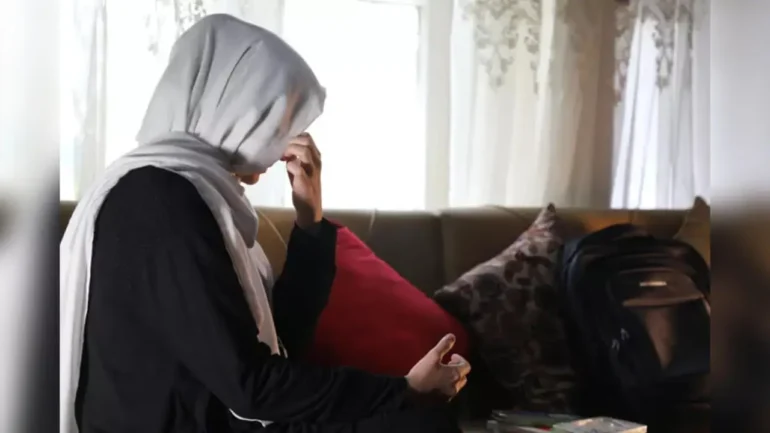

KABUL, AFGHANISTAN – The United Nations and former Afghan President Hamid Karzai have called for renewed efforts to protect girls’ rights in Afghanistan, as millions remain excluded from education under restrictions imposed by the Taliban authorities.
Marking the International Day of the Girl Child on Sunday, October 11, the United Nations Assistance Mission in Afghanistan (UNAMA) said millions of Afghan girls continued to face challenges including poverty, early marriage, limited access to education and illiteracy.
In a statement published on Facebook, UNAMA said education remained one of the most effective ways to help girls develop their talents and abilities. The mission called for practical measures to ensure every Afghan girl could access education, decent work, make personal choices and build a future shaped by her own aspirations.
UNAMA stressed that girls should be able to learn freely, develop their potential and determine their own futures, describing them as future leaders and innovators capable of changing the world.
Karzai also called for the empowerment of girls, saying Afghanistan’s development depended on ensuring that they had access to educational opportunities. In a message posted on X, the former president urged the Taliban authorities to reopen schools and universities to girls and women as soon as possible.
Karzai said Afghan society should not neglect the empowerment of girls alongside boys, adding that girls needed access to all levels of education so they could pursue higher studies and contribute to their communities and country.
He also said Afghanistan’s long cultural history and respect for women and girls should be reflected in recognition of their achievements and contributions at home and internationally.
The appeals come as Afghanistan remains the only country in the world where girls and women are barred from secondary and higher education. The Taliban authorities have prohibited girls from attending school beyond grade six since September 2021 and suspended women’s university education in December 2022.
According to the United Nations Children’s Fund (UNICEF), more than 2.6 million girls have been denied secondary education since the Taliban returned to power in 2021. UNICEF said in August 2026 that Afghanistan remained the only country where secondary and higher education was effectively closed to girls and women.
The restrictions have consequences beyond classrooms. UNICEF has warned that denying girls education increases their vulnerability to child labour, early marriage, violence and abuse. The exclusion of girls from education also threatens Afghanistan’s future workforce, including the supply of qualified female doctors, midwives, teachers and other professionals who are essential to serving women and girls in a society where gender restrictions limit contact between women and male service providers.
UNESCO and UNICEF have also warned that Afghanistan is facing a broader education crisis. In a joint statement in January 2026, the agencies said 2.2 million adolescent girls had been barred from secondary school and that 93 per cent of children at the end of primary school were still working towards basic reading proficiency.
The Taliban authorities have repeatedly maintained that their policies are consistent with their interpretation of Islamic law, while international organisations and human rights advocates have called for the restrictions to be lifted.
The continued exclusion of girls from education has become one of the most prominent aspects of the Taliban authorities’ restrictions on women and girls, which also limit women’s employment, freedom of movement and participation in public life. The United Nations has repeatedly urged the authorities to reverse these measures and allow Afghan women and girls to exercise their fundamental rights.

