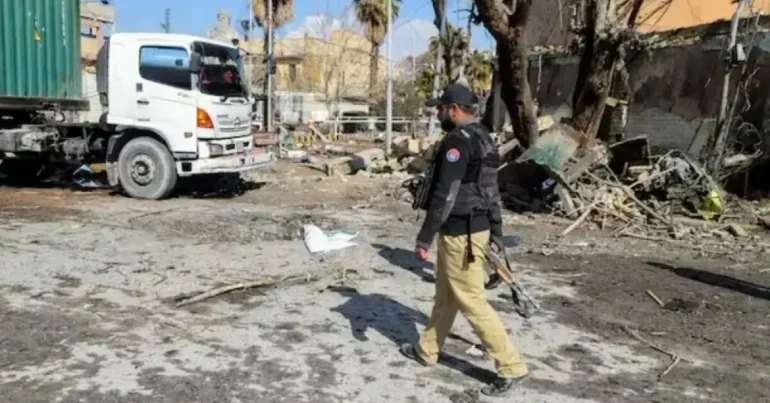

KABUL, AFGHANISTAN – Unidentified gunmen have abducted 20 police trainees in Mastung district of Pakistan’s Balochistan province, Pakistani media reported.
Dawn newspaper reported on Saturday, citing a senior Balochistan official, that the trainees were travelling home for the weekend when gunmen intercepted their vehicle along the Quetta–Karachi highway and abducted them.
According to the official, armed men riding motorcycles and carrying automatic weapons stopped the vehicle before taking the trainees and the vehicle to an undisclosed location.
Authorities in Balochistan confirmed that the gunmen released the driver and three other occupants of the vehicle. However, the whereabouts of the 20 police trainees remain unknown.
Security forces have launched a search operation in the surrounding mountains to locate the abducted personnel, Dawn reported. No group has claimed responsibility for the kidnapping.
Balochistan, which borders Afghanistan and Iran, is one of Pakistan’s most volatile provinces. Armed separatist groups, including the Balochistan Liberation Army, have repeatedly targeted security forces, government installations and other infrastructure, as well as carried out kidnappings and deadly attacks.
The security situation is also volatile in Pakistan’s northwestern Khyber Pakhtunkhwa province, which shares a border with Afghanistan. Both provinces have experienced persistent militant violence, although the groups operating in them and their objectives differ.
The security situation along the Pakistan-Afghanistan border has further deteriorated amid escalating tensions between the two countries. Islamabad has repeatedly accused the Taliban authorities in Afghanistan of allowing armed groups, particularly the Tehreek-e-Taliban Pakistan (TTP), to use Afghan territory to plan and launch attacks inside Pakistan. The Taliban authorities have denied that Afghanistan is being used to threaten other countries and have rejected Pakistan’s accusations.
The dispute has led to repeated border clashes, border-crossing closures and Pakistani airstrikes inside Afghanistan targeting locations that Islamabad says are associated with militant groups. Afghan authorities have condemned such strikes as violations of Afghanistan’s sovereignty, while cross-border violence and retaliatory actions have deepened mistrust between the two neighbours.
The tensions have also affected border communities, trade and the movement of people, with security operations and border restrictions disrupting daily life on both sides. The continued presence of armed groups, competing security claims and the lack of a lasting agreement between Islamabad and the Taliban authorities remain major obstacles to improving relations between Pakistan and Afghanistan.