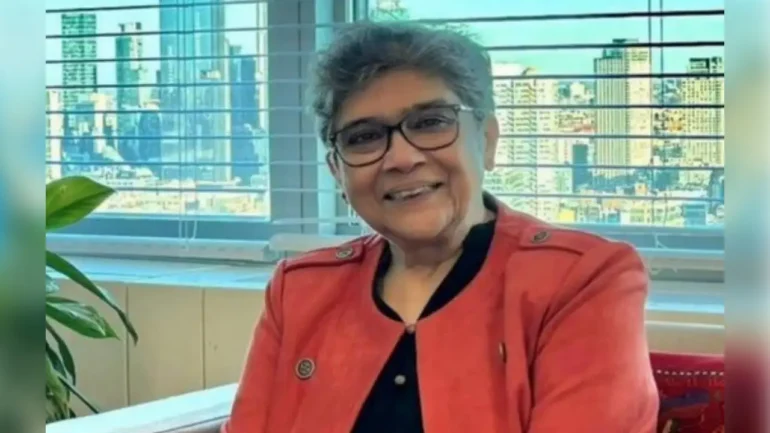

KABUL, AFGHANISTAN – Rabab Fatima, a Bangladeshi diplomat, has officially begun her duties as the United Nations Secretary-General’s Special Representative for Afghanistan and head of the UN Assistance Mission in Afghanistan (UNAMA).
UNAMA announced on Sunday, October 18, that Fatima had arrived in Kabul and assumed her new position.
She succeeds Roza Otunbayeva, a Kyrgyz diplomat and politician who led UNAMA from September 2022 to September 2025.
According to UNAMA, Fatima brings more than 30 years of experience in national and international civil service, bilateral and multilateral diplomacy, policymaking, advocacy, and programme development and implementation.
Before her appointment to Afghanistan, Fatima served as the United Nations Under-Secretary-General and High Representative for the Least Developed Countries, Landlocked Developing Countries and Small Island Developing States.
She was Bangladesh’s ambassador and permanent representative to the United Nations from 2019 to 2022. During that period, she chaired the executive boards of UNICEF in 2020 and UN Women in 2022. She also served as vice-president of the executive boards of the United Nations Development Programme (UNDP), the United Nations Population Fund (UNFPA) and the United Nations Office for Project Services (UNOPS).
In 2022, Fatima became the first woman elected president of the United Nations Peacebuilding Commission. She also served as a vice-president of the 77th session of the UN General Assembly.
Before joining the United Nations, she served as Bangladesh’s ambassador to Japan from 2016 to 2019 and as director-general of the country’s Ministry of Foreign Affairs from 2015 to 2016. Her diplomatic career also included assignments at Bangladesh’s missions in New York, Geneva, Beijing and Kolkata, as well as various positions at the foreign ministry.
Fatima has also worked with the International Organization for Migration (IOM) and served as head of human rights at the Commonwealth Secretariat in London. Bengali is her native language, and she speaks English and has knowledge of Hindi and Urdu.
Fatima assumes leadership of UNAMA as the Taliban authorities continue to impose sweeping restrictions on women and girls, limiting their access to education, employment and public life. Since returning to power in August 2021, the Taliban have barred girls from secondary education and women from universities, while introducing further restrictions on women’s participation in public and professional life.
Taliban’s acting Foreign Minister, Amir Khan Muttaqi also met with Rabab Fatima, welcoming her to the country and wishing her success in her new role. During the meeting, the two sides discussed expanding cooperation between Afghanistan and the United Nations, increasing support for development and infrastructure projects, and addressing the humanitarian needs of returning Afghan refugees through better coordination and more effective delivery of assistance.
They also stressed the importance of separating economic activities and humanitarian aid from political issues to ensure that assistance reaches people in need.
The discussions also covered the importance of using accurate and reliable information in UN reports and assessments on Afghanistan, reflecting the situation on the ground in a balanced manner, and maintaining coordination with relevant Afghan institutions. Both sides discussed expanding cooperation on climate change and water management, as well as the activities and upcoming meetings of the Doha Process working groups on private-sector support and counter-narcotics efforts.
The Afghan foreign ministry also praised the UN’s efforts to address opium cultivation and combat narcotics, while both sides reaffirmed their commitment to mutual understanding, constructive engagement and stronger cooperation.
Her appointment comes at a time when the UN’s engagement with the Taliban authorities remains a subject of international debate, particularly over how to address Afghanistan’s humanitarian crisis, human rights violations and political isolation without legitimising restrictions imposed by the Taliban.
UNAMA is a United Nations political mission established in 2002 at the request of the Afghan government of the time. Its mandate includes supporting political processes, promoting human rights, monitoring and reporting on the situation of civilians, facilitating humanitarian assistance, and coordinating international engagement in support of peace and stability in Afghanistan.
Following the Taliban’s takeover, the mission has continued its work under a mandate renewed by the UN Security Council. It monitors restrictions on women and girls, documents civilian casualties, engages with Afghan stakeholders and international partners, and reports on human rights and humanitarian developments. Its work also includes supporting efforts to protect civilians and promote an inclusive political process.
Otunbayeva’s tenure was marked by controversy over the international community’s approach to engaging with the Taliban. Some women’s rights activists and human rights advocates accused her of whitewashing the Taliban’s actions, arguing that diplomatic engagement had not sufficiently challenged the group’s systematic restrictions on women and girls.
Fatima’s appointment therefore places her at the centre of a difficult diplomatic balancing act: maintaining channels of communication with the Taliban authorities while upholding the UN’s human rights commitments and addressing the needs of millions of Afghans affected by poverty, displacement and humanitarian insecurity.
Her effectiveness will likely be judged in part by how UNAMA responds to the continuing exclusion of women and girls from education and public life, supports the delivery of humanitarian assistance, and advances international efforts toward a more inclusive and rights-respecting future for Afghanistan.