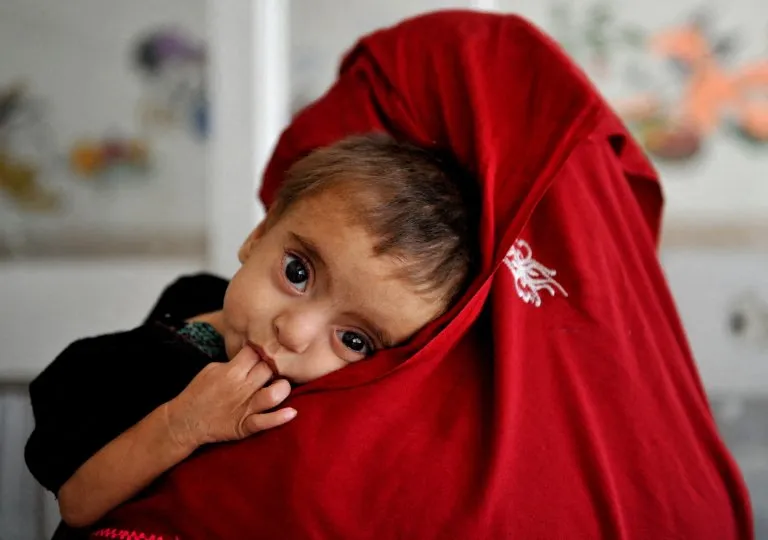

KABUL, AFGHANISTAN – More than four million children in Afghanistan are expected to require treatment for acute malnutrition in 2027, the highest number recorded in five years, the United Nations Children’s Fund (UNICEF) and the international humanitarian organisation Action Against Hunger warned on Thursday.
The warning is based on the latest Integrated Food Security Phase Classification (IPC) analysis on acute malnutrition, released on October 15, which projects a further deterioration in the country’s nutrition crisis.
The number of Afghan provinces facing critical levels of malnutrition has risen from seven in 2025 to 10 in 2026 and is expected to reach 14 in 2027, affecting more than one-third of the country’s provinces.
An estimated 1.09 million children are projected to suffer from severe acute malnutrition in 2027, a 16 percent increase from 2026, while nearly three million children are expected to experience moderate acute malnutrition. Nearly 1.3 million pregnant and breastfeeding women are also projected to suffer from malnutrition during the same period.
The IPC analysis further estimates that approximately 19.2 million people, or 38 percent of Afghanistan’s population, will face high levels of acute food insecurity during the winter lean season from November 2026 to April 2027.
Around five million people are projected to experience emergency levels of food insecurity, requiring urgent food assistance and livelihood support.
The most severe food insecurity is expected in Badakhshan, Badghis, Daikundi, Ghor, Samangan and Sar-e-Pul provinces, as well as rural areas of Ghazni province.
The worsening nutrition crisis is being driven by several overlapping factors, including economic hardship, limited access to nutritious food and safe drinking water, disease outbreaks and declining humanitarian assistance.
According to UNICEF, only one in three children aged six to 24 months receives the appropriate combination of nutritious foods needed for healthy growth and development. Nearly half of households in Afghanistan also struggle to access adequate and safe water, increasing the risk of malnutrition and preventable diseases.
Disruptions to cross-border supplies have further affected the availability of essential nutrition products, putting additional pressure on already overstretched health and nutrition services.
Cobi Rietveld, country director of Action Against Hunger in Afghanistan, said nutrition services in the southern province of Helmand were facing enormous pressure as needs continued to outstrip available resources.
She stressed that while treating severe malnutrition remained essential to saving children’s lives, humanitarian organisations also needed to prioritise prevention and early intervention to stop children from developing life-threatening conditions.
The agencies warned that the highest levels of acute malnutrition continued to be recorded in southern Afghanistan, where the growing number of people requiring assistance was exceeding the capacity of existing services.
They also cautioned that an anticipated funding shortfall could further restrict preventive nutrition programmes and interrupt life-saving treatment for children.
The deteriorating nutrition situation comes as Afghanistan prepares for another winter of widespread food insecurity. According to a separate IPC analysis released on October 15, the number of people projected to face acute food insecurity during the winter lean season has increased from 17.4 million in the corresponding period a year earlier to 19.2 million.
The United Nations Food and Agriculture Organization and the World Food Programme have warned that high food and transport costs, unemployment and declining humanitarian assistance are undermining families’ ability to meet their basic food needs, despite improvements in rainfall and agricultural production.
Humanitarian agencies have called for urgent and sustained funding to maintain food assistance, nutrition treatment, healthcare, safe water and sanitation services. They warn that early investment in prevention and treatment is essential to avoid further deterioration and reduce the risk of preventable deaths among children and other vulnerable groups.