


By Nematullah Akbari
1. Introduction
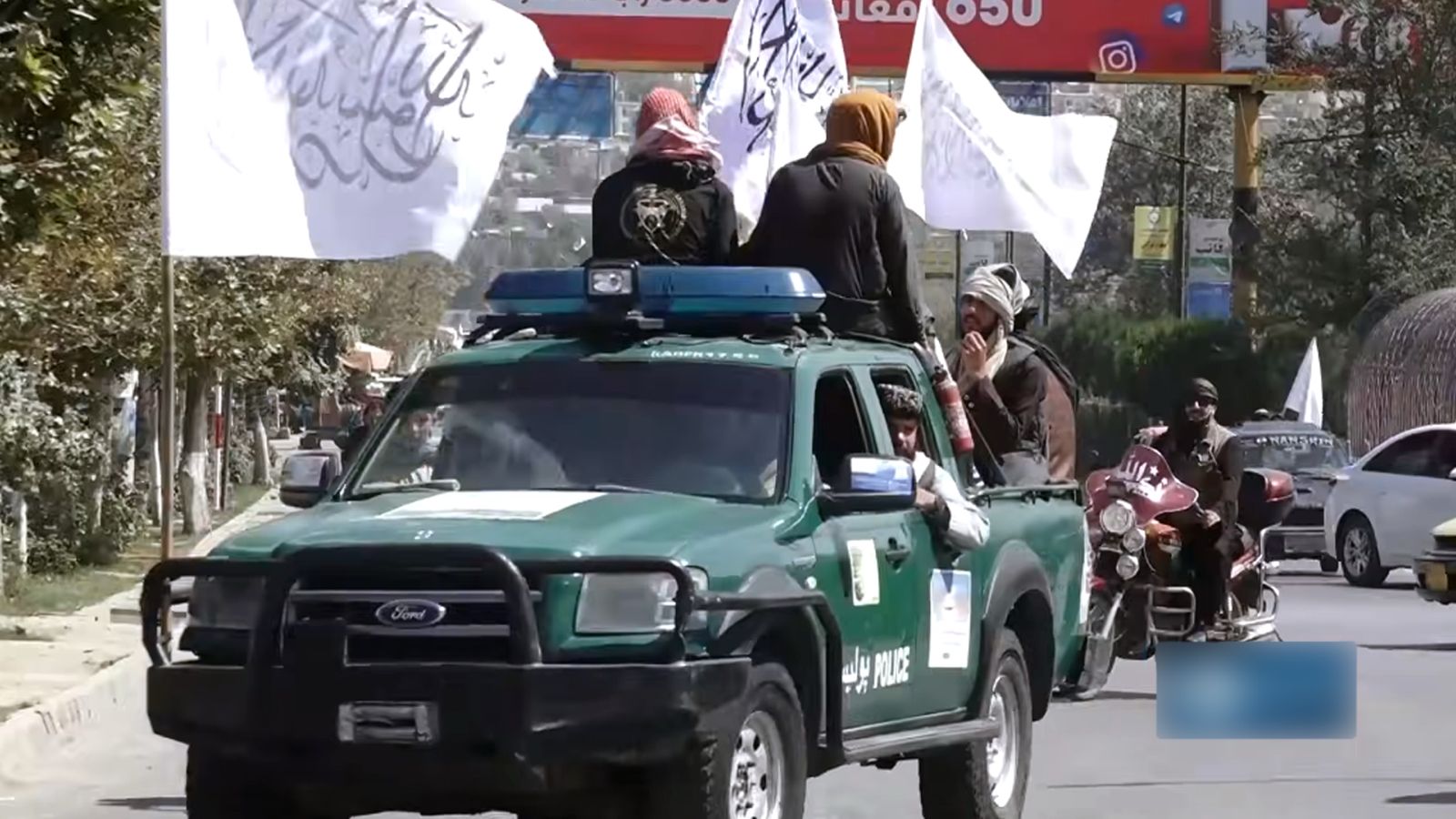
It is now five years since the Taliban takeover on 15 August 2021. Hassan Abbas’s The Return of the Taliban: Afghanistan after the Americans Left (2023) is one attempt to understand the Taliban from within. Abbas’s central argument is that the Taliban is a fractious movement, divided by personalities, interests, and approaches, including hardliners based largely in Kandahar and more pragmatic figures associated with Kabul. He encourages readers to distinguish between the Taliban of 1996–2001 and what he calls the “new Taliban” that returned to power in 2021, pointing to the movement’s prolonged engagement with the international community during the Doha negotiations, its use of social media and modern communication tools, and the presence of members with greater exposure to formal education and international politics.
Although the Taliban had signed the Doha Agreement with the United States on 29 February 2020, few would have expected that the group would be ruling Afghanistan only a year and a half later (Abbas 2023, 2). Even by mid-July 2021, U.S. intelligence assessed the risk of an imminent Taliban takeover of Kabul as very low (Abbas 2023, 73). For more than twenty years, the United States and its international allies had funded a significant portion of the Afghan state, with Abbas estimating that assistance accounted for more than 80 percent of the Afghan government’s annual budget (Abbas 2023, 119).
This review, therefore, recognizes the value of Abbas’s nuanced attempt to understand the Taliban from within, particularly his attention to internal divisions and the movement’s political and organizational adaptation. At the same time, it critically examines the book’s central claim that the Taliban has changed. I argue that, despite important differences in organizational structure, engagement with the international community, military strategy, and use of modern communication, the movement is not fundamentally different from the Taliban that ruled Afghanistan between 1996 and 2001. The post-2021 Taliban has demonstrated significant adaptation, but adaptation should not be mistaken for transformation. Its religious ideology, conception of political authority, leadership structures, gender politics, and prioritization of religious principle over public welfare all show substantial continuity with its previous rule.
A further criticism, beyond the absence of a settled theoretical framework – as I discuss below – is that the book remains too Taliban-centric, putting the voices of women, civil society and ordinary Afghans in the shadows. This review therefore seeks not only to assess the strengths and weaknesses of Abbas’s account, but to ask what it actually means to call the post-2021 Taliban a “new Taliban”: new in what sense, and unchanged in what sense?
2. What Does the Taliban Look Like?
The road to Kabul reveals one of the clearest forms of the Taliban’s organizational adaptation. The establishment of the Taliban Political Commission in Doha in 2012 created a political channel through which the movement could engage foreign governments and gradually present itself not only as an insurgency but as a political actor capable of governing. Its negotiations with the United States, culminating in the 29 February 2020 Doha Agreement, further demonstrated the movement’s ability to operate simultaneously through political and military channels. The Taliban that returned to Kabul in 2021 was therefore organizationally more sophisticated than the movement that ruled Afghanistan between 1996 and 2001. Yet this adaptation alone does not tell us what kind of political movement has returned to power.
Abbas’s distinction between Taliban 1.0, 2.0, and 3.0 is useful here. Taliban 1.0 refers to the movement’s rule between 1996 and 2001; Taliban 2.0 to its insurgency against the United States, its allies, and the Afghan government; and Taliban 3.0 to the movement that emerged from around 2019 and returned to power in 2021 (Abbas 2023, 9). Abbas also identifies several factions within the movement, including the pragmatists who represented the Taliban in Doha, the Quetta and Peshawar Shuras that formed its ideological core, foot soldiers, criminal networks, and ordinary villagers who aligned with the movement for different reasons (Abbas 2023, 79–80). The distinction between hardliners and pragmatists runs through much of his analysis.
This internal diversity is important because the Taliban’s public image of unity can obscure how power is actually distributed within the movement. The formation of the interim government in September 2021 offers a useful example. Before the cabinet was announced, many observers expected Mullah Baradar, who had spent years leading the Doha negotiations, to occupy the most senior political position. Instead, he became one of three deputy prime ministers, while Mullah Mohammad Hassan Akhund, a senior Kandahari cleric close to Hibatullah Akhundzada, became prime minister (Abbas 2023, 86–87). The decision suggests that diplomatic experience and international visibility did not necessarily translate into internal political authority.
The composition of the cabinet reinforces this point. Sirajuddin Haqqani became interior minister and Mullah Yaqoob defense minister, while thirty of the thirty-three cabinet positions went to Pashtuns and most appointees had links to the Quetta Shura, the Haqqani network, or the Darul Uloom Haqqania seminary in Pakistan (Abbas 2023, 89–92). Rather than representing a technocratic or broadly inclusive government, the cabinet reflected networks of trust and loyalty developed during the insurgency. This complicates Abbas’s characterization of the post-2021 movement as a fundamentally “new” Taliban.
The tension between adaptation and continuity becomes even clearer in the movement’s approach to legitimacy. The Taliban has learned to communicate with the outside world through diplomatic channels, social media, and international negotiations, but its internal distribution of authority remains strongly connected to clerical status, seniority, and proximity to Kandahar. The June 2022 gathering at Kabul Polytechnic University, where Hibatullah made his first public appearance in Kabul, further illustrated this tension. Despite the international importance of questions such as girls’ education, the gathering produced no clear resolution on the issue (Abbas 2023, 133–136).
What emerges from Abbas’s account, therefore, is not simply an old Taliban or an entirely new one. It is a movement that has learned to operate differently while retaining many of the internal structures through which authority has traditionally been exercised. Its political organization, diplomatic engagement, military strategy, and communication have changed substantially. But the question of who has the authority to define legitimate political and religious conduct remains much more continuous with the Taliban of the 1990s. The Taliban may have learned new ways of governing and communicating with the world; the more difficult question is whether it has changed the principles through which it understands political authority.
3. Continuity and Change
So, has the Taliban changed? Reading Abbas carefully, I think the honest answer has to be broken into parts rather than given as a single yes or no. Abbas’s conclusion leans fairly hard toward “yes, this is a new Taliban” (Abbas 2023, 241), but the evidence presented throughout the book does not always support that conclusion as cleanly as his own framing suggests.
Organizationally, as Abbas’s account demonstrates, something has clearly changed. The Taliban of the 1990s had no standing political office abroad and nothing resembling the Doha Political Commission or the sustained international engagement that followed (Abbas 2023, 42). Strategically, a movement that negotiated with Khalilzad for two years, secured the release of thousands of prisoners, and ran a coordinated military campaign deliberately avoiding provincial capitals until the very end is plainly more sophisticated than the Taliban that took Kabul in 1996. Its media operation is also genuinely different: Twitter accounts with hundreds of thousands of followers, a spokesman giving interviews to the BBC and NPR, ministers hosting live audio conversations — none of this existed the first time around (Abbas 2023, 11, 211–212).
But on the question of ideology, and specifically on the question of women, the continuity looks far stronger than the change. The promise of girls’ education beyond grade six, made repeatedly during Doha and again after the takeover, was reversed within months, and reversed specifically because of pressure from three hardline clerics based in Kandahar (Abbas 2023, 110). The travel restrictions on women, the reintroduction of the mahram requirement, the eventual recommendation of the burqa as the preferred form of hijab — these are not new policies dressed up in new language; they are close to the same restrictions imposed in the 1990s, arrived at by a slightly different route (Abbas 2023, 107–108).
My own reading, against Abbas’s framing, is therefore that the change is real but concentrated largely in tactics, diplomacy, and communication, while the deeper questions of who holds religious authority, what a legitimate Islamic government looks like, and what role women are permitted to play in public life remain essentially where they were in 1996. The Taliban has learned how to talk to the world. It has not changed its mind about who is allowed to take part in the conversation.
4. The Taliban as a Governing Institution
One of the more useful contributions of the book is the material it offers for thinking about how the Taliban actually understands and exercises authority once it is no longer simply fighting a war. Abdul Hakim Haqqani’s treatise, Al-Imarah al-Islamiah wa Nizamaha, written with a preface by Hibatullah and circulated among Taliban officials in mid-2022, is treated by Abbas mostly as a curiosity, but it is arguably the closest thing the movement has produced to a constitutional statement (Abbas 2023, 100–104). The book describes the head of state, the Ameer-ul-Momineen, as owed absolute obedience, selected through “allegiance, domination, and the formation of a council,” a process modeled loosely, and rather selectively, on the succession of the four rightly guided caliphs (Abbas 2023, 102–103). There is no space in this model for anything resembling representative government, and Abbas himself notes, almost in passing, that the treatise stops “just short of saying that democracy is forbidden” (Abbas 2023, 103).
My own reading of the evidence Abbas presents is that religious and political authority are difficult to separate within the Taliban’s system of governance. A minister’s standing depends less on the ministry he runs than on his clerical credentials, his tribal or seminary lineage, and his personal relationship to Hibatullah. Abbas actually demonstrates this well without stating it in quite these terms: he notes that “even today, the most important credential one can possess is the clerical or Mullah status,” and that religious knowledge “trumps political connections” when it comes to who actually wields influence (Abbas 2023, 239). This helps explain why Baradar’s diplomatic skill and international reputation did not translate into greater governing power, and why a less internationally visible Kandahari cleric like Hassan Akhund could become prime minister ahead of him.
5. What the Book Misses
For all its access and detail, the book has some limitations, and it is worth being specific about them rather than simply noting, in the usual reviewer’s shorthand, that “more could have been said.”
First, there is no sustained theoretical framework. Abbas moves between historical narrative, interview material, and occasional gestures toward sociological concepts — the discussion of the Taliban as a “new religious movement” in chapter four is the clearest example, and it is genuinely interesting, but it is dropped almost as soon as it is introduced and never really integrated into the rest of the analysis (Abbas 2023, 165–172). Abbas offers more empirical texture, largely because of his interviews, but he lacks the explanatory power that a clearer framework would have given the book.
Second, and related to this, the book is heavily Taliban-centric. Abbas had extraordinary access to Taliban officials, Pakistani intelligence figures, and Western diplomats, and this access is genuinely valuable, but it also shapes whose voice the book privileges. Ordinary Afghans appear mostly as backdrop — fleeing the airport, queuing for food rations, watching the flag change — rather than as people whose own strategies, forms of resistance, and daily negotiations with Taliban rule deserve sustained attention. Afghan women in particular are discussed largely as objects of Taliban policy rather than as actors. Given that gender policy is one of the most consequential and internationally visible features of Taliban rule, this is a significant gap that should have been considered.
Third, there is the simple problem of writing about a regime that was, at the time of publication, barely eighteen months old. Abbas is careful to date his own observations — “at the time of writing (January 2023)” appears more than once (Abbas 2023, 136, 192) — and, to his credit, he does not overclaim. But some of his more optimistic projections, about generational change and about a “Gen Z Taliban” eventually pulling the movement toward moderation (Abbas 2023, 251), read rather differently several years on, as restrictions on women and girls have continued and, in many areas, hardened rather than loosened. This is not entirely a fair criticism of a book written in 2023 — no one could have been expected to predict every subsequent decree — but it is a reminder that any attempt to read the trajectory of a fast-moving regime in real time risks being overtaken by events. This appears to have been the case, at least on the question of whether pragmatism would eventually win out.
6. Conclusion
It has now been more than three years since Abbas finished writing this book, and a great deal has changed in Afghanistan since January 2023. Restrictions on women and girls have expanded, and the “Gen Z Taliban” that Abbas hoped might push the movement toward moderation have not, so far, visibly done so.
So, returning to the question posed at the outset: is this the same Taliban returning, or a new Taliban governing? I do not think the honest answer is either one cleanly. It is a movement that has adapted, sometimes impressively, in how it negotiates, communicates, and manages the machinery of the state. Its diplomatic engagement and media strategy, for example, look genuinely different from 1996. But in the places that matter most for the people actually living under its rule — who counts as a legitimate political voice, what role religious authority plays in every decision, and above all what place women are permitted to occupy in public life — the continuity with the Taliban of the 1990s is much stronger than Abbas’s own conclusion suggests. Abbas gives us an unusually well-sourced and genuinely valuable account of how the Taliban thinks about itself and how it operates internally. What the book does not quite give us, and what the years since its publication have made increasingly difficult to conclude, is much reason to believe that this internal transformation extends to the questions that matter most.
Nematullah Akbari is an MA student in Politics and Security (Central Asia) at the OSCE Academy in Bishkek, Kyrgyzstan. He is currently writing his MA thesis on the political function of the Taliban’s gendered system of governance. His research interests include Afghanistan and Central Asian politics, evolving geopolitical competition, and gendered political systems in the 21st century.

