

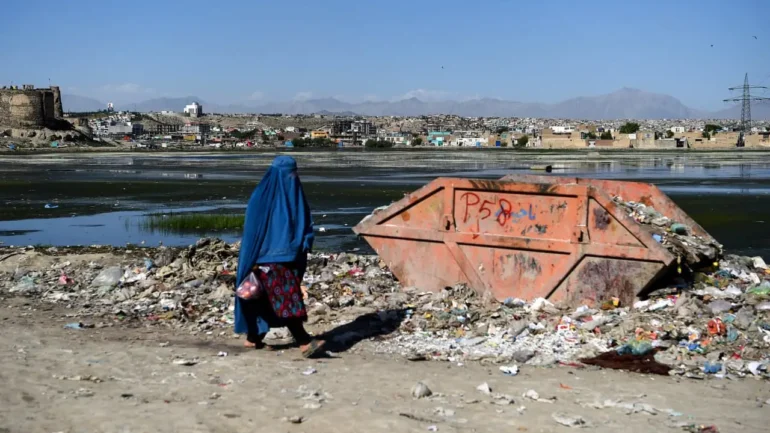

KABUL, AFGHANISTAN – The United Nations Assistance Mission in Afghanistan (UNAMA) says environmental pollution has become a serious and growing challenge in the country.
In a message marking World Cleanup Day, UNAMA said on Sunday, September 20, that among the various sources of pollution, plastic waste plays a significant role in contaminating Afghanistan’s water, soil and land.
The UN mission said preventing waste from being dumped on roads, in alleys and waterways, including the Kabul River, would help protect the environment, create healthier communities and contribute to a more sustainable future.
UNAMA said World Cleanup Day serves as a reminder that every piece of waste has an impact on the environment.
Environmental pollution is a major challenge in several Afghan cities. The accumulation of waste on roads, in rivers and public spaces, inadequate urban drainage and waste-management systems, and limited public awareness about urban sanitation are among the factors contributing to the problem.
Air pollution is another major environmental concern. The widespread use of coal and other low-quality fuels during winter, along with thousands of older vehicles operating in cities, contributes to poor air quality and exposes residents to a range of health risks.
UNAMA has previously warned that Afghanistan is facing increasingly severe environmental and climate-related challenges. In June 2026, the UN mission said drought and water shortages were affecting more than half of the country’s population, while air pollution, particularly in Kabul during winter, remained a major health threat linked to low-quality fuels and poor waste management.
The World Health Organization (WHO) says air pollution is associated with respiratory and cardiovascular diseases, lung cancer and other serious health problems. It identifies vehicles, household fuels, coal and waste burning among major sources of air pollution. WHO’s Afghanistan environmental-health information has also identified household and outdoor air pollution, inadequate sanitation, and exposure to solid waste and wastewater as important environmental health risks in the country.
In addition, environmental pollution and climate change are closely linked in Afghanistan and have compounded the country’s existing environmental challenges. Rising temperatures, prolonged droughts, declining water availability and more frequent extreme weather events are placing greater pressure on already fragile ecosystems and water resources.
At the same time, air pollution from coal and other low-quality fuels, vehicle emissions, waste burning and deforestation contributes to environmental degradation and can intensify the effects of climate change. Poor waste management and the disposal of plastic and other waste also pollute waterways and soil, while climate-related water shortages reduce communities’ ability to manage these pressures. Together, these problems threaten public health, agriculture, livelihoods and access to water, particularly in communities already affected by poverty and limited infrastructure.
Afghanistan contributes just 0.08% of global greenhouse gas emissions but is among the world’s most climate-vulnerable nations. It faces one of the most severe water shortages, driven by years of drought, weak infrastructure, and climate change impacts. Experts have warned that Kabul, home to more than five million people, could become the first modern capital to run out of water by 2030 as its aquifers continue to decline.

