


The Return of the Question of Afghanistan as al-Qaeda’s Safe Haven
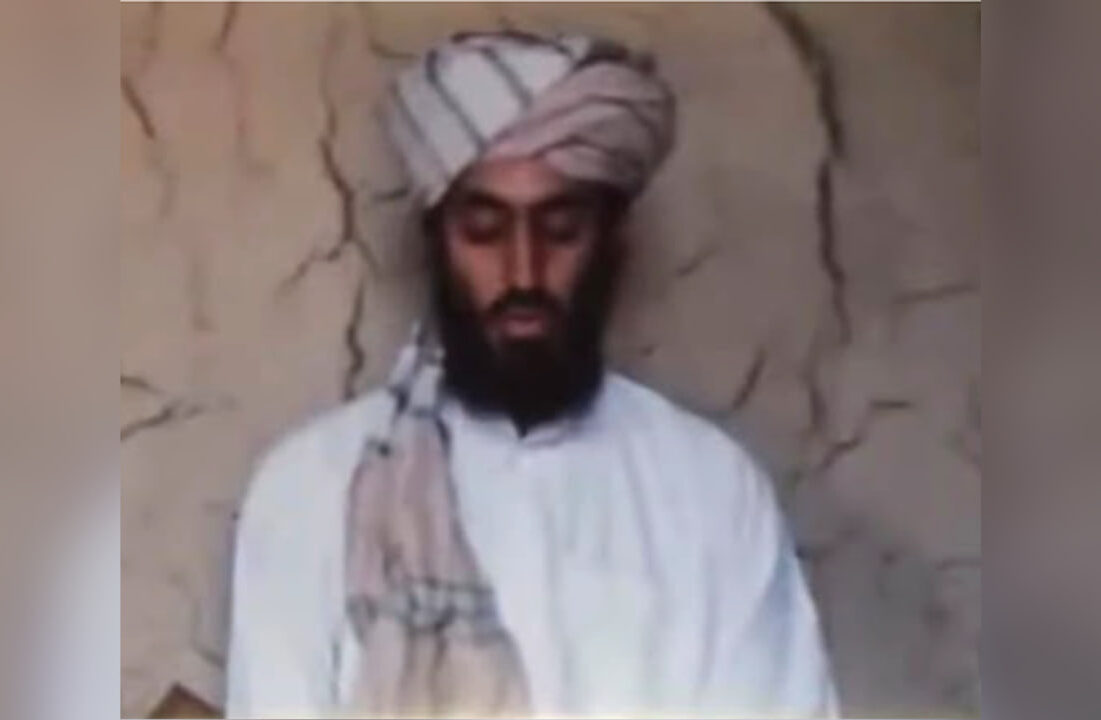
In recent days, a video has been circulating widely on social media in which a man identified as Hamza bin Laden, the son of Osama bin Laden and one of the best-known members of the family of al-Qaeda’s founder, delivers a speech marking the 25th anniversary of the September 11 terrorist attacks. In the speech, he emphasizes continuing the path of Osama bin Laden and what is described as “global jihad.” In one part of the video, the individual whom al-Qaeda identifies as Hamza bin Laden says: “Islam is facing an all-out religious, cultural, economic, and military war by enemies who do not want Islam to prevail.” Elsewhere in the video, al-Qaeda calls for recruitment and claims that “jihad is expanding” and that its power is “terrifying the enemies of God in Washington, London, and Tel Aviv.”
It is still impossible to determine with certainty the identity of the person appearing in the video or the location where it was recorded. However, some visual details—from the clothing and the way the turban is wrapped to the architecture of the buildings in the background—raise the possibility that the video may have been filmed somewhere in Afghanistan. If that assessment is correct, the issue would not be limited to the possible presence of Hamza bin Laden. The presence of an individual connected to the bin Laden family in Afghanistan, particularly on the 25th anniversary of the September 11 attacks and accompanied by a message supporting the continuation of jihad, could raise more serious questions about the state of al-Qaeda and other international jihadist groups in the country.
I have watched this video several times, and what stands out most is the environment visible in the background. The individual is wearing clothing and a turban commonly used by men in southern Afghanistan, while behind him there is a mud wall made of pakhsa. Mud walls constructed with pakhsa cannot, on their own, establish the location where the footage was recorded, because this type of architecture exists in different parts of Afghanistan and, in some cases, in parts of Pakistan’s tribal areas as well.
Nevertheless, such structures are more common in some areas, including Ghazni, Zabul, Uruzgan, Maidan Wardak, and parts of Khost and Paktia. At the same time, the individual’s clothing—and particularly the type and style of his turban—is somewhat familiar to me and resembles the way turbans are worn in parts of southern Afghanistan.
To examine this point, I spoke with a friend of mine in Kabul who works in the sale of fabric and turbans. According to him, the type of turban seen in this image is also known in Kabul’s markets and is mainly sold under the name “Mullah Yaqoob turban,” or “Mullah Yaqoob Lungi”—a name that became common because of its resemblance to the turban worn by Mullah Yaqoob, the Taliban’s defence minister. Historical images of Mullah Mohammad Omar also show examples of this style of wrapping a turban. Of course, these indications—particularly in the absence of independent information about where the video was recorded—cannot in any way prove that the footage was taken in Afghanistan. But neither can they be completely dismissed.
Another possibility could be that the setting shown in the video was deliberately selected or even constructed in a way intended to make viewers believe that the footage was recorded in Afghanistan. Jihadist groups have gained considerable experience over the years in propaganda, deception, and psychological operations, and using local environments, clothing, and symbols to mislead audiences or convey a specific message is nothing new. Under current circumstances, the possible use of artificial intelligence tools cannot be ruled out either. From this perspective, even if the footage was not actually recorded in Afghanistan, the choice of an Afghanistan-like setting and the use of clothing commonly associated with the country could itself be part of the message. This raises the question: if the sole purpose was to demonstrate that Hamza bin Laden is alive, why choose an environment resembling Afghanistan rather than an Arab or African setting? Perhaps the answer is that the producers of the video want to create the impression that he is alive, living in a secure environment, and still able to operate and maintain contact with jihadist networks; and Afghanistan, in this narrative, can serve as a symbol of precisely this kind of “security,” provided by a major supporting actor, namely the Taliban.
The Issue Is Bigger Than Hamza
But in either case, the issue is bigger than Hamza bin Laden. If the footage was actually recorded in Afghanistan, the central question is not in which village or province Hamza bin Laden is present. The real question is how, 25 years after the September 11 attacks—and despite claims that al-Qaeda’s capabilities, particularly in Afghanistan, have been eliminated—this country could once again become an environment in which individuals and networks affiliated with al-Qaeda feel secure. And if the footage is fabricated and its purpose is to create precisely this impression, an equally important question remains: why should Afghanistan be chosen as the symbol of a safe environment for a senior and important al-Qaeda figure?
This question becomes more significant when the history of al-Qaeda’s relationship with the Afghan Taliban is taken into account. Before the September 11 attacks, Afghanistan was not merely the place where Osama bin Laden lived. Under Taliban rule, the country had become an environment in which al-Qaeda could train, recruit, expand its networks, and plan cross-border operations. Daniel Byman, a terrorism scholar, in an analysis published to mark the 25th anniversary of the September 11 attacks identifies the “misunderstanding of Afghanistan’s unique value as a safe haven before 9/11” as one of five major analytical mistakes made by the United States after the attacks. In his view, one of the fundamental problems in post-9/11 assessments was that the particular importance of the Afghan environment to al-Qaeda was not properly understood.
Alongside this issue, Byman highlights four other analytical errors: the attacks of September 11 were viewed to an excessive degree as the beginning of a wave of larger and more catastrophic attacks; the sustained pressure required to combat terrorism was underestimated; the internal rivalries and divisions within jihadist movements did not receive sufficient attention; and, finally, the United States’ ability to transform societies and political structures elsewhere in the world, particularly in the broader Middle East, was overestimated.
The significance of this argument lies in the fact that, 25 years after 9/11, Byman is neither arguing that the threat of terrorism should be ignored nor predicting the inevitable return of the 2001 scenario. Rather, he emphasizes the need to “calibrate and proportion” threat assessments. In other words, a reduction in the risk of a major attack should not lead to the conclusion that the jihadist threat has disappeared, just as every sign of activity by these groups should not be interpreted as a definite prelude to an exact repetition of September 11. Instead, these signs could lead to different outcomes in another part of the world.
This point is particularly important for the debate over Afghanistan today, because it demonstrates that a country’s importance to a terrorist network is not limited to the physical presence of that group’s leaders. The political and security environment, opportunities for training, organization, communication, recruitment, and network rebuilding can be equally decisive. Therefore, today’s question should not simply be whether one or more al-Qaeda members are present in Afghanistan. It should also be whether the conditions currently prevailing in Afghanistan can facilitate the survival and rebuilding of such networks. Available evidence and reports suggest that such conditions may exist. This suggests that al-Qaeda in Taliban-controlled Afghanistan may have greater access to geographic, logistical, operational, administrative, training, and financial resources.
A profile published by the Wilson Centre on Saif al-Adl shows that he went to Afghanistan in the late 1980s, joined the Arab mujahideen, and shortly after the formation of al-Qaeda became a member of the group. During the 1990s, he became one of the figures close to Osama bin Laden and played a role in training, operations, and expanding al-Qaeda’s relations with affiliated groups. The report also discusses his role in the Battle of Kandahar in 2001 and his flight to Pakistan following al-Qaeda’s defeat.
This history demonstrates the role Afghanistan played in the formation and expansion of the first generation of al-Qaeda’s network. Afghanistan was not merely a place of residence for the group’s leaders; it was an environment in which training, organization, communication with other groups, and the development of operational capabilities were possible. Even the historical relationship between Saif al-Adl and Afghanistan demonstrates the country’s importance at different stages in al-Qaeda’s evolution, from its formation and training to its military confrontation with the United States.
This historical relationship did not completely end with the fall of the Taliban regime in 2001. After the Taliban returned to power in August 2021, the killing of al-Qaeda leader Ayman al-Zawahiri in Kabul in 2022 demonstrated that at least one senior leader of the network had been able to live in Afghanistan’s capital. This event alone cannot explain the situation of the entire al-Qaeda network in Afghanistan, but it demonstrates that the relationship between al-Qaeda and Afghanistan did not completely disappear after 2001.
At the same time, al-Qaeda today is not the same organization it was in 2001. Following the September 11 attacks and the military and intelligence pressure exerted by the United States and its allies, the group lost a significant part of its former centralized structure and gradually evolved into a more dispersed network.
An analysis published by the Modern War Institute at West Point on March 3, 2026, argues that al-Qaeda has entered its “third phase,” in which organizational rebuilding, network preservation, training, secure communications, deception, and the reconstruction of capabilities have become more important. According to this analysis, al-Qaeda today is quieter and less demonstrative than it was in the past, but this reduced visibility does not necessarily mean that its capabilities have disappeared. It may instead be part of an effort to rebuild the organization and preserve the capacity to return.
Byman’s analysis is also important to this discussion from another perspective. While emphasizing the success of the United States in preventing a repetition of a major jihadist attack on its soil, he warns that the threat of jihadist terrorism has not disappeared. In his view, the experience of the past 25 years should not lead to renewed neglect of the threat. At the same time, however, not every threat should be interpreted as a sign of an imminent repetition of September 11. What matters after 25 years is a precise, realistic, and proportionate assessment of the level of threat. This point is particularly important for Afghanistan: on the one hand, every unverified image or report should not be interpreted as evidence of a repetition of the September 11 attacks; on the other hand, the decline in major attacks should not cause the presence, training, and rebuilding of jihadist networks in a permissive environment to be overlooked.
The U.S. National Counterterrorism Center (NCTC) warned in September 2025 that the return of al-Qaeda’s calls to conduct attacks demonstrated the continuing and enduring nature of the organization’s threat. The assessment also stated that al-Qaeda and its branches use media productions and global crises to inspire potential attackers.
This assessment demonstrates that a reduction in al-Qaeda’s direct or high-profile operations should not be interpreted as the end of the organization’s threat. An organization once known for very large and highly visible attacks can today rely on lower-cost methods, decentralized networks, and propaganda to maintain influence and encourage individuals to act. Dispersed attacks can nevertheless have significant political and social consequences. Therefore, the threat should not be measured solely by the number of major operations. The organization’s capacity to survive, rebuild, and exploit new opportunities also matters.
This is not the first time that al-Qaeda has reached a stage in which the signs of its threat are less visible than the reality. An article titled “The Twenty-Year War,” first published in The Atlantic in 2016, notes that Osama bin Laden declared war on the United States on August 23, 1996, but that at the time many people paid little attention to the move—an action that later developed into a prolonged conflict between the United States and al-Qaeda. The article also recalls that after being expelled from Sudan in 1996, bin Laden returned to Afghanistan and came under Taliban protection.
This historical experience shows that jihadist threats are not always recognizable at the moment when they are developing into a major danger. At times, the stage in which an organization is rebuilding its capabilities, establishing networks, and preparing itself receives less political and media attention.
The Risk of al-Qaeda’s Return
But to understand the situation in Afghanistan today, perhaps the most important evidence lies not in the past, but in recent assessments of al-Qaeda’s current condition. On September 9, 2026, the Armed Conflict Location & Event Data Project (ACLED), in an analysis marking the 25th anniversary of the September 11 attacks, emphasized that al-Qaeda still exists, but that global jihadism is no longer organized around a single organization, leadership, or geographic center. In the section concerning Afghanistan and Pakistan, Pearl Pandya, ACLED’s senior South Asia analyst, states: “Al-Qaeda continues to enjoy a permissive operating environment in Taliban-ruled Afghanistan.” According to her, al-Qaeda’s role in Afghanistan is largely limited to providing training and support to other armed groups active in the country, while al-Qaeda in the Indian Subcontinent has shown signs of increased activity.
The importance of this assessment is that ACLED does not necessarily describe Afghanistan at this stage as the location from which al-Qaeda is planning international attacks. Rather, it speaks of the existence of a “permissive operating environment” for the group in the country. This distinction is highly important for understanding the nature of today’s threat. A jihadist group does not necessarily have to plan attacks like September 11 at a given moment in order to become a serious threat. The existence of a permissive environment can give such a group the opportunity to preserve and train its personnel, establish relationships with other groups, and rebuild its infrastructure and operational capabilities. Therefore, the risk posed by Afghanistan should be understood not only in terms of the possibility of an immediate attack, but also in terms of the creation of conditions that allow jihadist networks to persist, strengthen, and rebuild.
ACLED also points to increased activity by al-Qaeda’s branch in the Indian subcontinent, citing the car-bomb attack in New Delhi in November 2025 and reported efforts to establish cells in Bangladesh as indications of this trend. The organization also refers to al-Qaeda’s support for armed groups operating in Afghanistan and Pakistan.
As a result, the Afghanistan issue cannot be viewed solely within the country’s borders. If a jihadist network is able to train, communicate, and rebuild in Afghanistan while simultaneously maintaining relationships with armed groups in other countries, the consequences can become a regional security issue.
Aaron Y. Zelin, in an analysis marking the 25th anniversary of the September 11 attacks, argues that today’s global jihadist movement, despite becoming more geographically dispersed and changing structurally, continues to demonstrate resilience in terms of manpower, resources, media production, and its ability to continue operating. At the same time, however, its position on the security priorities of the United States and many Western countries has declined. In his view, great-power competition, the war in Ukraine, tensions with Iran, and issues such as migration and drug trafficking have pushed terrorism away from the center of security calculations. This shift in priorities can gradually affect governments’ budgets, personnel, intelligence collection, and, most importantly, institutional memory, potentially creating the conditions for another “strategic surprise” in the future.
This analysis is important for Afghanistan because a decline in global attention to terrorism does not necessarily mean a decline in the threat. On the contrary, the more governments’ security attention shifts toward geopolitical competition and new crises, the greater the opportunity jihadist groups may have to operate on the margins of these developments. Afghanistan could be one of the environments in which this gap between declining political attention and continuing jihadist capacity becomes visible. In other words, while terrorism loses its former position on the security agendas of many governments—or even as some countries remove certain groups from their security threat lists based on inaccurate images presented about them, as has been seen in the decisions of some countries regarding the Taliban—groups such as al-Qaeda may continue to preserve their personnel, communications, and operational capabilities.
From this perspective, the danger is not necessarily that an event similar to September 11 will occur tomorrow. The danger may lie in the gradual emergence of conditions in which a Jihadist group can preserve its human and financial resources, rebuild its communication networks, train personnel, and expand its relationships with other groups without being at the center of global attention. But there is also the possibility that this capacity for rebuilding, if favorable political and security conditions emerge, could eventually lead to the return of a more direct al-Qaeda threat.
This issue becomes even more significant on the 25th anniversary of the September 11 attacks. The world today no longer sees the Afghanistan of 2001, and al-Qaeda is no longer the organization of 2001. Yet some of the basic elements of that equation may still exist: an international Jihadist group, a network of affiliated individuals and branches, the ability to operate in a relatively closed environment beyond effective scrutiny, and an environment that allows it to pursue training, communication, and the rebuilding of its capabilities.
As Zelin argues in his article, if declining global attention to terrorism coincides with the continued capacity of jihadist groups, the gap between the actual threat and the perceived threat may widen. Under such conditions, an organization such as al-Qaeda could rebuild its capabilities while a large share of the world’s intelligence and security resources is redirected toward other crises. This is precisely the kind of gap that could create the possibility of a strategic surprise in the future.
For this reason, the image of Hamza bin Laden—whether genuine or the product of a media deception operation—is worth examining, not because it allows us to say with certainty that Hamza bin Laden is, for example, in a particular village in Andar District of Ghazni Province or in a particular village in Bazarak District of Panjshir, Afghanistan, but because the image once again raises a question that we assumed should no longer have to be asked after 2001: Has Afghanistan once again become a safe haven, or at least a permissive environment, for international jihadist groups, including al-Qaeda?
The answer to this question cannot be extracted from a single video. To reach a reliable conclusion, independent evidence concerning the presence of al-Qaeda leaders, training facilities, financial and communication networks, the movement of foreign fighters, and the nature of these groups’ relationship with the governing structure in Afghanistan must be considered together. Evidence published in numerous international reports, as well as discussions I have had with sources inside Afghanistan, clearly reflects this picture. But ignoring the question is not a solution either. The experience of August 23, 1996, and the years that followed demonstrated that major threats do not always begin loudly. Sometimes they grow quietly, rebuild in a permissive environment, and become visible only when little time remains to prevent their consequences.
What is most concerning today is not necessarily the immediate repetition of the September 11 scenario, but the gradual return of al-Qaeda and the normalization of the presence of international jihadist groups in Afghanistan, to the point where the country once again becomes a permissive environment and safe haven for the activity, organization, and rebuilding of these groups’ capabilities, while the international community gradually comes to accept this situation as part of the existing reality.
Such a situation will ultimately not be a problem limited to Afghanistan or its neighboring countries. In today’s interconnected world, wealthy countries cannot shield themselves from the consequences of poverty, instability, terrorism, crisis-driven migration, jihadism, and criminal networks in poorer and more unstable countries. For this reason, the domestic and national security of Western countries is to a significant extent dependent on the security and political conditions beyond their own political borders, and no wall can be built between domestic security and instability beyond those borders. If Afghanistan once again becomes a permissive environment for al-Qaeda and other international jihadist groups, ignoring this reality will not solve the problem. It may only change the timing and circumstances under which a threat resembling September 11 could return.
From this perspective, if the international community remains silent in the face of the creation of a permissive environment for jihadist groups to operate in Afghanistan, or at least chooses to look away despite the public statements of these groups, including al-Qaeda, calling on their supporters to travel to Afghanistan, Afghanistan may once again become a geography in which groups such as al-Qaeda have the opportunity to rebuild. Zelin’s analysis concerning declining strategic attention to the jihadist movement, together with ACLED’s assessment of the continued existence of a permissive operating environment for al-Qaeda in Afghanistan, demonstrates that the danger lies not only in the capabilities of jihadist groups. Part of the danger may also arise from declining attention and preparedness on the other side.
Under such circumstances, the image of Hamza bin Laden is not merely an image. It could serve as a reminder that the Afghanistan-al-Qaeda issue is not over. If the image is genuine, the question of the possible presence of a member of the bin Laden family in Afghanistan is serious—a subject that had already been raised in credible reports concerning Hamza bin Laden’s presence in Afghanistan. And if the image is fabricated, the choice of Afghanistan as the setting intended to evoke a sense of “security” is itself worthy of consideration. In either case, what matters is not proving a claim on the basis of a single video, but returning our attention to an old question: Has Afghanistan once again become an environment in which international jihadist groups can survive, rebuild, and use the world’s peripheral attention to prepare for their future? The main danger may not lie in what we see today, but in what may be quietly taking shape.

