

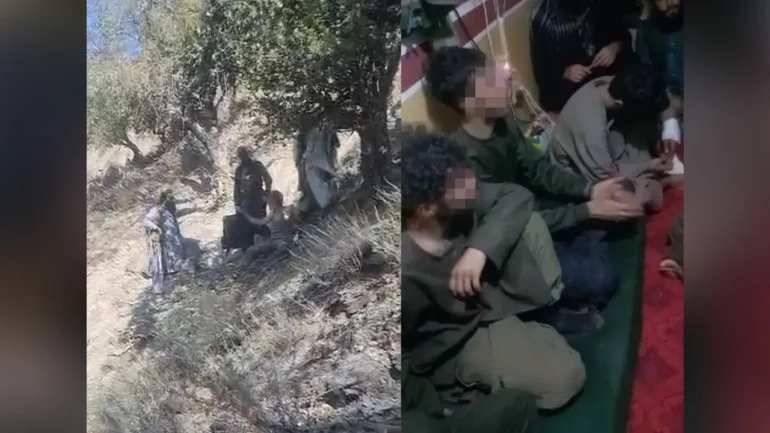

KABUL, AFGHANISTAN – The Taliban’s Ministry of Defense has confirmed clashes between its forces and an armed opposition group in Kamdesh district of Nuristan province, claiming that 28 members of the opposing group were killed and 32 others were captured alive.
In a statement issued on Sunday, September 27, the ministry said that “enemy movements were severely suppressed” and claimed that 28 people were killed and 32 others detained.
The ministry described those involved in the clashes as Daesh (ISKP) insurgents and elements of evil and corruption and alleged that they had been sent to Afghanistan with support from Pakistan.
The Afghanistan Freedom Front (AFF) reported the clashes a day earlier, saying that Taliban forces had attacked its positions in Kamdesh with ground forces and drones. The group said its fighters resisted the assault and launched a counterattack.
The Freedom Front claimed that the fighting inflicted heavy casualties on Taliban forces, saying that the bodies of at least five Taliban members had been left on the battlefield.
The group also claimed that its fighters had captured several Taliban checkpoints and pushed Taliban forces back from parts of Kamdesh in Nuristan and Nari district in neighbouring Kunar province. Independent sources have not verified these claims.
In its statement, the Taliban Ministry of Defense further alleged that most of those involved were former members of the Afghan security forces who had been recruited by Pakistan’s intelligence services with promises of asylum and well-paid employment in foreign countries. The ministry claimed that after travelling to Pakistan, they were transferred to training camps operated by the Pakistani military and intelligence service and later sent to Nuristan following short-term military training.
The ministry also alleged that Pakistani fighters and members of Daesh were present during the clashes, but claimed that they fled at the beginning of the fighting and left the other fighters behind.
The Taliban did not provide independent evidence to substantiate these allegations. The Afghanistan Freedom Front has also not independently verified the casualty figures claimed by the Taliban.
The clashes come amid continued armed activity by several anti-Taliban groups across Afghanistan. According to the European Union Agency for Asylum, the National Resistance Front (NRF) and the Afghanistan Freedom Front have been the two main armed resistance groups to emerge following the Taliban takeover in August 2021. Other groups, including the Afghanistan Liberation Movement, People’s Sovereignty Front, National Mobilization Front and National Battle Front, have also reported armed operations.
In recent months, reports of armed resistance have increased in several parts of the country. The Freedom Front, National Resistance Front and other groups have claimed attacks on Taliban positions in provinces including Badakhshan, Kunar and Nuristan. In July, a newly formed group known as the Sepahiyan-e Mihan (Homeland Soldiers Front) briefly seized a district center in Badakhshan before withdrawing.
The latest clashes in Kamdesh therefore form part of a broader pattern of intermittent armed confrontation between Taliban forces and anti-Taliban resistance groups. However, claims by the different groups about casualties, territorial gains and the scale of their operations are often difficult to independently verify. Recent reporting has also noted that no anti-Taliban armed group has established sustained territorial control over a part of Afghanistan.

