

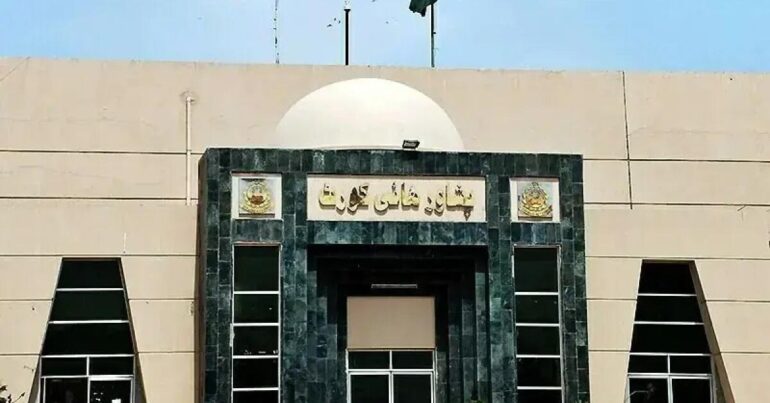

KABUL, AFGHANISTAN – The Peshawar High Court on Wednesday temporarily suspended the deportation of 17 Afghan trainee doctors who are undergoing specialized medical training at hospitals in Khyber Pakhtunkhwa, local media reported.
According to the Pakistani media outlet Dawn, the court allowed the doctors to continue their postgraduate training until a decision is reached on their pending visa extension applications.
A bench of judges at the Peshawar High Court issued notices to Pakistan’s federal government and the Pakistan Medical and Dental Council (PMDC), seeking their response to a petition filed by the 17 trainee doctors.
The doctors are undertaking postgraduate training at Peshawar General Hospital and North-West Hospital and Research Centre. Their petition challenges PMDC directives requiring Afghan medical students to discontinue their training and leave Pakistan.
The PMDC issued the directive earlier this month, ordering medical and dental institutions across Pakistan to expel enrolled Afghan students and facilitate their departure. The council also ordered the suspension of new admissions, placements, transfers and other educational opportunities for Afghan nationals until further notice.
In their petition, the Afghan trainee doctors urged the court to declare the PMDC directive unlawful and without legal validity. They also asked the court to order officials at the two hospitals to lift their suspensions and immediately allow them to resume their specialized training programs.
Lawyers representing the petitioners, Tariq Afghan and Sajeed Khan Afridi, told the court that their clients had entered Pakistan on valid student visas under formal agreements between Pakistan and Afghanistan to undertake specialist training. They said the doctors had successfully passed all required examinations and completed the necessary documentation, yet their visa extension applications remained pending.
The lawyers argued that the medical council has no legal authority to cancel the doctors’ placements or order their deportation.
The exact number of Afghan medical students studying in Pakistan remains unclear. According to the Human Rights Commission of Pakistan, about 100 Afghan medical and dental students in Lahore may be affected by the directive, including 20 to 40 women, many of them in their final years of studies.
Afghan students and doctors in several provinces, including Punjab, Sindh, Khyber Pakhtunkhwa and Balochistan, have turned to the courts in an effort to prevent the termination of their studies and their deportation. High courts in Lahore, Sindh and Balochistan have previously issued temporary suspensions allowing the students to continue their education.
The PMDC directive has drawn criticism from Pakistani politicians and rights groups. The Human Rights Commission of Pakistan warned that the move could create a humanitarian problem for students already enrolled. Human Rights Watch said the order particularly threatened Afghan women, while Amnesty International described it as “patently discriminatory and arbitrary” and called for a solution allowing Afghan students to complete their education.
The dispute comes amid a broader Pakistani campaign to repatriate Afghan nationals and deteriorating relations between Islamabad and Afghanistan’s Taliban authorities. According to the International Organization for Migration, 2.65 million Afghans returned from Pakistan between Sept. 15, 2023, and July 31, 2026, including more than 1.79 million since April 2025.
Pakistan authorities say their measures are aimed at enforcing immigration rules and addressing security concerns. Islamabad accuses the Taliban of allowing Tehreek-e-Taliban Pakistan militants to operate from Afghan territory, an allegation the Taliban denies.

