

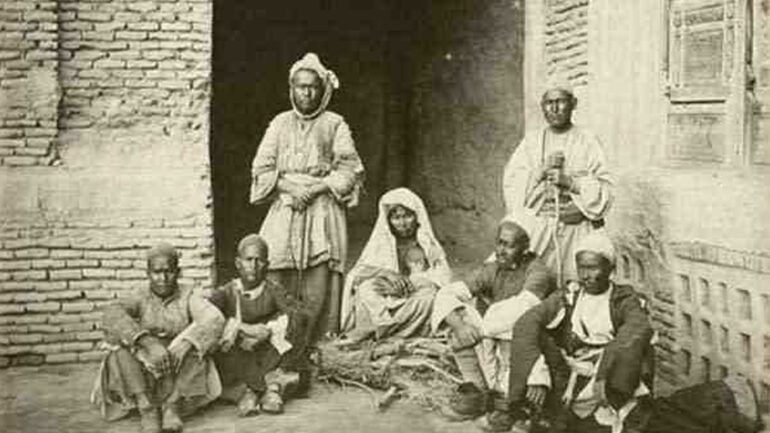

KABUL, AFGHANISTAN – Hazara activists and political groups marked September 25 as a day of remembrance for victims of mass killings and persecution of Afghanistan’s Hazara community, calling for documentation of past abuses, accountability and stronger protection from ongoing violence.
The date is linked by Hazara activists to the late-19th-century campaigns of Amir Abdul Rahman Khan, during which Hazaras faced mass killings, forced displacement, land seizures and enslavement. Activists say the annual observance honors the victims and draws attention to the ongoing discrimination and violence against the community.
Hazaras, a predominantly Shia Muslim ethnic group concentrated largely in central Afghanistan, have endured repeated waves of persecution and violence. Historical accounts, including the official chronicle Siraj al-Tawarikh, state that of approximately 600,000 Hazara households in the Uruzgan region, some 400,000 were killed, displaced to neighboring countries or sold into slavery during Abdul Rahman Khan’s campaigns.
The community was also targeted during the Taliban’s first period in power. Human Rights Watch documented the killing of about 170 mostly Hazara men in Yakaolang district in January 2001 after Taliban forces retook the area. The men were detained and shot by firing squad in public view, according to the rights group.
The People’s Islamic Unity Party of Afghanistan, led by Mohammad Mohaqeq, has said that between 8,000 and 10,000 Hazara and Shiite civilians were killed in Mazar-i-Sharif alone during the Taliban’s first rule.
Since the Taliban returned to power in 2021, Hazara activists say the community continues to face restrictions, targeted attacks, and pressure on its religious and cultural institutions and practices.
On Friday, Hazara intellectuals and political leaders used the occasion to draw greater attention to the community’s history and current situation.
In a Facebook post, writer and university professor Ali Amiri said remembering the victims is both an act of reflection and a way of honoring them. He said remembering past atrocities could help prevent their repetition and preserve a moral responsibility toward victims.
Mohammad Amin Ahmadi, a philosophy researcher and university professor, said commemorating the victims is not only about remembering a historical tragedy but also about rejecting discrimination, repression and the denial of human dignity against any group.
Former parliamentarian Aref Rahmani similarly called for the history of the Hazara genocide to become a present-day responsibility, including documenting the truth, pursuing rights and ensuring accountability.
Mohammad Karim Khalili, leader of the Islamic Unity Party of Afghanistan, said Sept. 25 represents a day associated in Hazara historical memory with massacres, looting, destruction and displacement. Khalili said recent Taliban policies toward Hazaras and Shiites showed the need for continued international attention and called on governments and international organizations not to remain silent over crimes against the community.
The People’s Islamic Unity Party of Afghanistan, led by Mohammad Mohaqiq, also issued a statement describing Sept. 25 as a day commemorating the mass killing of Hazaras in Uruzgan during Abdul Rahman Khan’s rule. The party called on the United Nations, the Organization of Islamic Cooperation and human rights organizations to pay greater attention to the situation of Hazaras and Shiites.
The Justice and Freedom Party, associated with former vice-president Sarwar Danesh, described the 19th-century events as one of the longest and most extensive genocides in the country’s history. It said Hazaras lost roughly 62% of their population in that period and have remained exposed to various forms of violence since. The party called for systematic documentation of past and present crimes against Hazaras and the preservation of evidence for future generations.
Hazaras have also been repeatedly targeted by the Islamic State’s Afghanistan affiliate, known as ISIS-K, which has attacked mosques, schools, public transport and other civilian sites in areas with large Hazara populations, particularly western Kabul.
The United Nations recorded at least 345 casualties — 95 killed and 250 wounded — in attacks aimed at the Hazara community between August 15, 2021, and May 30, 2023. Among the deadliest was a suicide bombing at the Kaaj Educational Center in Kabul’s Dasht-e-Barchi neighborhood on Sept. 30, 2022, that killed more than 35 Hazara girls and young women and wounded at least 82 others.
Human Rights Watch reported in 2024 that ISIS-K claimed responsibility for at least 17 attacks against Hazaras since the Taliban takeover, killing and injuring more than 700 people. The group has also criticized Taliban authorities for failing to provide adequate protection in predominantly Hazara areas.

