

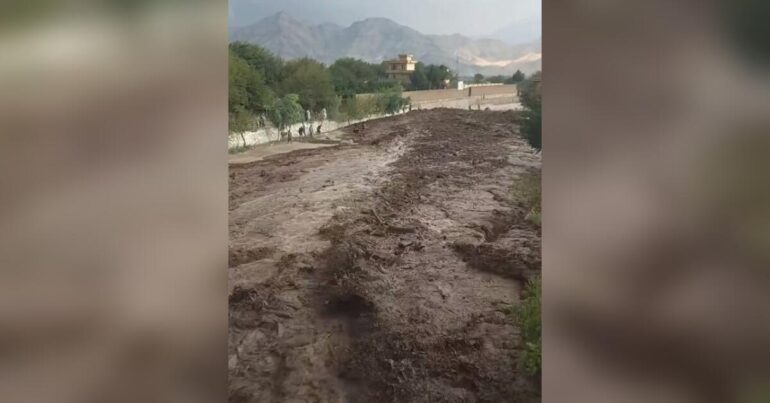

KABUL, AFGHANISTAN – Flash floods triggered by heavy rainfall have killed two children in Afghanistan’s eastern Kunar and Nuristan provinces and caused widespread damage to farmland, roads and other infrastructure, local sources and Taliban authorities said.
Both provinces and surrounding areas have experienced heavy rainfall since Wednesday, with flooding reported in several districts.
A source in the Taliban Information and Culture Department in Kunar said the two children were killed in Asadabad and in the district of Chawkay. The body of one child has been recovered, while efforts to locate the second continue.
The floods also killed 32 livestock and damaged two mosques, hundreds of acres of farmland, irrigation canals, two mills and roads, according to the source.
In Nuristan province, local sources in Waygal district reported that heavy rain and flooding in several parts of the district on Thursday afternoon damaged fruit orchards and agricultural crops. The full extent of the damage has not yet been determined.
The latest flooding follows days of severe weather across Afghanistan. In recent days, floods have affected many provinces, in some places causing displacement as well as the destruction of homes, farmland and infrastructure.
Last month, severe flooding in Parun, the provincial capital of Nuristan, killed and injured dozens of people and caused an estimated $35 million in financial losses, according to Taliban authorities.
Afghanistan has become increasingly vulnerable to climate-related disasters, including flash floods, prolonged droughts, landslides and extreme winter conditions. The United Nations has identified the country as one of the most vulnerable to climate change, despite contributing only a small share of global greenhouse gas emissions.
Years of conflict, underdeveloped infrastructure and declining humanitarian funding have weakened Afghanistan’s ability to prepare for and respond to natural disasters. The recurring crises have added further pressure to the country’s humanitarian situation, which remains among the world’s most severe.
Aid organizations have called for greater investment in early-warning systems, climate-resilient infrastructure, and disaster preparedness measures to reduce the impact of such events and support vulnerable communities.

