

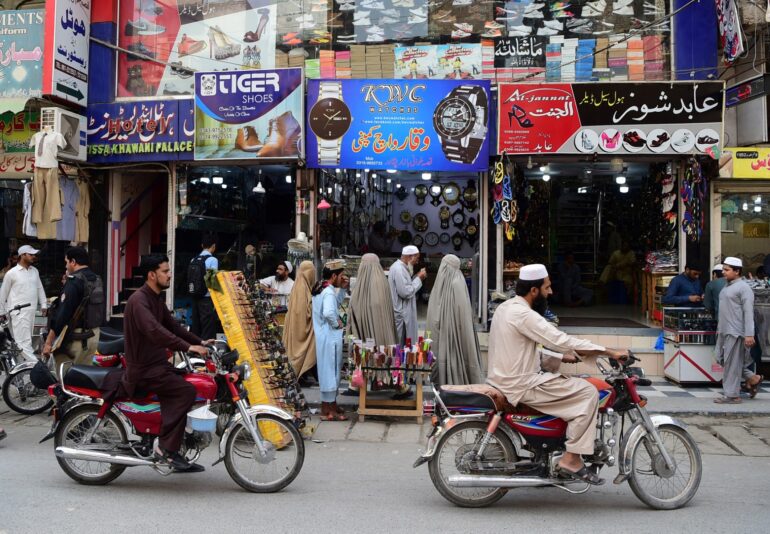

KABUL, AFGHANISTAN – The Taliban’s embassy in Islamabad says it has raised with Pakistani authorities the issue of properties belonging to a number of Afghan migrants that are reportedly being put up for auction in Chakwal district of Punjab province.
In a post on its X account, the embassy said that a delegation travelled to Chakwal on Friday, September 4, to inspect and assess the properties belonging to Afghan migrants.
According to the embassy, the delegation also held discussions with relevant local officials to find a legal and appropriate solution and prevent the loss of the Afghan shopkeepers’ property and assets. The embassy said Pakistani local authorities had pledged to cooperate on the matter.
The Taliban embassy did not provide details on how or why the properties had been put up for auction.
Relations between Pakistan and the Taliban have deteriorated sharply in recent years, largely over Islamabad’s accusations that the Tehrik-e-Taliban Pakistan (TTP) is operating from Afghan territory—an allegation the Taliban denies.
The worsening security and political tensions have also had a direct impact on Afghan migrants in Pakistan, as the country intensifies the implementation of its Illegal Foreigners Repatriation Plan, introduced in late 2023. In a directive two months ago, Pakistan’s Interior Ministry instructed law enforcement agencies to intensify arresting undocumented Afghan migrants from July 10 and ordered the immediate detention of those residing without valid visas.
Provincial administrations were also directed to submit daily reports on identifications, actions taken and current status of undocumented Afghans.
Pakistan has long hosted one of the world’s largest Afghan refugee populations, with successive waves of displacement fueled by decades of conflict, political upheaval and economic hardship in Afghanistan.
Officials in Islamabad say around 2.4 million Afghans have either returned voluntarily or been deported since the repatriation plan took effect. Data from the United Nations refugee agency, UNHCR, indicates that more than 1.15 million Afghans returned from Pakistan during 2025 alone.
The large-scale returns have prompted warnings from UN agencies and humanitarian organizations about the challenges awaiting returnees in Afghanistan, which continues to grapple with severe economic difficulties, widespread unemployment and limited access to public services.

