

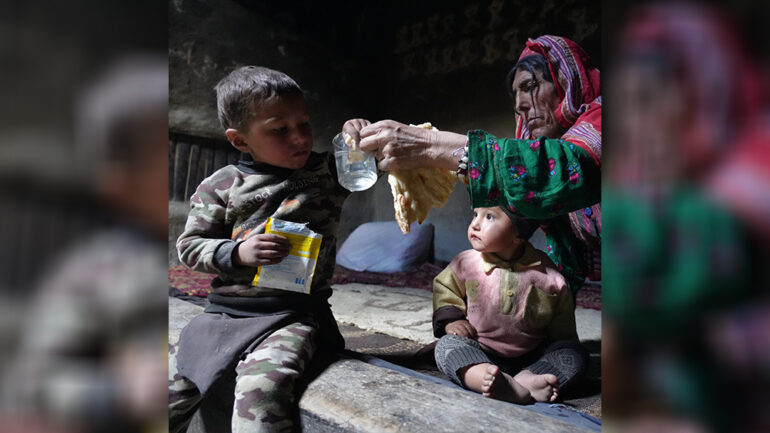

KABUL, AFGHANISTAN – John Aylieff, the World Food Programme’s (WFP) Country Director in Afghanistan, says many Afghans are surviving on little more than bread and tea because they cannot afford to buy enough food.
In an interview with the Swiss newspaper Neue Zürcher Zeitung (NZZ), Aylieff said food, fruits, vegetables, grains and rice are available in Afghan markets, but many people do not have enough money to purchase them.
“According to our studies, a worker is lucky to find informal work two days a week. That brings in a few dollars, but it’s not enough to properly feed a family. Many Afghans today live on bread and tea,” he said.
Aylieff said the situation has been further aggravated by the forced return of more than six million Afghan migrants and workers from Pakistan and Iran.
According to Aylieff, the return of millions of people has increased pressure on Afghanistan’s already fragile labor market. At the same time, many families have lost remittances previously sent by migrant workers from neighboring countries.
He said that after years of crisis, very few Afghans have savings they can rely on in such circumstances.
NZZ reported that Afghanistan has become accustomed to war, poverty and hunger, but conditions have rarely been as severe as they are today.
Five years after the Taliban returned to power, Afghanistan is facing a deepening economic and humanitarian crisis.
According to UN figures, one in three people in Afghanistan is facing hunger, with conditions expected to worsen during the winter.
The WFP estimates that nearly 14 million people in Afghanistan are suffering from malnutrition. The agency has projected that this year, 3.7 million children and 1.2 million pregnant and breastfeeding women will face acute malnutrition.
Regional tensions, including the war in Iran and the closure of Pakistan’s borders, have also made it more difficult to deliver humanitarian assistance to people in need.
Aylieff said the WFP is now spending more than three times as much as it previously did to transport humanitarian supplies. He said the additional costs are diverting funds that are urgently needed elsewhere.
Meanwhile, the WFP says it does not have sufficient funding to meet the growing humanitarian needs in Afghanistan.
“Today we have to turn away six out of seven malnourished women and children at our centers because we simply don’t have the money to provide for them,” Aylieff said.
The UN appealed for $1.71 billion to address humanitarian needs in Afghanistan in 2026, but less than 20 percent of the required funding had been received by the first half of the year.
Humanitarian agencies have also been hit by a sharp decline in foreign assistance from the United States, which previously financed up to 40 percent of humanitarian aid for Afghanistan.
As a result, aid organizations have been forced to scale back programs and prioritize assistance for those in the most critical need.
According to Human Rights Watch, the country’s food security has continued to deteriorate. Before October 2025, only 28 percent of Afghan households had sufficient access to food without external assistance. By April 2026, that figure had fallen to just 20 percent, while approximately 22 million people now require urgent food and healthcare assistance.
Afghanistan’s humanitarian crisis is being driven by Taliban restrictions on women, the continued deportation of Afghan migrants from neighboring countries, climate change and natural disasters, and declining humanitarian aid. Together, these pressures are worsening poverty, food insecurity and unemployment in an already fragile economy.

