

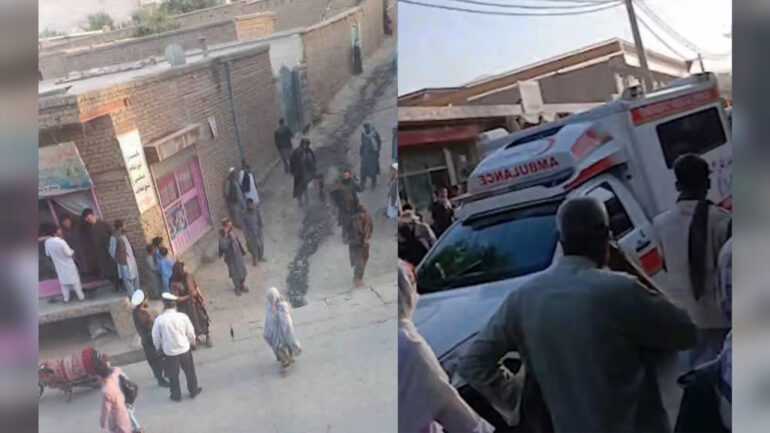

KABUL, AFGHANISTAN – The explosion at a private school in Dasht-e-Barchi, a predominantly Hazara and Shia area in western Kabul, has drawn widespread condemnation.
Richard Bennett, the UN Special Rapporteur on the situation of human rights in Afghanistan, the Afghanistan Freedom Front (AFF), and Mohammad Mohaqeq, leader of the Islamic Unity Party of the People of Afghanistan, have condemned the incident and called for accountability and an investigation into those responsible.
Richard Bennett said on Tuesday, August 18, that he condemned what he described as the “heinous attack” at a school in Dasht-e-Barchi that injured a large number of children.
In a post on X, Bennett said it was deeply troubling that a Hazara area of Kabul had once again been targeted. He called for a “full and independent investigation” aimed at identifying and prosecuting those responsible for the incident.
The Afghanistan Freedom Front also condemned the explosion, describing it as a “terrorist attack” and part of what it called a series of “organized terrorist attacks against the Hazara people and Shiites,” particularly students and civilians in western Kabul.
In a statement, the group expressed condolences to the families of the victims and said that targeting young students constitutes “terrorism and a crime against humanity.” The group argued that there could be no justification for an attack targeting children.
The Afghanistan Freedom Front further accused the Taliban of failing to provide adequate security for Hazara communities and public places in the area. It also alleged that “structures and circles within the Taliban” may have a role in such incidents, without providing evidence to substantiate the claim.
The group called on the international community and relevant international institutions to conduct a serious and independent investigation and identify those responsible.
Mohammad Mohaqeq also placed responsibility on the Taliban, saying that as the de facto authorities controlling Afghanistan, they are responsible for protecting the lives, property and dignity of civilians.
Mohaqeq said the incident, which occurred among children whose daily activities involved nothing more than books and pens, demonstrated the cruelty and brutality of those behind it. He argued that the Taliban must bear responsibility for security because they claim to have full control over the country.
Mohaqeq also said he had received information that two individuals riding motorcycles had thrown two hand grenades into the school compound.
The explosion occurred at around 4:30 p.m. on Monday, August 17, inside the compound of the private Shama-e-Hedayat School in the Mahdia township of Dasht-e-Barchi, in Kabul’s 18th security district.
Local sources reported shortly after the incident that explosives had been thrown into the school compound from outside. Taliban authorities confirmed the incident, but did not provide further details about the nature of the incident or identify any suspects.
Initial reports indicated that around 50 students were injured in the explosion. Many of the injured children are reportedly in critical condition and require urgent medical attention. Most of those injured are under the age of 18, and reports indicate that many urgently need blood transfusions. No group has officially claimed responsibility for the incident.
Dasht-e-Barchi, a predominantly Hazara and Shia area in western Kabul, has repeatedly been the scene of deadly attacks targeting civilians, students, educational institutions, mosques and other public places. The area has witnessed some of the deadliest attacks against Afghanistan’s Hazara community in recent years, raising persistent concerns about the protection of civilians and minority communities.
The latest explosion has once again raised questions about security in the area and the Taliban’s ability and willingness to prevent attacks against vulnerable communities.

