

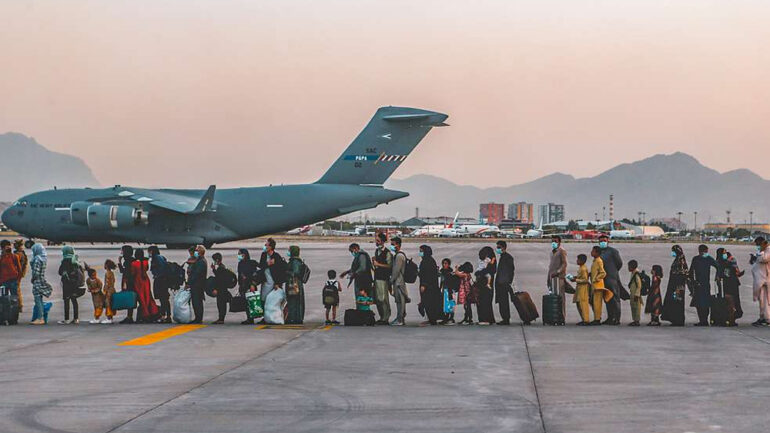

KABUL, AFGHANISTAN – The International Refugee Assistance Project (IRAP) says the United States has turned its back on Afghan nationals who risked their lives in support of the U.S. mission in Afghanistan.
In a statement issued Tuesday, August 12, marking the fifth anniversary of the fall of the Afghan republic, the Taliban’s return to power and the U.S. withdrawal from Afghanistan, IRAP criticized restrictions imposed by the Trump administration on Afghan refugees and asylum seekers.
“The United States government has increasingly turned its back on Afghan refugees, including those who risked their lives to support the U.S. mission in Afghanistan,” the organization said.
IRAP said years-long delays in processing Special Immigrant Visas (SIVs) have left many Afghan allies of the United States at continued risk. The organization added that new restrictions imposed by the Trump administration have further prevented eligible Afghans from reaching safety.
Jennifer Patota, IRAP’s deputy director of legal services, said the Trump administration was simultaneously blocking Afghans from entering the United States and disrupting communities that had relied on established pathways to safety and built their lives in the country.
“Whether it is arbitrarily targeting Afghan green card holders or stranding allies abroad, the U.S. government has betrayed its promise to protect Afghan refugees,” Patota said.
IRAP said that since late 2025, when a travel ban and suspension of immigrant visa processing for Afghan nationals took effect, even Afghans eligible for U.S. Special Immigrant Visas have been prevented from entering the country.
The organization accused the U.S. government of discriminatory treatment of Afghan refugees and said the Trump administration had effectively restricted refugee admissions to “white Africans.” It added that only three Afghan nationals were resettled in the United States during fiscal year 2026.
IRAP also expressed concern about the treatment of Afghans already inside the United States, saying some refugees and asylum seekers have been detained, stripped of their legal status and placed at risk of deportation.
The criticism comes as uncertainty continues to surround U.S. immigration and resettlement programs for Afghans following policy changes introduced by President Donald Trump last year.
In November 2025, following a shooting in Washington in which an Afghan national was accused of killing a U.S. National Guard member and injuring another, Trump ordered the suspension of Afghan refugee resettlement programs and visa processing for Afghan passport holders. He also called for a review of Afghans who entered the United States during former President Joe Biden’s administration.
The measures have affected thousands of Afghans awaiting relocation from third countries, including former interpreters, contractors, civil society activists and others who supported U.S. government and military operations during the two-decade U.S. presence in Afghanistan.
Many applicants remain stranded in countries including Pakistan and Qatar while awaiting visa decisions and relocation, with some facing prolonged uncertainty over their legal status and personal safety.
Refugee advocacy organizations, U.S. lawmakers, UN officials and human rights groups have criticized the restrictions, calling on Washington to preserve established pathways for eligible Afghans seeking protection and family reunification. They have also urged the U.S. government to continue supporting former Afghan partners and other vulnerable applicants through existing resettlement programs.
The development comes as Afghanistan continues to face a deepening humanitarian crisis, weak accountability mechanisms and growing concerns over the safety of former government employees and others who worked with international organizations and foreign forces. Reports of arrests and detentions by the Taliban have heightened fears among former employees, many of whom remain in Afghanistan and say they face risks of persecution, retaliation and arbitrary detention.

