

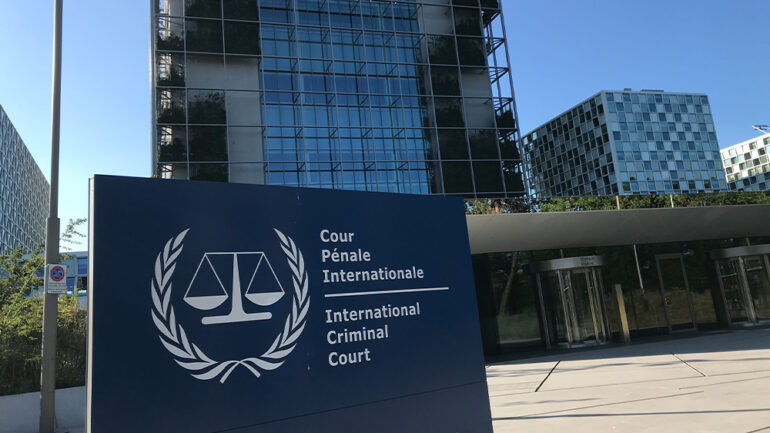

KABUL, AFGHANISTAN – The International Criminal Court (ICC) has secretly issued arrest warrants for two additional senior Taliban officials, in addition to the publicly announced warrants for the group’s supreme leader and chief justice, Middle East Eye reported Tuesday (August 11).
Citing confidential court documents and sources familiar with the proceedings, the news outlet reported that the warrants were issued by a three-judge panel at the ICC.
According to the report, several months after issuing arrest warrants for Taliban supreme leader Hibatullah Akhundzada and Abdul Hakim Haqqani, the group’s chief justice, the same judicial panel issued warrants for two other Taliban officials. Their identities have not been made public in order to preserve the confidentiality of the proceedings.
Middle East Eye said it had obtained confidential ICC documents indicating that the secret warrants were issued on the basis of new evidence and allegations involving additional victims.
In 2025, the ICC issued arrest warrants for Akhundzada and Haqqani following an application and evidence submitted by Karim Khan, the court’s former prosecutor. The warrants were issued in connection with alleged gender-based persecution of women and members of the LGBTQ+ community in Afghanistan.
The case stems from the ICC’s broader Afghanistan investigation. Afghanistan became a party to the Rome Statute in 2003, and the ICC authorized an investigation into alleged crimes committed in Afghanistan and related crimes in other states. After the Taliban returned to power in August 2021, the ICC prosecutor said the investigation would focus primarily on alleged crimes by the Taliban and Islamic State-Khorasan.
In 2024, Chile, Costa Rica, Spain, France, Luxembourg and Mexico referred the situation in Afghanistan to the ICC, citing alleged crimes committed through the exercise of state authority, including the systematic persecution of women and girls on gender grounds.
The ICC has said the alleged conduct forms part of a broader pattern of persecution based on gender and other grounds.
The reported secret arrest warrants come amid growing international scrutiny of the Taliban’s treatment of women and girls in Afghanistan.
Since returning to power in 2021, the Taliban has imposed sweeping restrictions on women’s education, employment, freedom of movement and participation in public life, prompting widespread condemnation from the United Nations and human rights organizations.
The ICC’s proceedings add to broader international efforts to establish accountability for alleged systematic violations, while Taliban authorities have repeatedly rejected accusations of wrongdoing and criticized international pressure on their government.

