

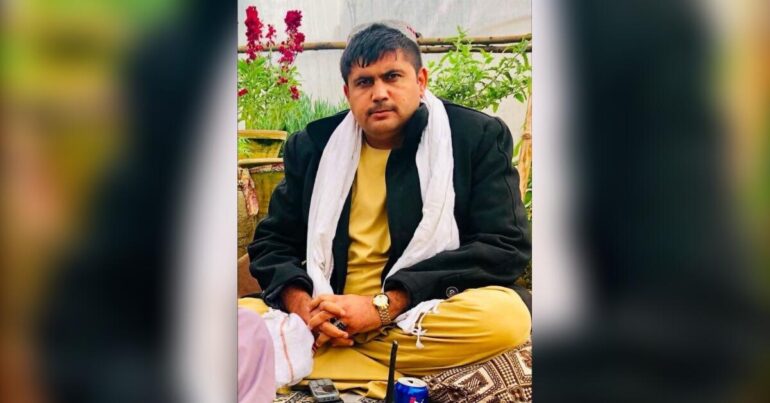

KABUL, AFGHANISTAN – A former Afghan security official who was reportedly close to former Kandahar police chief General Abdul Raziq Achakzai was shot and killed in Quetta, Pakistan, according to sources in Kandahar.
The former official was identified as Haji Woror Achakzai, who previously served as the head of Police District Two in Kandahar city under Afghanistan’s former government.
Sources said Achakzai left Afghanistan for Quetta following the Taliban’s return to power in August 2021, fearing reprisals from the group, and had been living there since then.
According to the sources, armed men riding motorcycles opened fire on Achakzai near his home in Quetta on Sunday morning, August 16, killing him at the scene.
The motive for the killing and the identities of those responsible remain unclear. No group has so far claimed responsibility for the attack.
Sources described Achakzai as a close associate of General Abdul Raziq Achakzai, the former police commander of Kandahar, who was one of the most influential security figures in southern Afghanistan. Abdul Raziq was assassinated in October 2018 in an attack at the governor’s compound in Kandahar, shortly before a planned meeting with senior U.S. officials.
The killing comes amid broader concerns over the safety of former government officials and security personnel under Taliban rule.
In a statement issued on Saturday, August 15, ahead of the fifth anniversary of the Taliban’s takeover, human rights group Rawadari said at least 399 former government employees and their family members had been deliberately killed by the Taliban or unidentified armed individuals during the group’s first four years in power.
Rawadari also reported that at least 6,043 Afghans, including 78 women protesters, were arbitrarily detained, among them 646 former government employees, 643 civil society activists, journalists and human rights defenders, and 1,366 people accused of links to groups opposed to the Taliban.
Following the Taliban’s takeover of Afghanistan, thousands of former government employees, security personnel and other Afghans fled the country and sought refuge in neighboring and Western countries.
In recent years, however, several host countries, particularly Pakistan and Iran, have deported large numbers of Afghans, including people who had fled Afghanistan following the Taliban’s return to power. The deportations have left many returnees in increasingly vulnerable circumstances, particularly those who fear persecution or reprisals because of their former government positions or other affiliations.
Although Taliban announced a general amnesty for former government officials and security forces after the group seized control of Afghanistan, reports by international organizations and human rights groups have documented cases of killings, arbitrary detention, torture, enforced disappearance and other abuses against former security personnel.

