

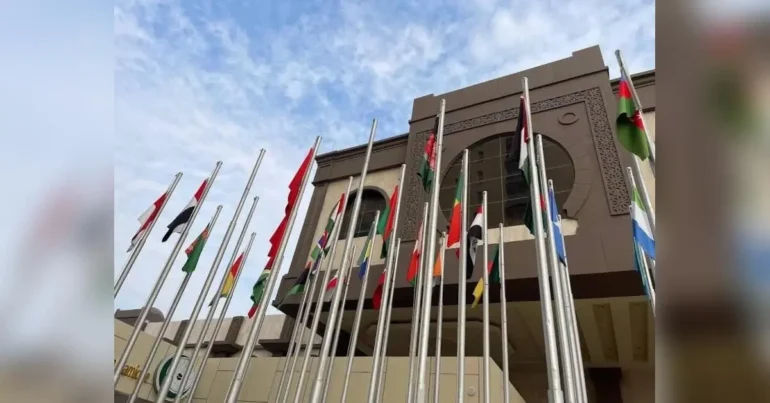

KABUL, AFGHANISTAN – The Organisation of Islamic Cooperation (OIC) and the Muslim World League (MWL) have discussed ways to strengthen cooperation and provide support to the Afghan people amid ongoing humanitarian and development challenges in Afghanistan.
The talks took place on Saturday, July 11, in Islamabad between Ambassador Dr Tarig Ali Bakheet, Assistant Secretary-General of the OIC, and Dr Mohammed bin Abdulkarim Al-Issa, Secretary-General of the Muslim World League.
According to the OIC, the two sides exchanged views on recent developments in Afghanistan and discussed ways to coordinate efforts aimed at assisting Afghans through humanitarian and relief initiatives. They also agreed to launch bilateral programmes focused on strengthening cooperation and serving shared objectives.
The discussions come shortly after Pakistan hosted the ninth meeting of OIC ministers responsible for women’s affairs today on Sunday, July 12. The meeting brought together representatives from 57 OIC member states to discuss women’s rights, political and economic participation, empowerment, and inclusion in the digital sector.
Participants were expected to explore ways to increase women’s involvement in public and professional life, expand access to economic resources and financial services, and address the gender gap in technology.
The meeting’s focus on women’s empowerment comes amid ongoing concerns over the situation of Afghan women, who continue to face severe restrictions on their rights and freedoms under Taliban rule.
Afghanistan continues to face a severe humanitarian crisis, with women and girls among the groups most affected by the Taliban’s policies. Since returning to power in August 2021, the Taliban have imposed extensive restrictions on women’s and girls’ rights, including banning girls from secondary and university education, restricting women’s employment, limiting freedom of movement, and excluding women from many areas of public life.
Human rights organizations have described the systematic exclusion of women from society as a form of gender apartheid, arguing that Taliban policies have created a system of institutionalized discrimination against Afghan women and girls. In recent months, restrictions have also extended to areas such as access to certain healthcare services and professional fields, including the ban on women studying mental health-related subjects, further limiting women’s access to education and essential services.
The meeting between the OIC and the MWL also takes place amid growing concerns over the forced deportation of Afghan refugees from neighboring countries, particularly Pakistan and Iran. Rights groups have warned that many Afghans are being returned to a country where women and girls are denied fundamental rights and where economic hardship and humanitarian needs remain widespread.
According to humanitarian agencies, around half of Afghanistan’s population requires humanitarian assistance due to poverty, displacement, food insecurity, and the continuing impact of decades of conflict.

