
KABUL, AFGHANISTAN – International aid reductions and the Taliban’s restrictive policies are pushing women-led organizations in Afghanistan deeper into financial crisis, with many at risk of shutting down in the coming months, a new UN Women report has found.
The report, based on a survey of 74 women-led organizations across Afghanistan, found that nearly three-quarters experienced funding reductions in 2025, while two-thirds said they had sufficient resources to continue operating for six months or less. More than half anticipate they will have to suspend or permanently close their doors within the next year.
UN Women said the combined impact of declining donor support and Taliban-imposed restrictions is threatening the survival of organizations that provide some of the last remaining avenues for women and girls to access essential services.
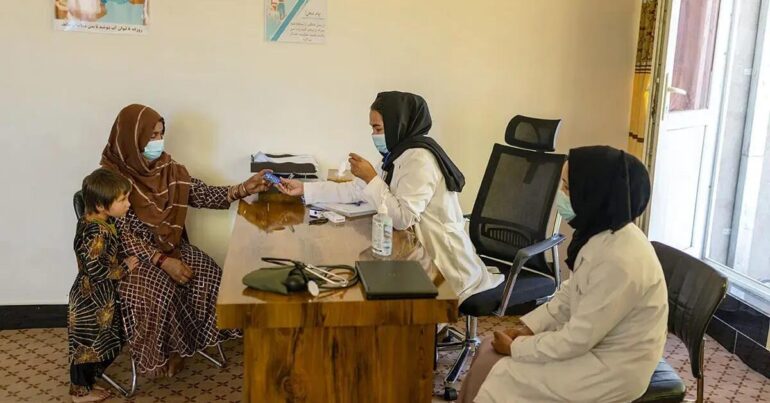
“These organizations are often the only safe and trusted spaces available to women and girls,” the agency said, warning that further closures could leave large numbers without access to healthcare, psychosocial support, vocational training, humanitarian assistance, and income-generating opportunities.
According to the report, half of the organizations have received no new funding since the beginning of 2025. 92% have already been forced to reduce staff numbers, limiting their capacity to provide healthcare, protection services, livelihood support, and other critical assistance.
The effects are being felt on the ground. 66% of the surveyed organizations reported that many women and girls who previously depended on their services can no longer access them. Education and income support initiatives have been scaled back by two-thirds of the groups, while programs addressing gender-based violence have been reduced by 58%.
The report also noted that many women-led organizations have been forced to adapt their operations in response to Taliban restrictions. Groups that previously focused on women’s rights advocacy, leadership development, awareness campaigns and capacity-building have increasingly shifted toward smaller, short-term projects centered on livelihoods and household income generation.
Masoma Haidari, who leads one such women’s organization, highlighted the importance of these centers. “On average, more than 300 to 400 women benefit from our services each week,” she said in the report. “Having centers like this is extremely important, especially for women, as they provide an opportunity to find relief from stress and seek support whenever they need it.”
Haidari added that funding cuts in 2025 forced her organization to lay off staff, directly affecting service delivery. “As our team becomes smaller, our capacity to deliver services reduces,” she said.
Afghanistan continues to grapple with one of the world’s most severe humanitarian crises nearly five years after the Taliban returned to power. International funding has declined as global attention has shifted toward conflicts in Ukraine and the Middle East.
UN figures indicate that around 22 million people — nearly half of Afghanistan’s population — depend on foreign aid this year, with more than 17 million facing food insecurity. Women and children are among the hardest hit.
The humanitarian situation has been compounded by Taliban policies that have imposed broad restrictions on women and girls. Women are barred from secondary schools and universities, excluded from many forms of employment, restricted from traveling long distances without a male guardian, and largely excluded from public life.
UN agencies and aid organizations have repeatedly warned that these restrictions have not only undermined women’s social and economic participation but have also hampered the delivery of humanitarian assistance, particularly services designed for women and girls.