
KABUL, AFGHANISTAN – At least 30 people were injured, and widespread damage was reported after fresh flash floods struck Afghanistan’s eastern Nuristan province on Wednesday, local sources said, days after another deadly flooding incident in the province.
The floods struck the Dehand Rahra area of Mandol district on Wednesday afternoon following heavy rainfall in the mountainous region, the sources said.
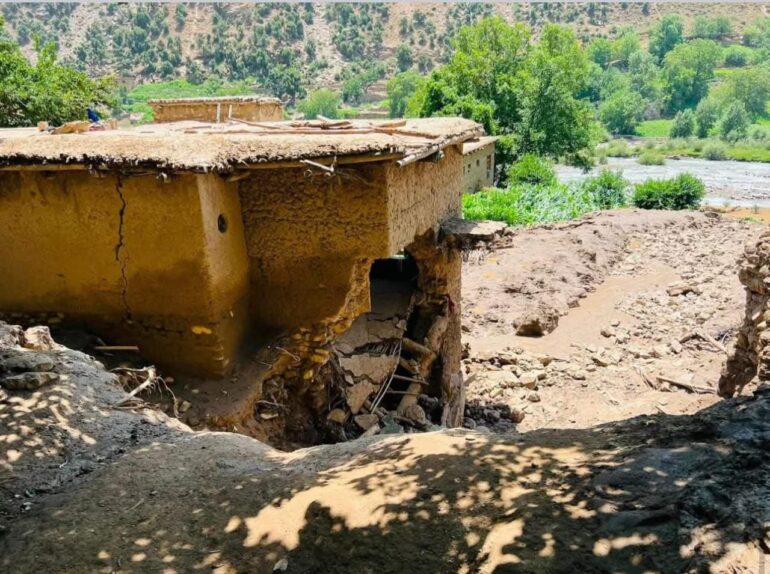
According to the sources, dozens of livestock were killed and significant damage was caused to agricultural land and local infrastructure. Six residential houses, water mills, main and secondary roads, and seven irrigation canals were either completely or partially destroyed. The full scale of the losses remains unclear.
Local Taliban authorities have not commented on the flooding or the damage.
The latest floods come days after severe flooding in Parun, the provincial capital, and nearby areas killed at least 26 people, injured 24 others, and left dozens missing, according to the United Nations. The earlier disaster caused extensive damage to homes, government buildings, roads, irrigation systems, and farmland, with Taliban authorities estimating losses at around $35 million.
Nuristan, along Afghanistan’s eastern border with Pakistan, is among the country’s most disaster-prone provinces due to its rugged terrain and limited infrastructure.
Heavy rainfall has affected several provinces across Afghanistan in recent days, with eastern and southern regions among the hardest hit. The floods have washed away farmland, killed livestock, damaged transportation routes, and disrupted the livelihoods of rural communities that rely heavily on agriculture.
Afghanistan remains highly vulnerable to natural disasters, including floods, droughts, and earthquakes. Humanitarian organizations have repeatedly warned that remote and mountainous areas face greater risks during emergencies due to poor infrastructure, difficult terrain, and limited access to rescue and relief services.
The recurring natural disasters have further strained Afghanistan’s already severe humanitarian crisis, with millions of people continuing to rely on foreign aid amid a significant decline in humanitarian funding.